Showing posts with label writing. Show all posts

Monday, November 24, 2025

Rethinking AI


One of the problems of writing about technology is the speed at which it changes. Back in the early years of digital literacy it seemed as if there was a bit of a scramble to keep up with blogging, peer-to-peer music sharing, Friends Reunited, Flickr, the early stirrings of social media, gaming culture and virtual reality. But before Buzzfeed, Bitcoin and AI - and certainly a long time before platforms and algorithms began to dominate the scene, things seemed more straightforward, perhaps more app-specific. This broadening of concerns is a recurrent theme in Rethinking Digital Literacy. But one of the struggles involved in trying to get an overview is that details may get overlooked. Having touched on AI in Why Writing Still Matters, I worked hard to develop that theme in the new book, but the more I think about it the more I feel the need to develop those ideas a bit further. I think I'm successful in pointing out some of the big issues - the limitations of AI, the pitfalls in using it, the potential distortions and of course the massive and wasteful energy costs that accrue from large numbers of people asking what are, in all probability, banal questions that could easily be answered in other ways. There are larger questions - questions that probably lie outside the ambitions of Rethinking Digital Literacy most of which circle around notions and definitions of agency and intentionality, and what we think intelligence and computing are in the first place. The vast computing power of a well-trained Large Language Model hangs on an extremely complex and sophisticated predictive guessing game of which word comes next in any given sentence. And what an achievement that is! But it's not how I go about thinking or writing. There is no representational model of the world, no genuine sense of what is valuable, no hierarchy of values, no overarching intentionality and little of that erratic, whimsical fuzziness that leads to creativity and invention, perhaps just as often as it leads to frustration. It seems that the doom narrative - that AI will rapidly discover that humans are wasteful, inefficient and obsolete and then dispense with them altogether - reflects a somewhat negative self-evaluation of the human condition rather than the likely future of computing. This wasn't written by ChatGPT and only partially reflects a desire to increase the profile and sales of Rethinking Digital Literacy.


Monday, November 10, 2025

The book


In spite of everything I may have written about the changes in literacy, the feeling of holding the book itself is still significant! The print copy of Rethinking Digital Literacy has arrived, and it feels important to hold it - even though it is light in weight when held against the hours of writing. It is a slim thing, but I'm proud of it and particularly appreciative of how it looks. I owe my thanks to my good friend for the great cover image and of course to my publisher, Edward Elgar, for doing all that publishers do and for their part in producing such a handsome volume. The book is, of course, available in digital format but I can't help thinking that readers would be missing out - even though they might be saving something like £45. But, having said that, I'm not really sure that I know what it is about print books apart from familiarity, nostalgia and habit that makes them seem so special. Rethinking Digital Literacy is an almost entirely digital thing. It was written and researched onscreen, on my iMac, at my stand-up desk. Open, on that desk, to my side, I would have had a notebook and pen, but that would be for a few scrawled reminders - that's all. It was a digital thing. It took form through tapping on a keyboard, it was saved sent, revised and checked digitally. I've never met anyone from the publishers - or even spoken to them on the phone. They might as well be machines or creatures from outer space as far as I know! I'm not complaining, I didn't feel as if I was missing out on anything, in fact I was undisturbed. The process was smooth, frictionless. I think of myself as being fairly measured. I don't go in for grand flourishes or big statements, but as the book developed and as it drew on some themes from Why Writing Still Matters, my previous book, I began to find myself arguing that there had been a revolution in writing - not just a revolution in how we produce text, but a revolution in the reproduction and distribution of text, accompanied by a discernible shift in the place of writing in the ecology of communication. As if that wasn't enough we are now obliged to take account of technological agency - not only the active work of search engines and algorithms, spell-checkers and other digital resources, but also the way in which AI and chatbots can create original text. The old monkey-typing idea- the idea that eventually (perhaps) a monkey's random keyboard tapping might produce the complete works of Shakespeare seems outworn now that AI can produce plausible and original Shakespearean English in a matter of seconds. All told, I've talked my way into a rather strong assertion. So whilst my ambition to write a powerful, popular book for a wide readership seems to have abated, I know that if I did it would be called The Writing Revolution or - perhaps its slightly weaker as a title - A Revolution in Writing. It would need someone to throw down the gauntlet before AI comes up with a version.

Tuesday, September 02, 2025

Gabriel?

Gabriel - I think of it as a literary name, a name that you'd expect to find in a novel, but rare in everyday life. So to add to my thread of literary coincidences, meeting a character called Gabriel in two different novels shouldn't be too surprising. But reading one after another there's always the danger of contamination. Fortunately though, the Gabriel or 'Gabe' of Maggie O'Farrell's excellent Instructions for a Heatwave is radically different to William Boyd's accidental spy in Gabriel's Moon. The similarities begin and end with the name. Both authors are leading exponents of contemporary English fiction and both do character very well, although their approaches are quite different and quite distinctive. In these two novels O'Farrell explores relationship through interaction, through inter-relation and social behaviour, and whilst this features in Boyd, he ends up taking us down a more analytical, psychological path. There are, of course, all sorts of ways that the impression of character can be conveyed. Modern novelists have often used descriptions of facial expressions and features, physical bearing and movement to identify and communicate something about character. O'Farrell has some delicate touches in describing how the family in her fiction dress - and this is important in capturing an era, principally focused on the Summer of 1976. From her I learnt what a sprigged dress is - and how well it sums up the Laura Ashley era. Some writers can't seem to hold back on this topic. Think of Flaubert who has 'a Polish girl in a salmon-coloured velvet spencer' with a 'gauzy skirt over pearl-grey stockings encased in pink boots edged with white fur', but then again this is him describing a fancy dress ball! But in Boyd it seems overdone. A double agent in a 'crisp white shirt and Royal Artillery tie', a minor character in 'a simple, close-fitting white dress', an artist in 'an olive green cotton drill suit with a dark orange silk tie', a barman in a 'starched double-breasted jacket ', a waiter in a 'cerise jacket' and the enigmatic Faith in 'navy blue pedal-pushers with a matching short blouson jacket' - all in the space of ten pages. Is Boyd giving wardrobe instructions for some future film adaptation or is he trying to capture something of the spy genre? Or is he inventing his own genre? After all Gabriel's Moon is described as the first of a trilogy of Gabriel Dax stories. What characters wear and how they wear it can supply important detail to the reader, it can anchor them to a particular culture or point in time, but in the hands of a skilled writer it can also convey a character's age or social status and something more subtle about their relationship to the world. I'm not sure that Boyd's descriptions do any of that work, but in other respects Gabriel's Moon is a very readable book. I'll sign up for the next one.

Wednesday, April 23, 2025

Academic outputs

At about the same time that academia was force-marched into accountability, the writing that academics do came to be referred to as outputs, as if in some sort of quasi-mechanical fashion scholars were being paid to sit on a production line watching ideas, data, themes or perhaps chunks of half-formed text rolling down a conveyor belt to be riveted together into papers, journal articles or monographs. According to this new industrial logic the productivity or worth of an academic would depend on the availability of high quality material published by a reputable publisher in a prestigious journal. Academic writing would then be on the market, favoured or favourited, liked, bought or somehow consumed by others. Just as the ways in which we think about publishing has had to take account of digital distribution and open access, academic activity, and writing in particular, has been reshaped by new market forces. Much has been written about this, and there's still plenty to debate, but the hidden cost lies in the reshaping of academic labour into something that appears to be measurable, even quantifiable in some way. A single output certainly could be described in terms of its weight as a printout, its word count or average word length - and people would be right to scoff if these were proposed as measures of its importance. So perhaps the number of citations an output receives seems more scientific - but then, if we think that influence or popularity is the same thing as quality we'd be fooling ourselves. Such measures are at the most a very rough guide, as is the h-index of an individual academic, dependent as it is on the cumulative market value of citations. Could we ever achieve consensus on the quality of academic writing? Perhaps in very broad terms we might agree that some outputs are more persuasive than others, that some develop a robust argument, develop or introduce a new perspective or contribute to the advance of knowledge. But as with writing in general, perceptions of quality are, in the end, an individual and even a temporary judgement, partly because of the way in which our own reading reflects shifting interests and purposes. For me it has frequently been the case that what I've read, and perhaps cited, may not be particularly well argued or well founded, but something that has caused me to stop and reflect - just as going to a presentation that annoys me can help to clarify my own thinking. Even academic writing that has had a formative influence may not be recognised as significant till later on, until its ideas have been absorbed, debated and reinterpreted. After all, even Einstein's groundbreaking work failed to make an immediate impact. Steady and considered assessment and re-assessment is how knowledge evolves, how ideas build within and across academic communities. As we know, a piece of writing - an output, if you must - is always in dialogue with other writing, with other discussions, and with a range of practices and perspectives. At the end of Middlemarch, George Elliot claims that the 'growing good of the world is partly dependent on unhistoric acts' and owed to those 'who lived faithfully a hidden life, and rest in unvisited tombs'. The accumulation of knowledge and the evaluation of the work of academics in general seems to me to require the same sort of logic - a recognition of a community of practitioners many of whom may live a hidden life, rather than an assembly line of outputs judged by their market value and the prestige of the individuals who produce them.

Wednesday, March 13, 2024

The reading habit

My reading habit is almost as bad as my writing habit. In fact it may be worse. It costs more for a start and it has the added disadvantage of cluttering the place up with its remnants - books. I usually read a couple of them a week. Sometimes non-fiction but most of the time these days fiction. A long term ambition has been to make some sort of reference to what I read here, on this blog. But that's too much pressure. And the trouble is that I don't quite know what I think about a piece of writing until sometime afterwards and by then I've started on something else and then I forget what I thought before. My clearest thoughts about my reading usually begin to crystallise out as I'm reading, but somehow it seems wrong to write them down before I've finished the whole thing. Wrong and probably unfair. So my first impressions of Checkout 19 was that it was a rather clumsy attempt to claim cultural capital with all those references to her reading. That was until it started to impress me with its deep interiority and its own grappling with the writing/reading process. But all that fell away when I started to admire the jaw-dropping way that it would lurch into full-blown fantasy. Still when I reached the end it had become something else again, another kind of story. Bennet's book is unsettling. It's hard to compare it with anything else and perhaps that's why I can't quite bring myself to say I enjoyed it. OK, it shares some common features with something like Amy Liptrot's The Outrun, but then that's a more conventional form, a memoir with an explicit trajectory, a memoir that dwells directly on its central character and context. On some occasions when I read I just get absorbed in technique and with Checkout 19 I found myself turning back the pages on a couple of occasions to find out how skilfully Claire-Louise Bennett got us from A to B. Quite remarkable in itself. I turn the corner of the page as if I'll go back again which is something I rarely do, because by then I'm on to the next thing which in this case is Drive Your Plow Over the Bones of the Dead.


Saturday, January 27, 2024

Don't lean on me man

Scribbled notes on a scrap of lined paper sold for £89,000 the other day. They were the draft lyrics for Rock n Roll Suicide and Suffragette City – complete with the added revisions ‘Hey man!’, ‘Don’t lean on me man’ and ‘Outasight’. The everyday nature of the materials and the rather unremarkable addition of those words might seem trivial or even banal if it were not for the huge impact of Bowie’s songs on popular culture. That scrap of paper, those hastily scribbled jottings are like visible traces of a creative process in vivo. Those songs echoed around bedrooms and shared houses, bedsits and squats, family homes and student flats. They were sung along to, played, replayed and performed time and again, spooling outwards, as it were, from those hastily scribbled lines. Of course, it wasn’t just the lyrics, it was the voice and the music too, the distinctive sound of that particular recording, distributed on vinyl, in its instantly recognisable cardboard sleeve. And it goes without saying, the RCA supply chain ensured that copies were there, ready and available in the racks and trays of LPs that like-minded people habitually flicked through when they went to their favourite record store, back in the day. Matter of little significance has, over time, become a much sought after collector’s item - the value of that scrap of paper far outstrips the value of the raw materials it’s made from, and the ways in which the words themselves wound their way around the feelings and impulses as well as the hopes, beliefs and dreams of a generation of listeners is difficult to capture because of its inevitable multiplicity. It may well have been the soundtrack of many people’s early lives - but then what lives? How did the lyrics come to mean in different contexts, how were they understood - how were they heard, misheard, disliked, detested? Material history can be a bit like that, for although we might agree on the importance of a particular artefact, its meaning is fundamentally unstable inviting interpretation, re-interpretation and misinterpretation. Music in popular culture seems to inhabit the outer reaches of such instability because of the way in which it is often woven into significant personal events, stitched in to one’s particular state of mind, the recreational drugs, relationships, lifestyles and ambitions of the time. Perhaps music in general does this, seamlessly attaching itself to the memories and affects, the distinctiveness of a life. After all this is key to the success of Desert Island Discs, now 81 years old. The 8 track format is such a convenient hook to tell the story of one’s life - or at least a version of it. With an aspiration to be a writer, poet or wordsmith and a nascent literary sensibility I was drawn to the words that punctuated the soundtrack of my early life. That soundtrack was made of vinyl. Singles and EPs that span around at 45 rpm, LPs at 33.3 rpm. Mostly I first heard stuff on pirate stations, on a transistor radio, on Top of the Pops or round at friends’ houses. But the LP soon became something to own. The record sleeve had the all-important supplementary information. The aesthetic of the art work, the names of the musicians, the way they looked, the way they dressed and how they had their hair - the instruments they played, who sang, who wrote the songs and of course, the lyrics themselves. No longer inaudible or misheard, there they were, nearly always on the back of the sleeve or on a pull-out, and you could read them, sing along or just pour over their meaning, if you could fathom it out. Some were more self-consciously poetic than others, some were just rubbish, but nonetheless huge clouds of creativity billowed out of that early flowering of rock music. It seemed at the time that the lyrics carried valuable messages. If they were not poetic they might gesture towards expressions of lifestyle, of taste, of belief and in doing so fashioned the habits of mind of a generation. Whimsical and romantic, uncompromising and rebellious, conceptual, quirky, hedonistic, we were served up with a range of possibilities, a wardrobe of identities that might distinguish us from the mainstream. Only a few at the time saw how the subtle threads of capitalism were part of this, establishing a marketplace in which even the costumes of anti-capitalism could be bought. And now, just the words remain – like a dog without a bone, an actor out on loan (it’s all there somewhere, even if the melody is hard to sing!). Skeletons, threadbare outfits. At an earlier auction the lyrics for Bowie’s Starman sold for £203,500. Unlike Suffragette City, these look like neat copy – presentable handwriting on graph paper with misspellings corrected, probably provided for publication of the official lyric sheet. They don’t have quite the same feel as the Rock n Roll Suicide and Suffragette City lyrics – they’re more polished, more self-conscious, but their market worth is still interesting, and given that an early demo of the song went for £41,000, a fifth of the price, it seems like the material trace of writing is an important marker for the collector, being closer perhaps to an autograph than a ghostlike voice, written by the hand of an icon, don’t lean on me man.

Sunday, December 10, 2023

Killers


Perhaps Martin Scorsese is playing with conventions, but 3 hrs 26 mins sounds like a very long movie. Killers of the Flower Moon is that long but I can honestly say that it didn't drag, the evening just had to be rearranged to accommodate it, and that's no bad thing. The murders, the casual racism and the downright evil intent of William Hale are dramatisations of real-life events that took place in the 1920s and were explored in David Grann's book of the same name Killers of the Flower Moon: The Osage Murders and the Birth of the FBI. The film script is based on the book. But although we get a bit about the FBI, the film concentrates on the strongly drawn characters and the atrocities that they unleash. Leonardo diCaprio, as Ernest Burkhart, is excellent at playing a character who is weak, confused and easily manipulated by William Hale (Robert deNiro) whose charitable mask hides a seething caldron of malice.  Most sources categorise the film as a Western and there's plenty to be said about that - how the genre has evolved and what it means now. I don't find it a particularly useful box to put this film in, but through a series of co-incidences, work on the mostly grim encounters between white settlers and Native Americans has been on my mind a lot recently. Delving into the work of Sebastian Barry had taken me into the brutal world of the Indian Wars - a bloody chapter in American history, which Barry handles so well. In Days without End he manages to weave in delicate intimacy, love and yes, even gender fluidity, with the trauma of human atrocity without lessening the impact or significance of either. I didn't need Faber to include the first chapter of A Thousand Moons in that book, but I went on to read it anyway. Equally brilliant writing. So although reading the two, one after another, was no co-incidence at all, I didn't think of either in terms of a Western - and good for Faber, they don't go down that route, either. Then, in a second-hand bookshop, I picked up West by Carys Davies. If anything was at work it was subliminal. I just wanted something fairly short, something with a lively narrative and a quick flick through suggested that's what I'd get. What a great first novel it is too. It's short, there's a strong storyline and some pitch-perfect writing. Always fascinated by writing about writing I thought she has a particularly deft touch in looking at that particular settler practice from a different perspective. One of her central characters has a Native American companion who dispassionately observes the act of writing 'the dip of the point of one of his half-bald feathers into the ink, the sound that was like the working of the claws of a small creature on a leaf or the smooth bark of a tree.' Wonderful! With a title like 'West' it's easy to think of it as a Western, but it's so much more than that. And again it exposes colonialism and the bloody violence of the settlers, the land grab, the fight for domination, the inhumanity of those who think of themselves as civilised or somehow superior. And then we watch the news.

Thursday, October 05, 2023

Why writing still matters, too


For the cover of Why Writing Still Matters I wanted an image that conveyed some of the messages that are to be found in the book - and that's quite a big ask. This image of Tom Price's wonderful piece called Network, which is in the Yorkshire Sculpture Park, was an obvious candidate. It might make you think of writing as it is becoming - writing with technology, which is consistent with the book's subtitle, 'Written Communication in Changing Times'. The fact that I'm in the picture as well is a bit of an in-joke. But in the end we went for the more abstract image which is credited to Nick Oakes but doesn't actually get any commentary. It's a photograph of initials and names carved into a tree trunk near the Alhambra in Spain. I like it because it references an everyday, but unofficial use of writing - using your name as if to say 'I was here, too' - here for as long as this writing surface remains. It will outlast the act of inscription, but anything further is uncertain. It is the trace of an action - a penknife gouging out the crusty bark of a tree. Someone leaves their mark, announces their existence, expresses their frustration, pledges their love or whatever. I like it because it can be read in different ways, and because it might provoke all sorts of different reactions. The specific detail of its origin and author(s) are unknown. The fact that it has been coloured with the primary colours that Miro was so fond of adds another dimension for me. That and the place in which the photograph was taken - I have fond memories of visiting the Alhambra. Visiting and queuing. Once we waited for 6 hours! It can be like that at the height of the tourist season. But, it's always worth it. The Alhambra and the Generalife are a potent reminder of Moorish rule in Europe and an important part of Spain's architectural heritage. A jewel in the crown of Andalusia. Of course, none of this is in the photograph, but it's what I bring to the photograph. And somehow when you put all that together you get more of a sense of what writing is, what writing does and then maybe, perhaps, why writing still matters.

Saturday, August 26, 2023

Thinking about Yoko Ogawa
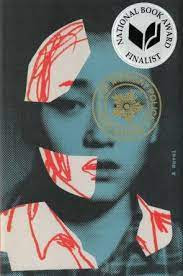
I read The Memory Police about a year ago and I thought it was so good that I should post something about it. I put the book down on the deep windowsill in my study which functions a bit like an in-tray. That's where I put things I'm working on, or things I need to attend to - work, parking fines, speeding tickets, tax notices and so on. For a while, each morning, I'd look at it and think about what I might write, but I couldn't come up with anything. Gradually things began to accumulate around it, and there were more pressing things to do, like my own writing for instance. Soon it was hidden underneath other stuff, well after the fines were paid and the tax notices filed away. But now there were papers to review, drafts to look over - maybe a new parking fine to pay or to appeal against, life goes on. It would be a fiction to I claim that I forgot about The Memory Police. It just got buried. It got buried because I couldn't work out what I wanted to say about it. Occasionally it would come to light again as I sorted through the mess of things on the windowsill. And if I tidied up, as I do occasionally, there it was - something I wanted to do, and I'd promise myself that I'd write something about it. But I didn't. After some time, maybe six months or so, I realised that I wasn't going to get round to it and that it would be better just to forget it altogether. It got shelved, somewhere or other. I gave up. The title stayed with me though, and from time to time I would mention the book to someone or just conjure up the strange atmosphere that it created for me. And then last week, when I found myself in a bookshop looking for something to read, I remembered it, but I couldn't think of the name of the Japanese author who wrote it. I felt a bit under pressure because I wasn't sure whether I'd parked my car illegally, but I googled the title anyway and there it was - The Memory Police by Yoko Ogawa. The bookshop had a couple of shelves that featured Japanese writers, and that's what had prompted my memory. I quickly turned up three titles by Ogawa and chose The Housekeeper and the Professor. I'm about half way through it at the moment and it confirms my view that Ogawa is a brilliant writer. It seems good to post about it now and I certainly don't want it to sit on the windowsill like The Memory Police did. It's written in the same spare prose style, conjuring up this rather strange world, not unlike our own but different, of course, unusual perhaps. 'Haunting', I think it says on the dust jacket. But what does that actually mean? I have no idea, nevertheless it is - haunting, unusual, atmospheric. The reader is drawn into this very particular sort of world, detailed but impressionistic - both at the same time. If I said it was a bit like ink wash, I hope it doesn't sound as if I'm looking at it through the eyes of a romantic orientalist. It's like ink wash because it's beautiful, delicate and at the same time slightly out of focus. Blurred. There's craft and precision; every word contributes to the whole. In this sense, I'm reminded of Small Things Like These, in fact everything by Claire Keegan, although the result couldn't be more different. And just like The Memory Police, The Housekeeper and the Professor is about remembering and forgetting although so far, at least, there isn't the same feeling of oppression, the same political undertow that haunts the pages of The Memory Police. Even though I haven't finished reading it yet, it's a real achievement, and it probably won't ever sit on the deep windowsill underneath the random stuff that accumulates there.

Wednesday, July 12, 2023

The desk


When my mother died, I couldn't work out what to do with the desk she had. It was rather like the one here, and it had been part of the family home as we grew up. About five foot in height, the hinged front pulled down for a writing surface revealing a series of small cubby holes that could be used to store things like envelopes, tape, pencil sharpeners and so on. I say five foot in height, but I can still remember it towering over me, not being able to reach the flat surface of the desk top, and having to be warned not to bang my head on it. I've kept hold of it all these years, although if anything it's a bit low to work at as a stand up desk. It's become clear to me that this one is a rather cheap affair - my mother referred to it as 'post-war utility furniture' - and I know that's probably true because a friend of mine's got a posher version. Better cubbyholes and drawers and even a couple of pop-out lopers that support the work surface from underneath. My parents could never quite agree on what to call it. It was one of a number of things that seemed to index their different backgrounds. My dad just called it the desk and was even known to deride my mother for calling it a bureau. For her it was a bureau, and for me because I'm interested in writing and all its appurtenances it's come to be known as the 'secretaire' which could be thought of as it's official classification in the world of furniture - 'secretaire' or 'secretary desk', although I note, in passing that in The Luminaries Eleanor Catton simply refers to is as a 'secretary' (and she can do no wrong in my opinion). And there's an alternative, too, that I rather like - the escritoire. Somehow that seems to be far too sophisticated a word to describe my dad's desk, but doesn't that just show the way we value a little bit of French? Secretaire is good because of its connection with the word secretary - originally someone who was privy to private and confidential matters (including correspondence), but escritoire appealing because of its etymological connection with scribing, with writing, with mark-making. I suppose there's a book to be done on writing furniture - desks, tables, study rests, lecterns and not to mention all those rather ugly computer tables. I'd like to read something that really grapples with the peripheral material paraphernalia of writing. Maybe not just furniture, why not venture into stationery as well? Its inventive, technological and - well, material.

Saturday, February 04, 2023

Fountain pens

I remember a time when writing with a fountain pen was something to aspire to. Yes, the fountain pen with its little metal lever, delicately hinged against the soft bladder within, to syphon up the ink. I remember the wet, metallic smell of ink. Quink in glass bottles - presumably the qu- for quick, as in quick drying; ink as in ink. The syringe-like way in which it was drawn up into the pen. And I can still recall the sensuous flow of ink from the nib, flowing on to the page as I tried to master nib technique, scratchily unsatisfying one day, smooth and flowing the next, so unpredictable that there were whole catalogues of disaster and frequent frustrations along the way. Bent nibs, split nibs, or the two vertical sections hopelessly crossed.  Accidents, leakages and the stained fingers of the apprentice writer. The running out of ink, and the excess of ink, pooling into blots on the page. And, of course blotting paper - loose or as part of a pad, the necessary accompaniment to pen and ink. Essential for drying-off your writing before the fold, before a turn of the page. Blotting paper to keep on top of minor spillages, to clean the nib, to mop up bottle drips. Blotting paper pellets, launched across the room from a flexed ruler - oh, the anarchy of stationery in the schoolroom! And then, the hazardous business of penmanship, of lining up letters of an acceptable size, looping them together, working to a standard of perfection, the ideal perfection of handwriting, and the grown-up signatures we all aspired to. I've still got my father's fountain pen. It's a Sheaffer with a screw-on lid, with the smooth contours of what might, in its time, have been thought of as futuristic. There's something rocket-like about it (although that may because I still see it through the eyes of a child who grew up with Dan Dare, moon-landings and space exploration). All right, so it may or may not be futuristic, but it's certainly elegant, gracefully tapered, carefully designed. It tapers like a bullet. It has a dark walnut-coloured finish, reminding me of a mint humbug. And, in common with all of its generation, the pen lid has a small golden clip to secure it to your pocket - the inside pocket of your jacket, of course, because 'wearing' it on your front pocket was seen as rather crass. There was something very accomplished and professional about the way in which my father parted the front fold of his jacket to draw out his Shaeffer for signing a cheque or making a note. In those moments, the pen was like a powerful weapon in the hands of an assassin. It was always on target, just right, and his signature was always the same, neat and flowing. It seemed to encapsulate the very essence of him. His neatly loped signature was like his neat wavy hair, carefully parted and carefully presented.

Sunday, October 09, 2022

Remote island fiction

You could imagine a particular kind writing workshop. There's an assignment: sketch out a story set on an island. Have two main characters, and a small cast of locals. The main characters go to the island, some events unfold and then they return to the mainland. End of story. It doesn't seem like much, but there's still plenty of possibility. Amy Sackville's novel Orkney and Audrey Magee's The Colony are both framed in this way, but pull in very different directions, as if to illustrate this possibility. Orkney is a tale of enchantment and loss - inward, psychologically oriented; The Colony a set piece on cultural dominance and exploitation, outward-looking, political. But first, more on similarities. Both stories are set on remote islands of what might be called the Celtic fringe of Europe. Orkney, as its title suggests is set on a Scottish island - probably Westray, whereas Magee's island is somewhere off the Irish coast. Both contain lyrical descriptions of the island seascapes in ways that thicken the narrative. Magee has one of her characters scramble 'on hands and knees along the cliff's edge to peer at caves and archways cut by the ocean' whereas Sackville's studies the 'flats and crevices between the ridges', which are 'strewn with snake-like seaweed'. And both have epigraph's by clever people that signal their orientation: Nietzsche for Magee and Cixous for Sackville. The narrator of Orkney is a professor on the brink retirement, but the island of his experience is refracted through the mysterious, almost mythical presence of his young wife and former student. The Colony dwells most consistently on the character of Mr Lloyd, the artist. Although we repeatedly see the island through Mr Lloyd's eyes there are a number of disrupting devices at work; the character JP, a French linguist studying the island variety of the Irish language, several of the islanders themselves, and the brief almost journalistic accounts of the Troubles - or to be more precise, the deaths of ordinary people caught up in sectarian violence, and these accounts are interspersed with the narrative. The plot of Orkney has none of this structural complexity, it dwells on the slightly uncomfortable Lolita-ish relationship between Richard the professor and his lover, it draws us in like an obsession or an addiction. We are hypnotised, we are enchanted, just like Richard, as slowly his young lover dissolves into pure myth. She - and we never learn her name - she seems to slowly escape his grasp, to fade away, until she finally disappears. Readers are left with the enigmatic sense of Richard's young wife and the character of Richard himself, aloof, misanthropic, obsessional, not particularly attractive, but at the end of his tether, 'I am a cancelled man. I cannot see what I should do with the days ahead; I cannot see tomorrow morning even.' It is as if he is about to be erased, too. 


Reading The Colony straight after Orkney is one thing. But I wonder what it might be like to do it the other way round? Would it force a different set of comparisons? Or are they just very different kinds of writing, with different purposes, different preoccupations? I would prefer it that way, but reading both, so close together, made me wonder about the attraction of what might be thought of as remote island fiction. There are plenty of examples of it, and they're not all recent. Perhaps it's simply that a specific and circumscribed setting helps to sharpen a writer's focus. But it also seems that the symbolic separation from the mainland that the island motif provides actually offers us new perspectives on the mainland itself.  The poetic, the lyrical Orkney could be read as a critique of our dull, grey conformity, the ways in which we can be trapped (is that what Richard really stands for?). The island is nothing if not beautiful, haunting and dangerous, whereas Richard's life before the island is...well, boring. Standing on The Colony we see a mainland that is deeply marked by political domination and struggle in ways that also play out in social, cultural and linguistic worlds. In Sackville, Orkney can safely remain a placemarker for the romantic imagination and folklore (that's hopeful), but Magee's island exists in a dynamic relationship with the mainland. What will become of the language, of the lives of the islanders, their creative and economic ambitions? It is a different story and it poses different sorts of questions.

Friday, August 19, 2022

Half full and half empty

In one way or another a work of fiction is always subject to the gravitational pull of the time in which it is made. Whether we're thinking of its material form as Ozeki does, or whether we're thinking of its subject matter, shape and substance are important. A print book has a particular heft and the 550 pages of The Book of Form and Emptiness lend it a certain weight. The extent to which that weight is simply ballast could be what distinguishes good writing from the rest. The Book of Form and Emptiness faces a challenge common to much contemporary fiction that directly addresses the current milieu. To put it simply, issues like environmental catastrophe, the inequities forced on us by global capitalism and the rise of national populism do not readily present us with opportunities for resolution or narrative closure. The predominant cultural story, if it's not straightforward disaster porn, is one of unsustainability and collapse rather than one of noble decline or a utopian back-to-nature simple life. Ozeki piles on the tragedies, both personal and social. I'd not encountered the term 'psychic diversity' before, but it takes its place alongside disability, mental health issues, substance abuse and poverty. If loss and grief act as a pivot for the book, hoarding, self-harm and even gender fluidity also play a part. Nearly all the principle characters are in some way lost, confused or misguided. Exceptions are the author of the fictional book-within-a-book 'Tidy Magic', Cory the children's librarian, and the unnamed woman in the library who is always typing away on her laptop - perhaps typing the book itself. Reading all this was a lot to digest, particularly since it included the post-modern device of having the book itself addressing the characters and the reader and even reflecting on the nature of books themselves. Served up with a side dish of new materialism, there was a lot here on the agency of objects, enchantment, vibrant matter and so on - as if Ozeki had taken a crash course with Jane Bennett. As a result I could have done without the potted biography of Walter Benjamin and quotations from his essays - and the Borges garnish that was liberally applied.

The Zen that the author claims suffuses the book is hard to see amongst all this clutter. Its most overt appearance is in the figure of Aikon, the Marie Kondo like author of Tidy Magic who dispenses advice on how to fold your t-shirts and underwear. At times I longed for an Aikon editor who might clear a path for the characters and events that were building some momentum. But perhaps that's unfair. The prophetic old Zen master may be a stereotype, but he is important in his own way. And Benny's koan is the question 'What is real?' which forms an interesting counterpoint to the critique of consumerism that flavours the book. They come close to being brought together when Ozeki asks 'What gives things the power to enchant and is there a limit to the desire for more?'. To combine these thoughts with the idea that things, both made and unmade, have agency sets an almost impossible question...and if a book, too, is agentive what then? And how do you square a critique of consumerism with Benjamin's obsession with collecting books? Perhaps these are just meant as a collection of ideas to think about. All told, books and libraries have a central place in this fictional world, but there are unresolved tensions even here. Early on Ozeki observes that within this 'social hierarchy of matter, we books lived on top'. But the past tense is telling. Benji's mother, Annabelle, is laid off as media goes digital, and towards the end something similar is happening with the thinning out of library shelves. There's some print nostalgia at work here, but Ozeki is up front about this. In the end perhaps, The Book of Form and Emptiness is a timely reflection on the ways in which books shape our lives in different ways.

Sunday, March 13, 2022

Travelling with Tolstoy
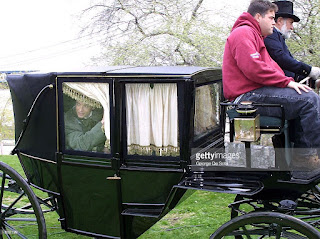
The passenger sees the world from a particular point of view. Separate, like a spectator, a world unfolds through the frame of the window. The framed scene outside is textualized, having a cinematic quality, as the passenger moves through the world without engaging with it in any other way than simply viewing it. There is a quality to this experience that prompts reflection, and it turns up time and again in literature. Towards the end of Anna Karenina Tolstoy uses this reflective experience to conjure up Anna's troubled state of mind. He sets the scene, "Sitting in the corner of the comfortable carriage, barely rocking on its resilient springs to the quick pace of the greys, again going over the events of the last few days, under the incessant clatter of the wheels and the quickly changing impressions of the open air, Anna saw her situation quite differently from the way it had seemed to her at her home." This introduces the reader to the reflective quality. What Anna thinks and feels is interspersed with the noise and movement of the carriage and the changing scene through the window, to the "incessant clatter of the wheels" and the "quickly changing impressions" outside. Her attention is drawn to the urban environment she is moving through "...she began to read the signboards. 'Office and Warehouse. Yes, I'll tell Dolly everything..." The signboards are particularly interesting conveying a familiar modern street scene. Later, on her return journey she looks at passers-by "'This one is pleased with himself,' she thought of a fat, red-cheeked gentleman who, as he drove by in the opposite direction, took her for an acquaintance and raised a shiny hat over his bald shiny head and then realized he was mistaken, 'He thought he knew me. And he knows me as little as anyone else in the world knows me'" Anna's mental state is captured in stream-of-consciousness writing that predates Mrs Dalloway by nearly fifty years - but it is the way in which Tolstoy juxtaposes the Moscow streets with her reflections that again captivates us. "Twitkin, Coiffeur...Je me fais coiffer par Twitkin...I'll tell him when he comes,' she thought and smiled. But at the same moment she remembered that she now had no one to tell anything funny to." Anna, as passenger, reads the world outside. Her grief only hits home when she thinks that she has no-one to share it with.

Saturday, December 04, 2021

Powerpoint fiction....anybody?


If you'd told me that the novel I was about to read contained over 60 pages of Powerpoint slides using some of the standard insert graphics you get, I think I'd change my mind and pick something else. Haven't we all had enough of Powerpoint? Surprisingly though, Jennifer Egan makes this device work so well in A Visit from the Goon Squad that I actually found myself really enjoying it. It's one of the many small triumphs in this Pulitzer Prize winner - a work that is packed full of insights and intrigues. I'd missed it when it won in 2011, but came to it late through the first chapter, Found Objects, which appeared as a short story in the New Yorker. It could be argued that the freestanding piece Found Objects has the edge. After all, it's tightly written and only hints at the broader landscape of events. In that sense it's more open for the reader. You can speculate all you like about Sasha, the focal character, about what is lost, found or stolen in her life and the fragmented dialogue with her therapist works very well in prompting this sort of perspective. I like the economy of the short story form for some of these reasons. I think George Saunders writes about making every word count in a short story - and that's why Found Objects works. Egan's stand alone tale raises all sorts of questions most of which are answered in the novel, so I suppose if you're the sort who hopes for some sort of closure in fiction you'd prefer A Visit from the Goon Squad; but both are very good. After several unsuccessful attempts to surf the wave of enthusiasm for Richard Powers, Egan has re-established my flagging confidence in American fiction.

Saturday, October 02, 2021

Going slow

It's been a while. Perhaps it seems as if I'm a blogger on a go-slow, but really it's just the sign of a changing relationship with what I write. Recently posting has become a way of rehearsing thoughts that later become more extended pieces of writing - but somehow or other I didn't need to do that for the book Stacking Stories (out soon!). So that's where my energies have gone, writing that. But I still like the blog. I like it for its continuity, or to be precise for the way it maps change. Colin and Michele once described it as a 'wunderkammer' in their typology of blogs, but it long since changed direction. Gradually it became more performative. I tried to capture where I'd been, what I was reading and what was getting published. In other words it surfed the breaking wave of self-promoting academic identity performance (yuk!). Even quite recent posts - up to and including this one - seem to draw attention to what I've been up to in my professional life (such as this!). But I've also tried to stay faithful to the notion of capturing the main gist of what I'm thinking about, what inspires me. And it perhaps goes without saying, writing in one way or another always seems to come to the top of the pile. Producing it, consuming it, the two inextricably woven together. Everyday notes, graffiti, literature, sky-writing, logos, subtitles, digital, non-digital - the lot. That has to be the next (the last?) major project, translating that fascination into something that is both insightful and readable. Will I get round to it? I think so, although my current fascination with the Uruguayan writer Mario Levrero might be trying to tell me something. His short book Empty Words and the bible-sized tome The Luminous Novel are masterpieces in exploring the many ways you can avoid writing what you really want to write - or, how that avoidance can itself become a thing of fascination. Following that model I should probably post regularly about how I'm not getting round to starting work on that substantive topic. But I don't want to make a promise that I don't think I could keep.

Friday, August 28, 2020

Drawing on something


I took up drawing again about a year ago - I say again because I haven't really done any since my teens. Armed with a pocket-sized sketchbook and a couple of pencils we sat outside cafes in Ortigia as I sketched people passing by, photographing the Church of Santa Lucia, delving into their holiday rucksacks, chatting with their friends and on their smartphones. They weren't up to much - my sketches, that is - but I had a particular project in mind, and I wanted to find my way into drawing people. You have to start somewhere. As with my earlier attempts, half a century before, I realised that I don't have much that you might call technique. In fact I don't think I'd really want technique even if it was on offer. I just want to discover what works for me. I want to watch my drawing evolve. Of course it's not quite as simple as that. It's not all about first hand discovery. As art critics have often pointed out we are always governed by what we have seen before. What we draw or paint looks right because we have seen something like it previously. Still it emerges afresh on the page as we draw. We do it ourselves, and that's a creative act whether it's 'good' or just good enough. It's our own expression of something. Anyway, in those intervening years - those between my early drawing and my current rekindled interest, I have been preoccupied with writing. Not particularly good or even interesting writing, but writing nonetheless, and most of it professional or academic in nature. And the most important thing to emerge from all this writing is the realisation that what attracts me most is not actually its originality (although of course that helps) but the creative self-expression itself - trying to represent things in my own way, in my own voice. As with drawing, my writing doesn't have a preoccupation with technique - at least not in a self-conscious sort of way. It's just constantly refining itself. And of course it refines itself in the light of what I read. That's not quite the same as saying it's all imitation, but I think it always draws on something, even if I might not be  sure exactly what that is. The word expression seems to capture that, and if I were to write another book that would be a driving theme. Writing - technology and expression or something like that. Even in writing that it would be perfectly obvious that I'd be drawing on something.

Saturday, July 25, 2020

Book pairing

Continuing on the theme of books that provoke surprising connections when read together I want to recommend pairing Marilyn Strathern's work on Relations with anything by Henry James (from Daisy Miller onwards). I've always been struck by the Jamesian use of the term 'vulgar' - in part because it resonates with a family joke, (which I won't go into) - but mostly because it's one of those words that surfaces repeatedly in The Awkward Age, The Golden Bowl, The Wings of the Dove and in some ways becomes James's signature theme. Relations, people and behaviours that are below the norms of an idea of respectability all fall into his category of the vulgar. For James the vulgar is a register of social distinction at a time in which it is being tested in New and Old World sociality as well as by shifting generational impulses and family tensions. Purdy's 1968 essay 'Henry James's use of vulgar' in the journal American Speech explores some of this and is particularly good at teasing out the different connotations of the word. Strathern, however, has an entirely different project in mind as she problematises the place of relations in and beyond anthroplogy. Charting the rise of relationality as a way of looking at and ordering the world she is optimistic about new ways of thinking about relations - a re-enchantment through language.

Sunday, May 10, 2020

Fish, floating signifiers and WhatsApp

Online multimodal communication seems to thrive when it's easy to use and experiment with. It's one of the more attractive features of WhatsApp as a platform. Still and moving images are easy to pull in, links work well, and voice messages provide a useful alternative to typing. And of course it's so handy just to click on to an audio or video call. Compared with old school synchronous chat, exchanges are more coherent. That's because the way in which you can quickly quote solves the problem of chaotic multi-threaded conversations. All in all there's plenty to research in WhatsApp chat and the smooth interplay of media makes it a gift for multimodal analysis. It may be a generational effect that I'm a bit slow on emojis, but I'm learning. Animated gifs on the other hand have tended to leave me totally bemused. Bemused until yesterday when my daughter just slipped one into the chat as naturally as you might raise an eyebrow in talking with a friend. And given that she's been studying this sort of thing I asked some basic questions and from her answers a whole new territory opened out. Searching gifs is a rudimentary affair and most of them could be described as floating signifiers in that they only become meaningful in their immediate context of use or within a particular speech community. Her partner's group of buddies use this fish one regularly in their banter - when someone has taken the bite. And it's therefore quite something looking back over a string of exchanges that effortlessly mix communicative resources - and all in the playful arena of casual everyday meaning making, the laboratory of human communication.

Friday, March 13, 2020

Two at a time

A long-established habit of mine is to have two books on the go at the same time. More often than not one of them will be fiction, but then that’s not always the case. Whatever the combination might be at any one time I often tend to find that the two different texts interact with one another in unpredictable ways. And what’s more their subject matter or themes can often connect with what I’m writing about in my professional life, and I suppose that’s down to the sense I’m actively making in the moment, as it were. Reason aside, it feels like a productive way of proceeding. But then there’s always room for exceptions, and the two I’ve just completed over the last few days have combined in altogether surprising ways and ways that don’t relate to anything I’m writing about at all. Michel Serres’ book Hominescence, which I commented on before, is a really engaging overview of those recent shifts that have led to a changed experience of what it means to be human, to be globally connected and to have become an all-powerful species on the planet. And then Europe: the first 100 million years, by palaeontologist Tim Flannery, traces the long and diverse history of fauna on our continent – including for example wisent, aurochs, elephants, big cats and a long succession of hominids and hybrids. Of course, Flannery works on a larger timescale in which periods of interdependence, species dominance and extinction move across the landscape of Europe like shadows cast by moving cloud. In some senses you could say that Hominescence expands on Flannery’s final chapters, and certainly some of Serres’ ethical considerations gain traction when we consider the variety of rewilding projects and ecological conundrums that are described in the Europe book. But what unites the two authors is actually a sense of optimism. Flannery is stronger on detail when it comes to climate change but he still believes that humans can turn things around. And although there’s a wistful tone to Serres’ recollections of pre-war France there’s still a strong commitment to the future possibilities of global connection. And now that very idea of inter-connected humanity comes to the fore when considering responses to the Coronavirus pandemic. It could well be a test case for hominescence. Can we work together across national and political boundaries to do what is best? Only time will tell. And in the meantime it’s a case of what to read next and that will become even more significant to me if we decide to increase social distance. What better way to spend the time; two at a time.