Showing posts with label media. Show all posts
Thursday, June 20, 2024
Let's hear it for the trees
There's a hypnotic, meditative quality to Perfect Days which foregrounds the Koji Yakusho character's quiet immersion in simple everyday life as a Tokyo toilet cleaner. He is surrounded by busy people, but also by natural beauty. A touchstone here is the sunlight leaking through trees, summed up by some beguiling cinematic images of that komorebi effect. Quiet acceptance seems like a template for contentment and it has been suggested that Wim Wenders is taking a stand here. But what do we read into some of the other motifs? The cassette tapes he plays in the car each morning - those lo-fi analogue recordings of a previous generation that haunt the movie? Or the delicate suggestion that his past and his family relationships may not be so straightforward? And all those imaginative toilet designs that we encounter? Critics have tended to focus on the beauty of the film and have celebrated the portrayal of a character seemingly at peace with the world, turning away from, or escaping from the mess. But, perhaps inevitably, there's more beneath the placid surface of the film. It takes us away from toilets, from toilet cleaning and from Tokyo, such a potent symbol of the modern world. It could be argued that Perfect Days makes an uneasy settlement with the modern world, in the same way that the Koji Yakusho character may have made an uneasy settlement with his life. Some parallels can be found in another slow and quiet film - Here from the Belgian director Bas Devos. The central characters, a Romanian construction worker and a Chinese bryologist develop a romantic connection in natural beauty walking through the woodland around Brussels. The trees and the mosses come to the foreground, They are beautifully filmed as modern life speeds by in the background - trains ceaselessly moving rootless people from place to place. Here is another sideways glance at modernity. The character Stefan is more troubled than Wim Wender's toilet cleaner, but his life is just as simple and his motivations are nothing but generous - he cooks up soup and walks miles to deliver it in plastic tubs to his friends. Here may be overlooked because Devos is not so well known and because it may be siloed as art house, but it is still a real achievement. On the other hand Wim Wender's huge reputation has already insured that Perfect Days gets plenty of attention. But both films deserve to be taken seriously, both show what a feature-length film can do, and both have important messages for us. And let's hear it for trees - they don't feature in the credits, but they are major actors in both these wonderful, thought-provoking films.
Saturday, December 04, 2021
Powerpoint fiction....anybody?
If you'd told me that the novel I was about to read contained over 60 pages of Powerpoint slides using some of the standard insert graphics you get, I think I'd change my mind and pick something else. Haven't we all had enough of Powerpoint? Surprisingly though, Jennifer Egan makes this device work so well in A Visit from the Goon Squad that I actually found myself really enjoying it. It's one of the many small triumphs in this Pulitzer Prize winner - a work that is packed full of insights and intrigues. I'd missed it when it won in 2011, but came to it late through the first chapter, Found Objects, which appeared as a short story in the New Yorker. It could be argued that the freestanding piece Found Objects has the edge. After all, it's tightly written and only hints at the broader landscape of events. In that sense it's more open for the reader. You can speculate all you like about Sasha, the focal character, about what is lost, found or stolen in her life and the fragmented dialogue with her therapist works very well in prompting this sort of perspective. I like the economy of the short story form for some of these reasons. I think George Saunders writes about making every word count in a short story - and that's why Found Objects works. Egan's stand alone tale raises all sorts of questions most of which are answered in the novel, so I suppose if you're the sort who hopes for some sort of closure in fiction you'd prefer A Visit from the Goon Squad; but both are very good. After several unsuccessful attempts to surf the wave of enthusiasm for Richard Powers, Egan has re-established my flagging confidence in American fiction.
Friday, August 28, 2020
Drawing on something
I took up drawing again about a year ago - I say again because I haven't really done any since my teens. Armed with a pocket-sized sketchbook and a couple of pencils we sat outside cafes in Ortigia as I sketched people passing by, photographing the Church of Santa Lucia, delving into their holiday rucksacks, chatting with their friends and on their smartphones. They weren't up to much - my sketches, that is - but I had a particular project in mind, and I wanted to find my way into drawing people. You have to start somewhere. As with my earlier attempts, half a century before, I realised that I don't have much that you might call technique. In fact I don't think I'd really want technique even if it was on offer. I just want to discover what works for me. I want to watch my drawing evolve. Of course it's not quite as simple as that. It's not all about first hand discovery. As art critics have often pointed out we are always governed by what we have seen before. What we draw or paint looks right because we have seen something like it previously. Still it emerges afresh on the page as we draw. We do it ourselves, and that's a creative act whether it's 'good' or just good enough. It's our own expression of something. Anyway, in those intervening years - those between my early drawing and my current rekindled interest, I have been preoccupied with writing. Not particularly good or even interesting writing, but writing nonetheless, and most of it professional or academic in nature. And the most important thing to emerge from all this writing is the realisation that what attracts me most is not actually its originality (although of course that helps) but the creative self-expression itself - trying to represent things in my own way, in my own voice. As with drawing, my writing doesn't have a preoccupation with technique - at least not in a self-conscious sort of way. It's just constantly refining itself. And of course it refines itself in the light of what I read. That's not quite the same as saying it's all imitation, but I think it always draws on something, even if I might not be sure exactly what that is. The word expression seems to capture that, and if I were to write another book that would be a driving theme. Writing - technology and expression or something like that. Even in writing that it would be perfectly obvious that I'd be drawing on something.
Wednesday, July 15, 2020
Neurodiversity and after
I was advised not to write about neurodiversity by an expert, a well-respected colleague that I've worked with for a number of years. It was very good advice, there was already too much at stake in writing for Child-Parent Research Re-imagined. The book is an excellent collection and I'm pleased with my contribution. Of course everything has to be re-conceptualised, re-imagined or otherwise re-branded at the moment - but this is only a minor quibble because it is a great piece of scholarship. But neurodiversity doesn't get a look in, which is a shame. Another colleague of mine, Liz Barrett, has used the child-parent relationship in exploring this topic and to good effect, but my family context made this more complex - that, and my driving interest in how idiosyncratic meanings get made, re-made, and re-mixed across media. I had to be close up, intimate even, to read these meanings and to understand how they were forged. Researching en famille bestows these advantages, or at least that's what I argue. I got round some of the ethical issues by making a soft toy the focus of the piece and I really enjoyed playing with that idea. But since the last ten years have been a steep learning curve with respect to neurodiversity there's part of me that wants to come back to the topic. As I followed advice and edited out all the giveaway clues to neurodiversity in my piece of writing something inevitably got lost. It wasn't exactly neurodiversity that got lost, it was more the particularities of a specific relationship. That is a relationship that is coloured by neurodiversity but also one that comes after neurodiversity.
Sunday, May 10, 2020
Fish, floating signifiers and WhatsApp
Online multimodal communication seems to thrive when it's easy to use and experiment with. It's one of the more attractive features of WhatsApp as a platform. Still and moving images are easy to pull in, links work well, and voice messages provide a useful alternative to typing. And of course it's so handy just to click on to an audio or video call. Compared with old school synchronous chat, exchanges are more coherent. That's because the way in which you can quickly quote solves the problem of chaotic multi-threaded conversations. All in all there's plenty to research in WhatsApp chat and the smooth interplay of media makes it a gift for multimodal analysis. It may be a generational effect that I'm a bit slow on emojis, but I'm learning. Animated gifs on the other hand have tended to leave me totally bemused. Bemused until yesterday when my daughter just slipped one into the chat as naturally as you might raise an eyebrow in talking with a friend. And given that she's been studying this sort of thing I asked some basic questions and from her answers a whole new territory opened out. Searching gifs is a rudimentary affair and most of them could be described as floating signifiers in that they only become meaningful in their immediate context of use or within a particular speech community. Her partner's group of buddies use this fish one regularly in their banter - when someone has taken the bite. And it's therefore quite something looking back over a string of exchanges that effortlessly mix communicative resources - and all in the playful arena of casual everyday meaning making, the laboratory of human communication.
Friday, October 26, 2018
Radio isn't dead
I like radio, I grew up with it on. In those days it was mainly the Home Service and the Third Programme, and it was the hey day of British broadcasting. We called it the wireless. We called it listening to the wireless, but wireless means something else now - but then so does radio. Radio isn't dead. I don't have radio on in the house any more although I do own three old valve radios - wirelesses from the late '50s and early '60s. Not a collection I've just ended up with them. They're all in good working order but I never listen to them. I do go through phases when I flip on the radio in the car though. I listen to bits of things - very 21st Century. Last week, for instance, it was lovely hearing Isaac Julien interviewing Stuart Hall. Slightly creepy though. Stuart Hall died in 2014. But he had a really beautiful and sonorous radio voice. Listening to him is like sinking into a really comfortable, well-upholstered armchair. It's a luxurious comfort. His voice is (the present tense seems appropriate) always reassuring, it's reasonable and it's deeply critical all at the same time. You could say that he was one of the last great public intellectuals. And he was a staunch advocate of British diversity, an insightful commentator on what it means to be black in Britain, and a key theorist of identity politics. But how could Isaac Julien be interviewing him live? It turns out it's an engaging format in which the guest - Julien in this case - interacts with someone, now dead, that they admired. The producers use excerpts from audio archives to simulate conversation. Meanwhile the guest has no idea what material will be used. Ingenious. And it makes for good radio. As it turned out we had a fascinating exploration of art and politics, identity, diversity and the Windrush generation. Stuart Hall was as engaging and eloquent as ever and his mellow tones reminded me of how good radio could be. If only I could listen again on a valve radio I would.
Friday, November 11, 2016
Making Literacy, Media, Technology
The idea of celebrating the materialisation of a book in print form might at first glance appear to be rather anachronistic. After all, in this era of online publishing, most of our words are 'out there' before any publishers' ink hits the page. But somehow or other receiving one's advance copy is still a rich experience. Not only does it represent completion, that it is, at least in some sense of the word, finished, that the labour is over - perhaps even, in retrospect, that it was worth it after all, no matter what one felt at the time, or at various stages on the way, but also and perhaps more importantly that it has become a thing, something more tangible, something with a particular heft, a particular look and so on. I feel the same about journal articles, and even though I have my name on a number that I've never seen as published, in amongst other contributions, or in the particular issues in which they 'appeared', I usually have a print-off, because that's the next best thing. Julia Gillen has teased me about this in private, but I suspect that she might agree that somehow online first is a bit of a shadow - more correctly a foreshadow, of the real thing. Or perhaps real is the wrong word altogether, it's maybe just that we live in a world of different kinds of objects, and that print forms have their own place in this order of things. This is a key point in the book Literacy, Media, Technology that I'm referring to. The book is an edited collection, and the subtitle: Past, Present and Future presented an opportunity for Becky Parry, Cathy Burnett and myself to interrogate that linearity, the slow and inexorable passage of time or the mad dash into the future - or whatever version of the progressive modernist narrative that you might subscribe to. Things can only get better? Maybe. But actually things co-exist, they resonate back and forth in interesting ways. And so, we take a stand against that popular phrase 'the future has arrived', opting instead for a view that it just hasn't happened yet. In a way we're more interested in the present and the way it is infused by the way things were and our ideas of what they might become. But apart from all of this, the excellent chapters, written by some of the finest academics in the field, are in conversation with one another, and in the final stages of the editing process it seemed as if they had something new to say about the inter-relationships between literacy, media and technology, at least to gesture towards a new conceptualisation of their interconnectedness, an interconnectedness that was always there but had to be found, and had never been fully articulated before. It feels good to hold on to that, and at least as good as holding the book itself, as a thing.
Thursday, October 15, 2015
New mobile literacies
I hope there will be a good audience for my talk on Sunday. It's called 'New Mobile Literacies' and here's a bit of a taster. ....Mobility is one of those signature themes of early 21st Century living. On a macro scale we are preoccupied with the movement of people, whether it takes the form of the ‘migrant crisis’ that has tested Europe’s ability to act with humanity, the contagion and spread of Ebola that has troubled the medical community, illegal border crossings and their generational legacy, or the carbon footprint left by mass tourism and big business. Within liberal democracies we agonise about social mobility, about the rising gap between rich and poor. At a local level about the ability of the transport infrastructure to get people from A to B, and with our growing sensitivity to disability, and ageing, how access and mobility can be enhanced. None of these are new to the 21st Century, but a concept of ‘mobilities’ sensitizes us to how we put ourselves about, how we get around, who moves where, and how. So how do any of these instances of mobility connect with our idea of literacies? Perhaps the answer lies in something that has always intrigued me, the other dictionary definition of communication. It’s the second in my Concise Oxford, in which communication is described as ‘a means of connecting different places, such as a door, passage, road or railway’. Then communication, by whichever definition, always implies a sort of movement, whether that is a movement of people, things or ideas. Yes, a mobility. And if this holds true we could argue that all literacies are in some way mobile. If that is the case, no need to go on, except of course, for the fact that we see rather a lot of people wandering about holding these things, these rectangular objects of different sizes – talking to them, tapping them, stroking them as if they were pets. Maybe you do the same, temporarily stashing a phone in your back pocket as you walk along or rummaging around in the dark recesses of a bag to locate the pulsing feel of an incoming call?
Saturday, May 09, 2015
Sacrifice and punish
In the wake of an unexpected election result, three of our political leaders have resigned, sacrificing themselves in order to shoulder what must be seen as collective failure. Resignation from public office has a respectable history as a ritual, and it is one in which the individual takes responsibility for collective failure. It could be read as an extension of the techno-politics of punishment, a condition in which an individual must ultimately and symbolically be held accountable. In this morning's newspaper the report sits cheek by jowl with the story of a public execution. The execution in Guild Wars 2 of the avatar of a player who had been guilty of cheating. DarkSide, the avatar in question, was executed in front of an audience of 325,000, symbolically punished by AreaNet to underline that cheats will not be tolerated (perhaps also to attract interest in Guild Wars 2). In a mediascape in which more alarming videos of real-world execution have been circulating the intermingling of real, virtual and symbolic acts of punishment and sacrifice is uncanny. Uncanny because of their multistability - the individual accepts, or is forced to accept responsibility, but the crime and the authority to punish is ambiguous. Throughout history the techno-politics of punishment are in part a spectator sport. We feel a certain sense of closure when an ineffectual leader falls on his sword, a sense of outrage when an innocent journalist is executed by militants, and maybe we are unsure what to feel about DarkSide.
Monday, December 22, 2014
Data driven?
At this year's LRA conference I found myself repeatedly asking whether presenters felt that their video data was producing them, rather than the other way around. It probably sounded like someone trying to make a clever point, so I thought it might be worth trying to unpick what I was driving at. The thought first occurred to me a while back when it seemed as if researchers had 'discovered' mobility, as if it was something akin to a previously overlooked landmass - already there, but as yet unchartered. At that point I wondered whether that new interest in movement was simply a by-product of moving image technology. Were we simply seeing what our technology enabled us to see? Looking back then, was that earlier fascination with spoken interaction, turn-taking, transcripts and all the paraphernalia of oracy simply the result of affordable recording devices and magnetic tape? Thinking in this way might just exemplify how data produces us - and also at the same time how technologies of data capture enact exclusions. In our rush to study mobility do we ignore turn-taking, or indeed anything that falls outside the frame? You could take the argument to another level, as Barad does in Meeting the Universe Halfway, when she argues that 'technoscientific practices play a role in producing the very phenomena they set out to describe.' (207:2007). Or on an everyday level you could see how the way the iPhone camera gets used creates a new way of seeing the world. That wide angle lens, the heightened colour values, and also the simple ubiquity of the phone itself melds with our experience in new ways, creating radical departures from photography as it was. Put that into a slideshow (as above) and the way we participate in the world is changed.
Wednesday, April 16, 2014
Baroque Philadelphia
When Cathy and I worked on the data that later became Points of View, we experimented with deconstructing the notion of 'the event', partly because we found it hard to define any clear boundaries between different instances of meaning-making in the material we were dealing with, and our multiple readings of the data, the stacking stories we developed, highlighted increasing levels of complexity, rather than coalescing around a single version of what was happening in classroom virtual world play. We struggled to find a word for what we were observing - maybe occurrences or action sequences might work - otherwise just call it the project! Part of the problem with the idea of 'events', which we haven't so far articulated, is the way in which they tend to associate too easily with 'activities' or 'routines' in the world of literacy education. And one thing that is clear about the virtual worlds work is the way in which it challenges just those sorts of boundaries, planned learning sequences, activities, objectives and all the rest. In our AERA presentation, we deepened our baroque reading of the data, using this to critique simple, reductive models of literacy in classrooms. Cathy introduced the notion of a baroque pedagogy, an exuberant expression of free roaming gameplay, one that is hard to describe, hard to understand, but thoroughly absorbing for participants. But we also used baroque techniques to illuminate the heterogeneity of meaning-making in classrooms, and that, I think, will be at the heart of the next paper that we're working on.
Monday, March 31, 2014
School collaboration
The idea of connecting schools and school children has been around for some time. Serving worthwhile goals of promoting cross-cultural understanding, developing language awareness and language skills and even contributing to wider notions of citizenship, school collaboration often ticks all the right boxes. Anastasia Gouseti's new book, Digital Technologies for School Collaboration, explores some of these themes and recognizes that although programmes that provide opportunities for transnational collaboration between schools have a respectable history, the potential expansion of these opportunities through new technology has yet to be evaluated in a principled way. Gouseti's book does just that. Based on a case studies of teachers' and students' experiences of the European eTwinning programme she provides a detailed analysis of the promises and pitfalls of web-based school collaboration. But the book is much more than that, providing an excellent overview and critique of the rhetoric associated with web 2.0 and 'participatory culture.' This is a book that is well-informed, well-argued and scholarly throughout, offering practical guidance on how to develop school collaboration through new media.
Wednesday, March 05, 2014
Is it a book or is it an app?
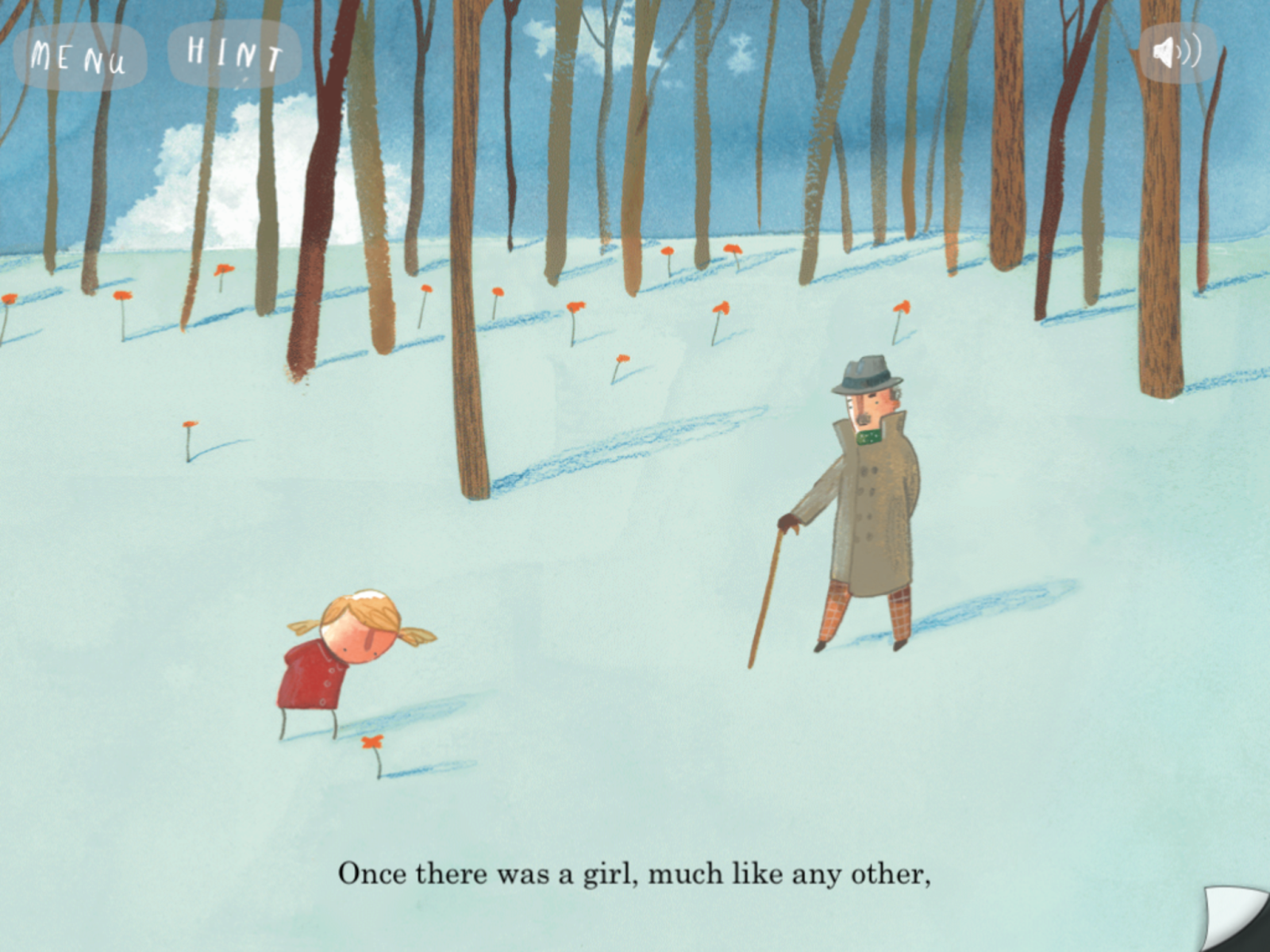
Sunday, December 29, 2013
The discourse of online reviews
Reputation and ranking through comment and consumer review are a ubiquitous feature of new media. Reviewing involves online performances of identity and taste that are highly influential in the consumer-led participatory culture of late modernity. Based on an analysis of a corpus of 1000 such texts, Camilla Vasquez's book 'The Discourse of Online Consumer Reviews', due to be published by Bloomsbury later this year, explores the linguistic features of this new online genre. Using an eclectic range of approaches, the discourse of these (often humorous) reviews is given a detailed treatment. In a compelling exploration of stance-taking Vasquez shows how the quest for the perfect product inflects the comments of these self-appointed reviewers. As she observes in the conclusion to the second chapter 'on our quest to have a "mind-blowing" dining experience, or with our hopes of finding the "perfect" diaper bag - we will continue to consume.' We see how reviewers work hard to position themselves on the expertise continuum, often evoking professional knowledge or the views of others to bolster their credentials - and, of course, all this is indexed in their written comments. Advice, warning and product endorsement all feature here as review-writers gain reader involvement and encourage interaction. Vasquez majors on reviews of specific items such as multi speed blenders, diaper bags and yoga mats, throwing in more general ones such as hotel reviews from TripAdvisor, movie reviews from NetFlix, and recipes from Epicurious for good measure. A highlight, for me, was the mushroom tortellini debate on the recipe site - witty, yet spirited - and this is lovingly analysed for the play of voices in the extended online interaction! Through their evaluations and short narratives these reviewers create a shifting online community of consumer advice, and Vasquez shows how they deploy discursive resources to achieve this. All this makes goes to make this book an essential for anyone who is interested in online discourse.
Saturday, December 07, 2013
The text vanishes
I found this year's LRA conference provided a rich fare. Some familiar things were being re-stated, some key work felt yet further developed and some radically new ideas seemed to be emerging. Cathy commented that the text itself received relatively little attention, and it does seem that with a growing interest in mobilties, and embodiment and affect, new constellations of sociotechnical and sociomaterial engagements are coming to the fore. Any signs of the text have now become ghostlike. Especially since now they have become open, provisional and often multi-authored, and in some senses ephemeral. Karen Wohlwend said something like 'I don't really like to talk about texts anymore, it seems that the kids are producing contexts.' I liked this, and although you could see in her work, and in that of many others, things that looked like texts - texts that formed and reformed - they were marginal things, like pencil shavings to the real sharpening of meaning that was occurring. The frozen fixed texts we used to pour over, the multimodal designs we read into them now seem to move backstage, as we watch gesture, movement and the claiming or enacting of meaning making spaces through mobility and countermobility. But what if the researcher's gaze is actually produced as much by data capture tools as it is by new representational practices and related theoretical advances? Does the availability of head-cams, spy-pens and flip cameras simply frame the segments of reality that we study in a different way? Perhaps though, we are learning more about the contexts that we always knew were there. Perhaps we have started to neglect text, or maybe it is slowly erasing itself as a fixed thing, a thing of privileged interest. When early emergent writing was a hot topic, we ran those paper-based artefacts under the photocopier and poured over the products while they were still warm. The contexts we tended to capture back then, if we had the time, the resource, and the inclination were more about talk, the stretches of verbal interaction that we caught on dictaphone tapes and then lovingly transcribed. As different then as new literacies might be, so are the possibilities for data collection. If we remain true to our reflexive project we are duty bound to think about what is newly acknowledged as well as what is omitted, erased or remains hidden, and how this influences the construction of knowledge. Did the play of power and the enactment of inequality, for example, just slip from our gaze or, if we are attentive, are those same forces simply seen in new ways and understood afresh?
Sunday, November 24, 2013
Affect
Massumi makes a useful contribution to the problem with affect when he says:' There seems to be a growing feeling within media, literary and art theory that affect is central to an understanding of our information- and image-based late capitalist culture, in which so-called master narratives are perceived to have foundered....belief has waned for many but not affect. If anything,our condition is characterized by a surfeit of it. The problem is that there is no cultural-theoretical vocabulary specific to affect. Our entire vocabulary has derived from theories of signification...' (Parables for the Virtual, 2002:27). Good point, well made. Still confusing affect with emotion? I found that this helped to unscramble the two (and 'feeling' at the same time).
Saturday, October 26, 2013
For your pleasure in this present state
Sunday, June 23, 2013
Body hacking
Any self-respecting cyborg has to be a fan of body hacking. Rather than some sort of grim ritual of zombie-like mutilation this sort of hacking is about collecting (and sharing) data on yourself, or as Gary Wolf founder of the self-quantifying movement puts it, turning windows into mirrors. It's not just about logging your life - that's been going on a while - but the whole idea is to collect your own physiological and psychological data. learn to read it (becoming data-literate in the process) and then use the wisdom of crowds (and experts) to improve your well-being, your physical and mental state. You could see it as digitally-enhanced self-improvement or extreme narcissism. The Quantified Self movement may not be your cup of tea, but when I heard Rodney Jones it made me think how it just is the logical extension of a more general trend in digital life. The supermarket knows what I eat, Amazon what I read, Insight knows when I meditate, and Mappiness knows how I'm doing. Put it altogether, invest in a FitBit and then you're truly post-human. It's the way to go...
Tuesday, May 21, 2013
Unconvergence
Five years ago, convergence technology was the real buzzword, and with early smartphones we began to see this on the high street - the phone was the camera, was the MP3 player. We're so used to that now that the powerful handheld device, aka smartphone, is often referred to in terms of its computing power and its internet capability. Early critics of iPhones often complained that it was good with media, but not wonderful as a phone. That's changed quite a bit over the years, but there is still a recognition that in order to get all that computing power into a small space some compromises have to be made. Commonly these compromises are about battery life and signal transmission/reception. Most people probably just live with this, but others have begun to invest in a simple phone too, so that they have at least one thing that works well. That's all very well, but as I pack for a trip to Hong Kong it's a logistical nightmare making sure I've got my phone, my camera, my iPad and my laptop and all the various leads and cables (each being completely different, of course). So, actually I'm a big fan of convergence technology, just because it makes life simpler, but it does seem that there's a way to go.
Sunday, April 14, 2013
Mediated publics
I like Thompson's idea of mediated publics. He argues that public was once defined in terms of people, places and events that share a common locale. Print media disturbed this convergence by creating a 'reading public which was not localised in space and time.' (Thompson, 1995:126). Other media have helped to accelerate fractured or reconfigured publics. In the UK, the 1952 Coronation is often cited as a landmark event, in which the spectating public was dispersed as television ownership grew exponentially. A public event was witnessed in private surroundings by many people, often with neighbours crowding into houses to share the spectacle. Perhaps it could be argued that the first moon landing was another key moment in that the immediate audience was particularly small, but the mediated event reached out to a large and very diverse public. Interestingly though, for the upcoming funeral of Thatcher, the public is divided in other ways, but there's bound to be a heavy media presence.
Subscribe to:
Posts (Atom)


