Showing posts with label future. Show all posts

Thursday, April 22, 2021

Three short pieces

One. Events pass through novelty and nowness to become history, obviously. I'm thinking of when doing things or going places one perhaps registers either to one's self or whoever you're with, that you're here. This is happening, I'm in Santiago, Singapore, Cyprus or some other place, doing this and conscious of doing it, too. And then looking back on it, that was life, that was what happened, the novelty or uniqueness flattening off, smoothing out. It settles down into the narrative of a life. Not only is it unrepeatable, after all we already knew that didn't we? but it settles down into ordinariness in a way we didn't quite expect somehow. That was what we did. We went to different places and did different things. it was all gradually absorbed like sugar into the sum total of experience. What at the time seemed remarkable or unusual gradually became part of the texture of things. There's a sort of doubling effect, events are at the same time both very special and rather ordinary. But yes, we did these things. Didn't we? Two. Variations on the blind man's cane. Husserl or Heidegger? No actually Merleau-Ponty: 'The blind man's stick has ceased to become an object for him'. The cane has become an extension of the senses. The hammer (probably Heidegger?) recedes as it becomes an everyday tool. We only realise how invisible such things have become when they go wrong, break. The cane snaps. The head falls off the hammer. We miss the nail and strike our thumb instead. So much of Pandemic experience has been like this. The head fell off the hammer of our lives. The everyday gets suspended, at least for a while. We quickly call conditions the new normal and then slowly they become normalized. So normal we stop noticing them (face masks). A different sense of the everyday arises. We get accustomed to it, slowly forgetting how things were or romanticising our memory of how they were. We lockdown. And then lockdown eases and the way things scurry back to normality is unsettling too. Our memories are short, we are quick to adapt, in fact adaptation is our strength. Three. Blind spots, literally blind spots. The bits we don't see we quickly fill in. Our reality like rickety Super-8 footage, badly spliced, jump cut, ill-matched film stock with different colour tones, sometimes out of focus, the sound out of sync. Is it really like that, reality? Yes, all of that spliced in with random bits of information and all slicked over with the gel of consciousness. Consciousness pulling it altogether, imposing pattern, predictability, superimposing meaning. Making sense out of nonsense. Stitching it together, smoothing it over always making it normal. That was life. It was what we did.

Thursday, March 11, 2021

Back to school

On Monday children in England returned to their classrooms for the first time since the 2021 lockdown was introduced. I knew that because I heard them clattering past my house on their way to school. There was an exuberant atmosphere, much swinging of bags, slamming of doors and rattling of railings. And there were voices, too. Some subdued, some loud and unruly - but it all reminded me of how these diverse energies are so often overlooked, reined in and brought to serve adult purposes. In this I find myself in sympathy with the work of some scholars and researchers who wish to dislodge reductive accounts of meaning making and even to challenge reductive ideas about what children, learning and school are and could be. Yes, on Monday there was an almost palpable sense of relief. Children were back in school, they were back together, and the event underlined my understanding of how children thrive in each others company as well as through the sensitive guidance of adults. Of course they may also have been some reluctance, let's not forget that there will have been children who were less enthralled by the prospect of school, children who were not excited, were worried, anxious, or just uncertain. But all told, the crucially important function of public education is that it provides spaces for children to be together - not only classrooms and other places designed for learning, but also outside, at the school gate, in playgrounds as well as in corridors and doorways. Such spaces tend to be less regulated, but they are the spaces in which the energy of childhood culture thrives, where children play and interact, often under the watchful eye of adults but not usually through their explicit direction. In this way schools - and primary schools in particular, have always offered so much more than the learning on offer. Unsurprisingly this is a large part of what children will have missed. Parents and children have been thrown back on their own resources these past months, often heroically supported by teachers who have worked under extremely difficult circumstances to provide learning opportunities remotely. All told, being back together feels like something worth celebrating. That said, I don't subscribe to the notion that children are now massively behind, or that they should necessarily be subjected to additional days and hours of study. Those arguments seem to come from the outdated view that children are like empty tanks to be topped up daily with fresh content, a view often held by those who mistake the arbitrary construction of age-related norms for objective truth. If anything, we need something more like the summer play schemes which used to be modestly funded by local government. The school premises were vacant, the curriculum was put to sleep and the normal rules of engagement could be re-negotiated. Volunteer teachers and parents worked informally together to organise games, creative activities and outings for children of all ages. Above all children could be children together in a loosely structured permissive context. What better as an economical and humane approach to healing the scars of lockdown?

Friday, January 18, 2019

The Library of Things

Good ideas, the ones that provide solutions to problems you didn't think you had, are things to celebrate before they become taken for granted. Think of suitcases with wheels - Google tells me we owe that to one Robert Plath, an airline pilot. Of course we wouldn't need wheels if we didn't have so much stuff to lug around. But since we've got them, why not put them to good use and cram them full? I digress. We'd been painting the hall and stairwell, my nephew and I. Bleached Lichen or was it Bleached Linen? The wall from stairfoot to ceiling was a good twelve foot. You could get most of it with some judicious placing of stepladders, staying just on the right side of safe and sensible, but then there'd always be a couple of square feet just out of reach. You need longer ladders, I'd said, telescopic ladders, but he'd never heard of them. Later on the High Street, where we went for lunch, I caught sight of the very ladders - telescopic - leaning against a wall, through a shop window. There! We stopped. Telescopic ladders. And slowly it dawned on us that we were not at a shop, it was the library - Crystal Palace Library, and the random collection of things we were looking at, amongst which were the telescopic ladders, was actually inside the library, part of the library. And, by peering further into the window, our heads wedged against the glass, hands above our eyes to cut the glare, we saw that this was indeed The Library of Things. And that's what I call a good idea. We decided against borrowing the telescopic ladders, but it's still good to know you could.

Friday, December 14, 2018

Biometrics on the move

I've often wondered why the seating in airports is so uncomfortable. Is it to prepare you for the inevitable discomfort of the journey ahead or is it just a total failure of imagination? Anyway here we are again in our serried ranks, this time in San Francisco, uncomfortable as usual when there's an announcement. US immigration are staging a 'biometric exit operation' just before boarding. Just when you thought you'd escaped notice and could slink off they're tracking your departure. In the end it's not as bad as it sounds. You just step up - when you're told, of course - and stand on two large yellow footprints glued to the floor while they take your picture. That's it, and off you go. They could have just announced that instead, 'We'll take your picture as you leave'. Biometric exit operation sounds better, but then again it's slightly more honest. Yes, they take your picture, it's simple....and then. It's the and then bit which is hidden. Hidden, like so much in our machine age. You have to imagine how your image becomes data, matched by face recognition software, tallied against finger and thumbprint records and passport details that connect your age, sex and nationality with where you've been and what you said you were doing, and it's all done behind the scenes. Then and there you just get a polite but slightly officious person in uniform who presses a button before telling you you're done. And this because you are - you're done again.

Wednesday, October 08, 2014

Deep reading

I've not been posting for a while because I've been on a long break in Nepal and Tibet - but somehow or other a complete break isn't quite as complete as you might think. Noticing the impact of the digital on everyday life seems to have become a way of life, and I found myself observing and photographing the different ways in which devices and texts are woven into lives that on the surface at least seem rather different. This is a monk at Boudanath, Kathmandu reading  a Tibetan scripture on an iPad as part of a devotional practice - one of many examples of how digital texts become absorbed into cultural practices. Reading Will Self about the impact of new technology on what he calls 'deep reading', I found myself recalling this image. Is this 'deep'...or did it suddenly become shallow because its read on an iPad? Clearly not. But of course, in an otherwise intelligent and nuanced piece, Self is actually equating the immersive experience of reading fiction with depth. Although he offers a balanced account, and is certainly not bemoaning the rise of digital text, there is a sadness in his tone. He thinks we have lost something. If he's right, though, its not depth we've lost, but a way of accessing imagined worlds.

Sunday, February 09, 2014

Digital futures for teachers

The need for teachers to engage with digital literacies at all stages of education has been articulated in numerous policy documents and directives in many parts of the world. Often the economic desirability of 21st century skills is seen as the central rationale for this, but commentaries also make reference to the increasing importance of digital literacy in citizenship and participatory culture. In education theory and research, the importance of acknowledging and using children and young people’s knowledge of popular culture has become a key theme, with a growing number of studies addressing the rise of digital culture. In the face of this, educators now realize that levels of participation in popular digital culture vary considerably between populations and social groups (Warschauer and Matuchniak, 2010). To add further complication, the understandings and experiences that learners and their teachers have, and need, are rapidly changing as technology itself changes (Davies and Merchant, 2009). Preparing teachers to operate effectively in this volatile environment presents a number of challenges. In our chapter in this book we look at some of the driving and constraining forces, concentrating particularly on the ways in which open educational resources (OERs) may have the potential to support teachers and trainee teachers in developing their capacity to address the ‘digital challenge’ (Abrams and Merchant, 2012). All this receives a detailed treatment in the chapter that Julia and I have written for this collection (now available). The chapter draws on the work of the DefT project.

Wednesday, July 10, 2013

Itinerant academic

The rather sudden decline in my posting frequency is probably largely the product of a very busy year that's included trips to the US, Malaysia, Hong Kong and now Australia. The funny thing is that you find yourself catching up on work tasks and conversations in the most unlikely places - a day out with Catherine Beavis and her partner at Purling Brook Falls (above), and now reviews, journal work, emails and some writing at Noosa. Although it may sound glamorous it gets very tiring, and I'm now looking forward to some down time. Moving about has highlighted some interesting, and perhaps unsurprising, themes in literacy education. The most dominant of these by a long way is the work that literacy educators have to do to legitimise what they already know, or think they know to be worthwhile in the light of  new centralised curriculum and accountability measures. In the realm of new/digital literacies this is particularly noticeable, and makes little sense when seen alongside political rhetoric about economic competitiveness and 21st Century skills. Another theme concerns raising the achievement of marginalised groups, and particularly the recognition of different languages, cultures and forms of representation. In sum, for all the newness of these policy initiatives and curriculum changes, the same old issues come to the fore. Given increased connectivity, it now seems timely to encourage transnational connections between educators - connections that may provide challenge and support for those committed to real change.

Wednesday, October 10, 2012

Screen panic


Journalists have latched on to Aric Sigman's polemic about the health risks of screen time on young children with gusto, even though it's widely acknowledged that negative effects are only 'possible'. The best response is buried in this report, in which Dorothy Bishop observes that 'His comments about impact of screen time on brain development and empathy seem speculative in my opinion, and the arguments that he makes could equally well be used to conclude that children should not read books.' So, maybe this isn't the end of civilization as we know it, we're not all going to hell in a hand cart. Let's here it for Peppa Pig!

Sunday, May 06, 2012

Where am I?


I've been experimenting with GPS - doing my homework for the DeFT project, and I must say I've always been impressed with the whole concept. I think I first heard of it in connection with marine navigation. The idea that satellites might replace the compass, map and chart, or the night sky as ways of plotting a journey is interesting in itself. More modern magic. I've been rather dimly aware that there are 2 sides to the GPS coin - track and trace. Not only can I see where I'm going, other people can see where I'm going, too. But who exactly? In idle moment I found myself reading the manual, the small print as you might say. There I learnt, what I assume most people already know, that GPS is owned and maintained by the US government. That's interesting, and I expect those social geographers have written all about the topic. Anyway, I'm sure there are checks and balances, I hope so. That a government might one day change the map would be nothing new, but that our position on the landscape and our direction of movement might be modified is a chilling prospect. Overnight respect for friends who pursue the noble art of orienteering has increased!

Tuesday, April 03, 2012

The fashioning of the new consumer


OK - I really like the New iPad, and I'm glad I indulged myself. Like my last purchase, the Kindle, it demonstrates how slick digital technology is becoming. That's the enthusiast talking, of course. But the Kindle is nothing without a few books, a newspaper or two....and then maybe some more books. So, it is just a platform for selling digital content. And the iPad? Well you're going to need some apps, after all, and they're not all free. More digital content. Then, of course, the iPad works very well with iCloud and that's the big sales push. Can that work with my laptop? No. I need to upgrade the OS....to Leopard, and that comes at a cost, too. Ah well, there's a cold snap on the way, and it may even snow again, but no need to worry, there's no need to leave the house, I can do all this from home. Who needs shops? They seem curiously old-fangled, now. I'll get a couple of books on the Kindle - click, that's twenty quid out of my bank account, and when I get bored, then what? Well I'll go to the app store and buy a bit more....maybe, I'll do the nostalgia thing and buy some music from the early 70s (iTunes springs to mind), or watch a movie (downloaded from LoveFilm). OK, I made the point. You click, you get - they've already got your card details. No need to leave the sofa. I have become the new consumer.

Wednesday, April 27, 2011

Nostalgia for the future
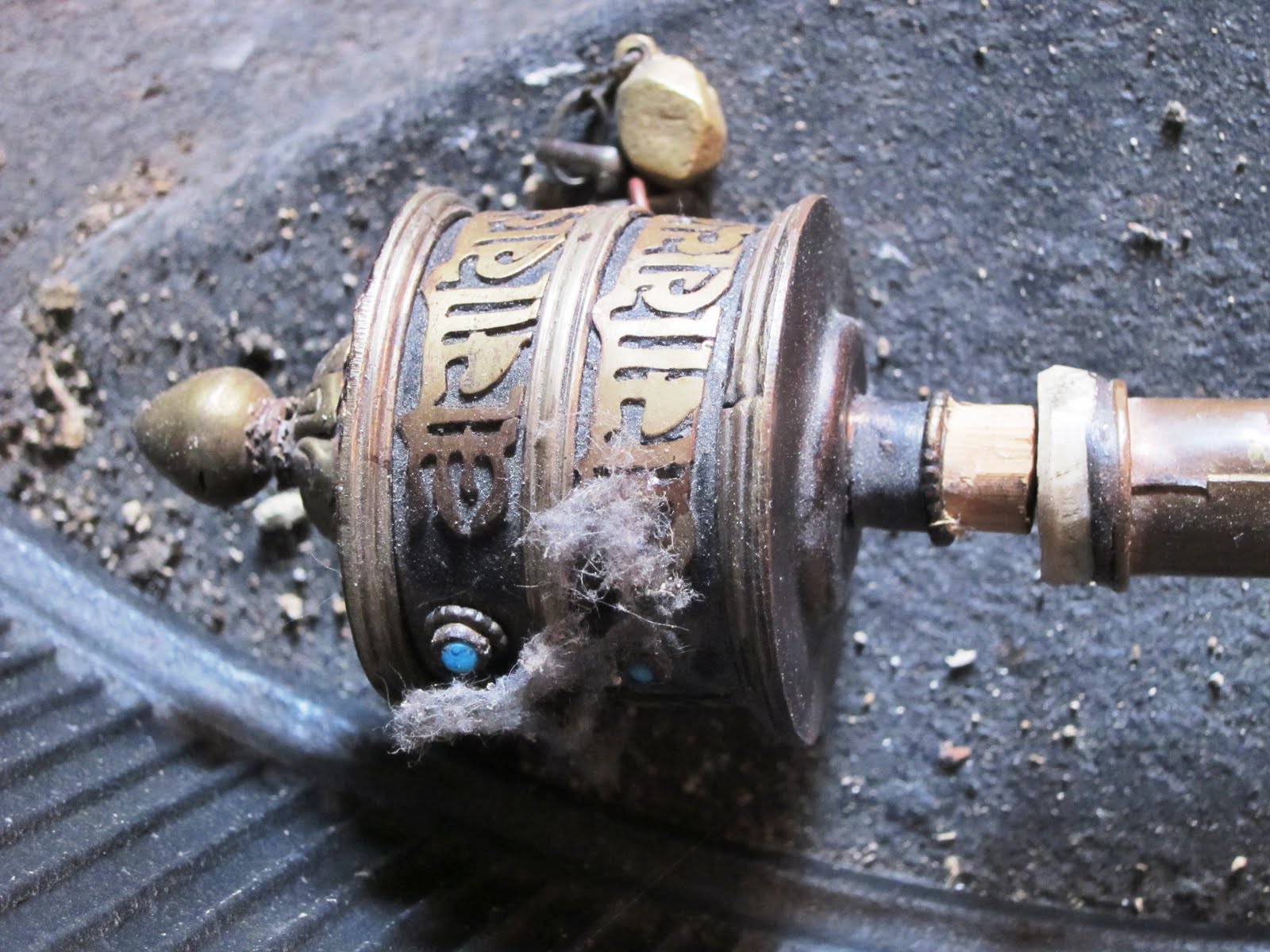


Most visions of the future just flesh out the present - or even re-imagine the past. John Banville describes this effect extremely well when his narrator explores the 'outmoded atmosphere that pervaded ...[his]...dream of what was to come.' So here goes: ' So what I foresaw for the future was in fact, if fact comes into it, a picture of what could only be an imagined past. I was, one might say, not much anticipating the future as nostalgic for it, since what in my imaginings was to come was in reality already gone.' (The Sea: 71)