Sunday, December 10, 2023

Killers


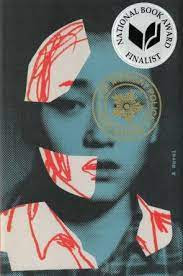
Perhaps Martin Scorsese is playing with conventions, but 3 hrs 26 mins sounds like a very long movie. Killers of the Flower Moon is that long but I can honestly say that it didn't drag, the evening just had to be rearranged to accommodate it, and that's no bad thing. The murders, the casual racism and the downright evil intent of William Hale are dramatisations of real-life events that took place in the 1920s and were explored in David Grann's book of the same name Killers of the Flower Moon: The Osage Murders and the Birth of the FBI. The film script is based on the book. But although we get a bit about the FBI, the film concentrates on the strongly drawn characters and the atrocities that they unleash. Leonardo diCaprio, as Ernest Burkhart, is excellent at playing a character who is weak, confused and easily manipulated by William Hale (Robert deNiro) whose charitable mask hides a seething caldron of malice.  Most sources categorise the film as a Western and there's plenty to be said about that - how the genre has evolved and what it means now. I don't find it a particularly useful box to put this film in, but through a series of co-incidences, work on the mostly grim encounters between white settlers and Native Americans has been on my mind a lot recently. Delving into the work of Sebastian Barry had taken me into the brutal world of the Indian Wars - a bloody chapter in American history, which Barry handles so well. In Days without End he manages to weave in delicate intimacy, love and yes, even gender fluidity, with the trauma of human atrocity without lessening the impact or significance of either. I didn't need Faber to include the first chapter of A Thousand Moons in that book, but I went on to read it anyway. Equally brilliant writing. So although reading the two, one after another, was no co-incidence at all, I didn't think of either in terms of a Western - and good for Faber, they don't go down that route, either. Then, in a second-hand bookshop, I picked up West by Carys Davies. If anything was at work it was subliminal. I just wanted something fairly short, something with a lively narrative and a quick flick through suggested that's what I'd get. What a great first novel it is too. It's short, there's a strong storyline and some pitch-perfect writing. Always fascinated by writing about writing I thought she has a particularly deft touch in looking at that particular settler practice from a different perspective. One of her central characters has a Native American companion who dispassionately observes the act of writing 'the dip of the point of one of his half-bald feathers into the ink, the sound that was like the working of the claws of a small creature on a leaf or the smooth bark of a tree.' Wonderful! With a title like 'West' it's easy to think of it as a Western, but it's so much more than that. And again it exposes colonialism and the bloody violence of the settlers, the land grab, the fight for domination, the inhumanity of those who think of themselves as civilised or somehow superior. And then we watch the news.

Thursday, October 05, 2023

Why writing still matters, too


For the cover of Why Writing Still Matters I wanted an image that conveyed some of the messages that are to be found in the book - and that's quite a big ask. This image of Tom Price's wonderful piece called Network, which is in the Yorkshire Sculpture Park, was an obvious candidate. It might make you think of writing as it is becoming - writing with technology, which is consistent with the book's subtitle, 'Written Communication in Changing Times'. The fact that I'm in the picture as well is a bit of an in-joke. But in the end we went for the more abstract image which is credited to Nick Oakes but doesn't actually get any commentary. It's a photograph of initials and names carved into a tree trunk near the Alhambra in Spain. I like it because it references an everyday, but unofficial use of writing - using your name as if to say 'I was here, too' - here for as long as this writing surface remains. It will outlast the act of inscription, but anything further is uncertain. It is the trace of an action - a penknife gouging out the crusty bark of a tree. Someone leaves their mark, announces their existence, expresses their frustration, pledges their love or whatever. I like it because it can be read in different ways, and because it might provoke all sorts of different reactions. The specific detail of its origin and author(s) are unknown. The fact that it has been coloured with the primary colours that Miro was so fond of adds another dimension for me. That and the place in which the photograph was taken - I have fond memories of visiting the Alhambra. Visiting and queuing. Once we waited for 6 hours! It can be like that at the height of the tourist season. But, it's always worth it. The Alhambra and the Generalife are a potent reminder of Moorish rule in Europe and an important part of Spain's architectural heritage. A jewel in the crown of Andalusia. Of course, none of this is in the photograph, but it's what I bring to the photograph. And somehow when you put all that together you get more of a sense of what writing is, what writing does and then maybe, perhaps, why writing still matters.

Sunday, October 01, 2023

Paper matters, too


In Why Writing Still Matters I spend some time tracing the invention and development of paper as a writing technology, but not with the detail and enthusiasm that Basbanes applies in On Paper. But I do note that after the French Revolution writing paper began to appear bearing the names of new government offices and departments. Sometimes this was lavishly produced from engravings of the motif Liberty, Egality and Fraternity. Pictorial writing paper subsequently began to make its appearance on the correspondence of traders and shopkeepers, signalling a sort of sophistication or professionalism. By the early 1800s good quality writing paper was beginning to become available in England. Headed paper with embossed and ornamental designs was often printed with decorative or coloured borders. Some of this high quality paper was watermarked and used for invitations, greetings and to promote social events. Although the written messages inscribed on them were important, the quality and decoration on the paper carried an additional message - distinctive, expensive, tasteful, carefully chosen. Paper and printing were important to the prolific French novelist Balzac. This is partly because of his professional background as a printer, and partly because he was a keen observer of the practices of the Parisian literary world of his time and the gradual diffusion of literacy which was shaping the social and political life of the time. His concerns add texture to Lost Illusions, even when they stretch the bounds of credulity. When David, the printer's son proposes to his sweetheart he accompanies this with a lengthy discourse on his new ideas about paper making. 'Paper, which is no less wonderful a product than printing, of which it is a basis, had long been in existence in China when it penetrated through the underground channels of Asia Minor' he declaims. And this is just the beginning! This proposal speech spans five pages. What it offers us in terms of a detailed history of papermaking far outweighs its potential in the arena of courtship.

Sunday, September 10, 2023

Why Writing Still Matters

My new book Why Writing Still Matters was published by Cambridge University Press last week. I haven't actually seen a copy yet - distribution being something slightly different from printing and publication, but I'm fairly certain it exists in that particular material form. And that's actually a significant transformation because up until this point in time it has been entirely digital. From proposal through to draft and final chapters it has been a thing on a computer screen. During this time the 10 months worth of writing has found its way up and down the country, across to New York and then out to Puducherry (formerly known as Pondicherry) for proofing. I mention all this because it's directly related to a major theme in the book. I wanted to explore, to think about and perhaps rethink writing in the context of digital communication. Does writing still matter? Of course, it will come as no surprise that I do think that it still matters - but of course, how, why and in what ways is central to the book. I don't make much of the double meaning of 'mattering'. With the rise of new materialism that's become rather old hat, but nevertheless my book does dwell on the materiality of print and digital technology. And still I find myself keen - perhaps too keen - to actually hold the thing. It has had an ephemeral existence for too long. I want to feel its substantial form, its heft. I want to see it occupying some space on my desk, my windowsill, the kitchen table. I want to take it with me in the car and watch others browse through it. And I want to give a copy to some of those who have contributed to its development. It's almost as if its 'thingness', its existence as a work only becomes complete when it achieves a certain material form. Why should that be the case? A common sense way of thinking about this is to recall that I did actually set out to write a book. I wasn't thinking of an extended blogpost, a free-to-use extended pdf essay, a beer mat or anything else. I was imagining a book all along. I shouldn't be so surprised. An observation, that can be found in the book, is that we live in a sort of halfway house, in which pen and paper happily co-exist with keyboards and screens. Our local high street probably still has a stationer's that stocks pencils, pencil sharpeners, pencil cases and all the other peripheral devices associated with what is sometimes referred to as traditional literacy. We might need to Google 'stationers near me' to find it, but that's my point. Back to the book - Why Writing Still Matters ends up being something like a cultural history of writing. My rather unsystematic tracing of writing through its long history is a way of illustrating many of the amazing and inventive uses - and staggeringly tragic misuses - of the written word. Its reach and its influence. Writing itself is value-neutral and like any technology, it is malleable. But it has become an established part of how we develop perspective, how we legislate, how we govern and build knowledge. It's part of how we unite around a common cause. It's part of informed debate. Of course, it's a whole host other things too - and not all of them are so positive. But perhaps an education in and through writing is the best we can have. I hope I have contributed to that understanding - but all that aside, I have another hope, too. I hope those who get to the book will enjoy reading it as much as I enjoyed writing it.

Saturday, August 26, 2023

Thinking about Yoko Ogawa

I read The Memory Police about a year ago and I thought it was so good that I should post something about it. I put the book down on the deep windowsill in my study which functions a bit like an in-tray. That's where I put things I'm working on, or things I need to attend to - work, parking fines, speeding tickets, tax notices and so on. For a while, each morning, I'd look at it and think about what I might write, but I couldn't come up with anything. Gradually things began to accumulate around it, and there were more pressing things to do, like my own writing for instance. Soon it was hidden underneath other stuff, well after the fines were paid and the tax notices filed away. But now there were papers to review, drafts to look over - maybe a new parking fine to pay or to appeal against, life goes on. It would be a fiction to I claim that I forgot about The Memory Police. It just got buried. It got buried because I couldn't work out what I wanted to say about it. Occasionally it would come to light again as I sorted through the mess of things on the windowsill. And if I tidied up, as I do occasionally, there it was - something I wanted to do, and I'd promise myself that I'd write something about it. But I didn't. After some time, maybe six months or so, I realised that I wasn't going to get round to it and that it would be better just to forget it altogether. It got shelved, somewhere or other. I gave up. The title stayed with me though, and from time to time I would mention the book to someone or just conjure up the strange atmosphere that it created for me. And then last week, when I found myself in a bookshop looking for something to read, I remembered it, but I couldn't think of the name of the Japanese author who wrote it. I felt a bit under pressure because I wasn't sure whether I'd parked my car illegally, but I googled the title anyway and there it was - The Memory Police by Yoko Ogawa. The bookshop had a couple of shelves that featured Japanese writers, and that's what had prompted my memory. I quickly turned up three titles by Ogawa and chose The Housekeeper and the Professor. I'm about half way through it at the moment and it confirms my view that Ogawa is a brilliant writer. It seems good to post about it now and I certainly don't want it to sit on the windowsill like The Memory Police did. It's written in the same spare prose style, conjuring up this rather strange world, not unlike our own but different, of course, unusual perhaps. 'Haunting', I think it says on the dust jacket. But what does that actually mean? I have no idea, nevertheless it is - haunting, unusual, atmospheric. The reader is drawn into this very particular sort of world, detailed but impressionistic - both at the same time. If I said it was a bit like ink wash, I hope it doesn't sound as if I'm looking at it through the eyes of a romantic orientalist. It's like ink wash because it's beautiful, delicate and at the same time slightly out of focus. Blurred. There's craft and precision; every word contributes to the whole. In this sense, I'm reminded of Small Things Like These, in fact everything by Claire Keegan, although the result couldn't be more different. And just like The Memory Police, The Housekeeper and the Professor is about remembering and forgetting although so far, at least, there isn't the same feeling of oppression, the same political undertow that haunts the pages of The Memory Police. Even though I haven't finished reading it yet, it's a real achievement, and it probably won't ever sit on the deep windowsill underneath the random stuff that accumulates there.

Wednesday, July 12, 2023

The desk


When my mother died, I couldn't work out what to do with the desk she had. It was rather like the one here, and it had been part of the family home as we grew up. About five foot in height, the hinged front pulled down for a writing surface revealing a series of small cubby holes that could be used to store things like envelopes, tape, pencil sharpeners and so on. I say five foot in height, but I can still remember it towering over me, not being able to reach the flat surface of the desk top, and having to be warned not to bang my head on it. I've kept hold of it all these years, although if anything it's a bit low to work at as a stand up desk. It's become clear to me that this one is a rather cheap affair - my mother referred to it as 'post-war utility furniture' - and I know that's probably true because a friend of mine's got a posher version. Better cubbyholes and drawers and even a couple of pop-out lopers that support the work surface from underneath. My parents could never quite agree on what to call it. It was one of a number of things that seemed to index their different backgrounds. My dad just called it the desk and was even known to deride my mother for calling it a bureau. For her it was a bureau, and for me because I'm interested in writing and all its appurtenances it's come to be known as the 'secretaire' which could be thought of as it's official classification in the world of furniture - 'secretaire' or 'secretary desk', although I note, in passing that in The Luminaries Eleanor Catton simply refers to is as a 'secretary' (and she can do no wrong in my opinion). And there's an alternative, too, that I rather like - the escritoire. Somehow that seems to be far too sophisticated a word to describe my dad's desk, but doesn't that just show the way we value a little bit of French? Secretaire is good because of its connection with the word secretary - originally someone who was privy to private and confidential matters (including correspondence), but escritoire appealing because of its etymological connection with scribing, with writing, with mark-making. I suppose there's a book to be done on writing furniture - desks, tables, study rests, lecterns and not to mention all those rather ugly computer tables. I'd like to read something that really grapples with the peripheral material paraphernalia of writing. Maybe not just furniture, why not venture into stationery as well? Its inventive, technological and - well, material.

Saturday, February 04, 2023

Fountain pens

I remember a time when writing with a fountain pen was something to aspire to. Yes, the fountain pen with its little metal lever, delicately hinged against the soft bladder within, to syphon up the ink. I remember the wet, metallic smell of ink. Quink in glass bottles - presumably the qu- for quick, as in quick drying; ink as in ink. The syringe-like way in which it was drawn up into the pen. And I can still recall the sensuous flow of ink from the nib, flowing on to the page as I tried to master nib technique, scratchily unsatisfying one day, smooth and flowing the next, so unpredictable that there were whole catalogues of disaster and frequent frustrations along the way. Bent nibs, split nibs, or the two vertical sections hopelessly crossed.  Accidents, leakages and the stained fingers of the apprentice writer. The running out of ink, and the excess of ink, pooling into blots on the page. And, of course blotting paper - loose or as part of a pad, the necessary accompaniment to pen and ink. Essential for drying-off your writing before the fold, before a turn of the page. Blotting paper to keep on top of minor spillages, to clean the nib, to mop up bottle drips. Blotting paper pellets, launched across the room from a flexed ruler - oh, the anarchy of stationery in the schoolroom! And then, the hazardous business of penmanship, of lining up letters of an acceptable size, looping them together, working to a standard of perfection, the ideal perfection of handwriting, and the grown-up signatures we all aspired to. I've still got my father's fountain pen. It's a Sheaffer with a screw-on lid, with the smooth contours of what might, in its time, have been thought of as futuristic. There's something rocket-like about it (although that may because I still see it through the eyes of a child who grew up with Dan Dare, moon-landings and space exploration). All right, so it may or may not be futuristic, but it's certainly elegant, gracefully tapered, carefully designed. It tapers like a bullet. It has a dark walnut-coloured finish, reminding me of a mint humbug. And, in common with all of its generation, the pen lid has a small golden clip to secure it to your pocket - the inside pocket of your jacket, of course, because 'wearing' it on your front pocket was seen as rather crass. There was something very accomplished and professional about the way in which my father parted the front fold of his jacket to draw out his Shaeffer for signing a cheque or making a note. In those moments, the pen was like a powerful weapon in the hands of an assassin. It was always on target, just right, and his signature was always the same, neat and flowing. It seemed to encapsulate the very essence of him. His neatly loped signature was like his neat wavy hair, carefully parted and carefully presented.

Sunday, November 20, 2022

Writing migration

Helping us to reflect on our particular position in the wider sweep of social and cultural life is something that literature does well. I don't mean that all literature does or indeed should do that, but it is often the case. It was a pre-occupation of nineteenth century novelists, who often constructed dynamic localised narratives against the backdrop of social and political change. The parochial or provincial drama played out on a larger canvas. Flaubert's Madame Bovary is subtitled 'provincial lives'; Eliot's Middlemarch  'a study of provincial life'. Nowadays it doesn't get spelt out in the same way. Go, Went, Gone could be about anything, from the title, but what you get it is a chilling blast of what it might be like to be an illegal migrant in modern day Europe. Jenny Erpenbeck's novel centres on a recently retired professor and his encounters with a group of African migrants in Berlin. Pause for thought. What is it with these recently retired professor types? Is there an offer on at the Writers'R'Us character warehouse? I'd only just recently retired the recently retired professor in Orkney for heaven's sake! They're full of ideas, and good intentions, not quite sure what to do with themselves, well-read and disturbingly adrift in their cardigans. Do they themselves represent something - tell us something about ourselves, our comfortable, rational, cloistered, male ineffectiveness, perhaps? In stark contrast the migrants in Erpenbeck have each in their own way become ambiguous, hurt or in some sense erased. They live in limbo. When Erpenbeck isn't being pedagogical - feeding us snippets about sub-Saharan politics, religion, culture and conflict, she's being rather clever. The retired professor is a character formed in pre-unification Germany and this adds depth. So here, identity, nationality, and the effects of political extremism create a shadowy backdrop to the story. What's clever, is that Erpenbeck doesn't have to tell us all this, she just gestures towards it. She doesn't need to tell us because we know it. We are her readers, after all, not the migrants that she writes about. And this is the problematic bit of Go, Went, Gone - even as she is helping us to empathise with the lives, the stories and the hardships of the migrants she is objectifying them, she is othering them, at just the point at which she's trying not to. I think this is partly a structural problem. She zooms in on the main characters one by one and gives each their individual story. It's almost as if she had found a similar group of migrants and interviewed them. You end up with something like a collection of pen portraits. But Erpenbeck is too sophisticated a writer to hang her story on this alone. Richard, that's the name of our retired professor - the same as the retired professor in Orkney, unfortunately - Richard has his own story, his own suffering, and this is partially resolved towards the end of the novel in a way that the plight of the migrants isn't - and thank goodness, because that's true to life. There's also a clever metaphor at work throughout the novel - something about surfaces, and what's beneath the surface. A quote at the beginning informs us that 'surfaces were invented by the devil'. The novel ends with Richard saying 'the things I can endure are only just the surface of what I can't possibly endure'. But what exactly is it about surfaces, when staying on the surface seems so vital in some of the dangerous journeys across the Mediterranean that Erpenbeck also writes about? Go, Went, Gone will stay with me because it's a story about nationality and migration in contemporary Europe, and it's a story that should be told more often.

Sunday, October 09, 2022

Remote island fiction

You could imagine a particular kind writing workshop. There's an assignment: sketch out a story set on an island. Have two main characters, and a small cast of locals. The main characters go to the island, some events unfold and then they return to the mainland. End of story. It doesn't seem like much, but there's still plenty of possibility. Amy Sackville's novel Orkney and Audrey Magee's The Colony are both framed in this way, but pull in very different directions, as if to illustrate this possibility. Orkney is a tale of enchantment and loss - inward, psychologically oriented; The Colony a set piece on cultural dominance and exploitation, outward-looking, political. But first, more on similarities. Both stories are set on remote islands of what might be called the Celtic fringe of Europe. Orkney, as its title suggests is set on a Scottish island - probably Westray, whereas Magee's island is somewhere off the Irish coast. Both contain lyrical descriptions of the island seascapes in ways that thicken the narrative. Magee has one of her characters scramble 'on hands and knees along the cliff's edge to peer at caves and archways cut by the ocean' whereas Sackville's studies the 'flats and crevices between the ridges', which are 'strewn with snake-like seaweed'. And both have epigraph's by clever people that signal their orientation: Nietzsche for Magee and Cixous for Sackville. The narrator of Orkney is a professor on the brink retirement, but the island of his experience is refracted through the mysterious, almost mythical presence of his young wife and former student. The Colony dwells most consistently on the character of Mr Lloyd, the artist. Although we repeatedly see the island through Mr Lloyd's eyes there are a number of disrupting devices at work; the character JP, a French linguist studying the island variety of the Irish language, several of the islanders themselves, and the brief almost journalistic accounts of the Troubles - or to be more precise, the deaths of ordinary people caught up in sectarian violence, and these accounts are interspersed with the narrative. The plot of Orkney has none of this structural complexity, it dwells on the slightly uncomfortable Lolita-ish relationship between Richard the professor and his lover, it draws us in like an obsession or an addiction. We are hypnotised, we are enchanted, just like Richard, as slowly his young lover dissolves into pure myth. She - and we never learn her name - she seems to slowly escape his grasp, to fade away, until she finally disappears. Readers are left with the enigmatic sense of Richard's young wife and the character of Richard himself, aloof, misanthropic, obsessional, not particularly attractive, but at the end of his tether, 'I am a cancelled man. I cannot see what I should do with the days ahead; I cannot see tomorrow morning even.' It is as if he is about to be erased, too. 


Reading The Colony straight after Orkney is one thing. But I wonder what it might be like to do it the other way round? Would it force a different set of comparisons? Or are they just very different kinds of writing, with different purposes, different preoccupations? I would prefer it that way, but reading both, so close together, made me wonder about the attraction of what might be thought of as remote island fiction. There are plenty of examples of it, and they're not all recent. Perhaps it's simply that a specific and circumscribed setting helps to sharpen a writer's focus. But it also seems that the symbolic separation from the mainland that the island motif provides actually offers us new perspectives on the mainland itself.  The poetic, the lyrical Orkney could be read as a critique of our dull, grey conformity, the ways in which we can be trapped (is that what Richard really stands for?). The island is nothing if not beautiful, haunting and dangerous, whereas Richard's life before the island is...well, boring. Standing on The Colony we see a mainland that is deeply marked by political domination and struggle in ways that also play out in social, cultural and linguistic worlds. In Sackville, Orkney can safely remain a placemarker for the romantic imagination and folklore (that's hopeful), but Magee's island exists in a dynamic relationship with the mainland. What will become of the language, of the lives of the islanders, their creative and economic ambitions? It is a different story and it poses different sorts of questions.

Friday, August 19, 2022

Half full and half empty

In one way or another a work of fiction is always subject to the gravitational pull of the time in which it is made. Whether we're thinking of its material form as Ozeki does, or whether we're thinking of its subject matter, shape and substance are important. A print book has a particular heft and the 550 pages of The Book of Form and Emptiness lend it a certain weight. The extent to which that weight is simply ballast could be what distinguishes good writing from the rest. The Book of Form and Emptiness faces a challenge common to much contemporary fiction that directly addresses the current milieu. To put it simply, issues like environmental catastrophe, the inequities forced on us by global capitalism and the rise of national populism do not readily present us with opportunities for resolution or narrative closure. The predominant cultural story, if it's not straightforward disaster porn, is one of unsustainability and collapse rather than one of noble decline or a utopian back-to-nature simple life. Ozeki piles on the tragedies, both personal and social. I'd not encountered the term 'psychic diversity' before, but it takes its place alongside disability, mental health issues, substance abuse and poverty. If loss and grief act as a pivot for the book, hoarding, self-harm and even gender fluidity also play a part. Nearly all the principle characters are in some way lost, confused or misguided. Exceptions are the author of the fictional book-within-a-book 'Tidy Magic', Cory the children's librarian, and the unnamed woman in the library who is always typing away on her laptop - perhaps typing the book itself. Reading all this was a lot to digest, particularly since it included the post-modern device of having the book itself addressing the characters and the reader and even reflecting on the nature of books themselves. Served up with a side dish of new materialism, there was a lot here on the agency of objects, enchantment, vibrant matter and so on - as if Ozeki had taken a crash course with Jane Bennett. As a result I could have done without the potted biography of Walter Benjamin and quotations from his essays - and the Borges garnish that was liberally applied.

The Zen that the author claims suffuses the book is hard to see amongst all this clutter. Its most overt appearance is in the figure of Aikon, the Marie Kondo like author of Tidy Magic who dispenses advice on how to fold your t-shirts and underwear. At times I longed for an Aikon editor who might clear a path for the characters and events that were building some momentum. But perhaps that's unfair. The prophetic old Zen master may be a stereotype, but he is important in his own way. And Benny's koan is the question 'What is real?' which forms an interesting counterpoint to the critique of consumerism that flavours the book. They come close to being brought together when Ozeki asks 'What gives things the power to enchant and is there a limit to the desire for more?'. To combine these thoughts with the idea that things, both made and unmade, have agency sets an almost impossible question...and if a book, too, is agentive what then? And how do you square a critique of consumerism with Benjamin's obsession with collecting books? Perhaps these are just meant as a collection of ideas to think about. All told, books and libraries have a central place in this fictional world, but there are unresolved tensions even here. Early on Ozeki observes that within this 'social hierarchy of matter, we books lived on top'. But the past tense is telling. Benji's mother, Annabelle, is laid off as media goes digital, and towards the end something similar is happening with the thinning out of library shelves. There's some print nostalgia at work here, but Ozeki is up front about this. In the end perhaps, The Book of Form and Emptiness is a timely reflection on the ways in which books shape our lives in different ways.
Sunday, March 13, 2022

Travelling with Tolstoy

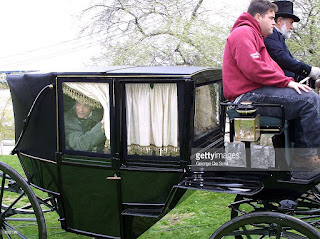
The passenger sees the world from a particular point of view. Separate, like a spectator, a world unfolds through the frame of the window. The framed scene outside is textualized, having a cinematic quality, as the passenger moves through the world without engaging with it in any other way than simply viewing it. There is a quality to this experience that prompts reflection, and it turns up time and again in literature. Towards the end of Anna Karenina Tolstoy uses this reflective experience to conjure up Anna's troubled state of mind. He sets the scene, "Sitting in the corner of the comfortable carriage, barely rocking on its resilient springs to the quick pace of the greys, again going over the events of the last few days, under the incessant clatter of the wheels and the quickly changing impressions of the open air, Anna saw her situation quite differently from the way it had seemed to her at her home." This introduces the reader to the reflective quality. What Anna thinks and feels is interspersed with the noise and movement of the carriage and the changing scene through the window, to the "incessant clatter of the wheels" and the "quickly changing impressions" outside. Her attention is drawn to the urban environment she is moving through "...she began to read the signboards. 'Office and Warehouse. Yes, I'll tell Dolly everything..." The signboards are particularly interesting conveying a familiar modern street scene. Later, on her return journey she looks at passers-by "'This one is pleased with himself,' she thought of a fat, red-cheeked gentleman who, as he drove by in the opposite direction, took her for an acquaintance and raised a shiny hat over his bald shiny head and then realized he was mistaken, 'He thought he knew me. And he knows me as little as anyone else in the world knows me'" Anna's mental state is captured in stream-of-consciousness writing that predates Mrs Dalloway by nearly fifty years - but it is the way in which Tolstoy juxtaposes the Moscow streets with her reflections that again captivates us. "Twitkin, Coiffeur...Je me fais coiffer par Twitkin...I'll tell him when he comes,' she thought and smiled. But at the same moment she remembered that she now had no one to tell anything funny to." Anna, as passenger, reads the world outside. Her grief only hits home when she thinks that she has no-one to share it with.

Sunday, February 27, 2022

Texting characters

In the study of writing we often overlook the fact that the most commonly spoken language in the world is Chinese. Using characters - a form of logographic writing, is the most obvious choice for a population of over 1.5 billion. And so associating literacy with the alphabet is both limiting and inaccurate. In fact, there is no better illustration of how political and economic power intersect with the development and propagation of writing than the character-based system of Chinese writing. The technologies of writing that developed with industrialisation from mid-nineteenth century telegraphy, the invention of the typewriter through to the personal computer have all favoured alphabetic writing. Jing Tsu's wonderful book Kingdom of Characters - A Tale of Obsession and Genius in Modern China traces the struggles of inventors and language reformers who have fought against alphabetic domination. The inequities of telegraph tariffs, the design challenge of Chinese language typewriters and the innovative development of the 'digital sinosphere' are carefully charted. Understanding that an educated Chinese speaker can recognise and reproduce somewhere between two and three thousand different characters, gives an impression of the magnitude of the challenge. The massive take up of mobile communication has resulted in a sort of compromise. It seems as if the majority now use pinyin (a modified alphabetic system) to write, supplemented by the software's predictive text which translates their message into characters. If I had one criticism of Jing Tsu's book it's that she doesn't give enough space to the complexity, innovation and variation of text messaging in Chinese - (and Japanese-) speaking communities. The prevalence of mobile instant messaging in these communities and the heavy use of WeChat and WhatsApp means that this is now an important site for semiotic work.

Saturday, February 05, 2022

Literacy practices in libraries


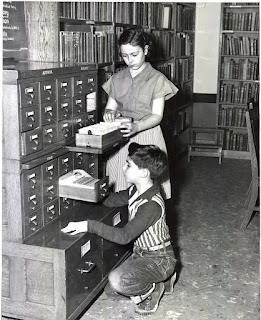
The public library was an important landmark in my childhood. It was in safe cycling distance, it was always warm, and it was the context for a ritualized, and mildly intimidating, interface with the adult world. I can clearly recall the heart-thumping point at which I would offer up my chosen books to be date stamped. I was in awe of the librarians who to my childish mind held the power to refuse me, point out my errors or even fine me. Invariably they were friendly, but they represented a powerful bureaucracy, an arm of local administration, that was strong and ought to be taken seriously. A successful visit to the library was rewarded by a subsequent rush of excitement - checking out was an experience like the end of a school day, clearing passport control or leaving a shop with just the toy you had in mind. But the pinch point at the library desk held all the power. It was the power that charged the anticipation as well as the release. The point where everything seemed to hang in the balance. With repeated visits and growing confidence I gradually became more and more interested in what happened at that point. The way in which a book's identifier - the book card, was deftly removed from a paper pouch glued to the endpapers, date stamped and then slipped with ease into my personal library card, snuggly held in alphabetical order in the custom-built wooden card index. As time went by I learnt more and more about the library system. Ways of classifying books, using card indexes and even requesting books that weren't in my particular branch. Home from my travels, in 1972, I was delighted to find that my mum had put in a request form for Herman Hesse's Magister Ludi - The Glass Bead Game. A postcard arrived at our home address on the 5th August that year with a hand franked two and half pence stamp. I know all this because the form dropped out of a book the other day. Evidently I used it as a bookmark and then forgot all about it. But the card is a fascinating record of a set of social and material literacy practices that were very much alive at the time, in libraries - and elsewhere too. The card - a reservation slip, a standard 6 x 3 inch postcard, serrated on one of its narrower edges at the point where it was detached from the counterfoil. One side with four pre-printed and indented rows of dots (for the address), the other with clearly labelled positions for the book's details - author, title, publisher and so on. The local branch name is ink-stamped on (oh, those ink stamps, so often the seals of officialdom!). All the specific details are captured in the distinctive flourish of my mother's handwriting. And one other feature that deserves a mention: two small holes and an impressed line in one corner, the scars of an earlier stapling, which tell something about a prior process of attachment. Such an efficient system, a marker of a sophisticated analogue literacy practice in its heyday, at a time when public libraries were generously funded. I could go on, but as I nostalgically turn this yellow-edged card in my hands I realise it's also charged with all those memories - returning home, my mother, reading Hesse, the smell of the public library, date stamps, stationery. It is slowly becoming other, its original and specific meaning is tucked into a card pocket in a much larger multidimensional catalogue. 

Saturday, December 04, 2021

Powerpoint fiction....anybody?


If you'd told me that the novel I was about to read contained over 60 pages of Powerpoint slides using some of the standard insert graphics you get, I think I'd change my mind and pick something else. Haven't we all had enough of Powerpoint? Surprisingly though, Jennifer Egan makes this device work so well in A Visit from the Goon Squad that I actually found myself really enjoying it. It's one of the many small triumphs in this Pulitzer Prize winner - a work that is packed full of insights and intrigues. I'd missed it when it won in 2011, but came to it late through the first chapter, Found Objects, which appeared as a short story in the New Yorker. It could be argued that the freestanding piece Found Objects has the edge. After all, it's tightly written and only hints at the broader landscape of events. In that sense it's more open for the reader. You can speculate all you like about Sasha, the focal character, about what is lost, found or stolen in her life and the fragmented dialogue with her therapist works very well in prompting this sort of perspective. I like the economy of the short story form for some of these reasons. I think George Saunders writes about making every word count in a short story - and that's why Found Objects works. Egan's stand alone tale raises all sorts of questions most of which are answered in the novel, so I suppose if you're the sort who hopes for some sort of closure in fiction you'd prefer A Visit from the Goon Squad; but both are very good. After several unsuccessful attempts to surf the wave of enthusiasm for Richard Powers, Egan has re-established my flagging confidence in American fiction.

Saturday, October 02, 2021

Going slow

It's been a while. Perhaps it seems as if I'm a blogger on a go-slow, but really it's just the sign of a changing relationship with what I write. Recently posting has become a way of rehearsing thoughts that later become more extended pieces of writing - but somehow or other I didn't need to do that for the book Stacking Stories (out soon!). So that's where my energies have gone, writing that. But I still like the blog. I like it for its continuity, or to be precise for the way it maps change. Colin and Michele once described it as a 'wunderkammer' in their typology of blogs, but it long since changed direction. Gradually it became more performative. I tried to capture where I'd been, what I was reading and what was getting published. In other words it surfed the breaking wave of self-promoting academic identity performance (yuk!). Even quite recent posts - up to and including this one - seem to draw attention to what I've been up to in my professional life (such as this!). But I've also tried to stay faithful to the notion of capturing the main gist of what I'm thinking about, what inspires me. And it perhaps goes without saying, writing in one way or another always seems to come to the top of the pile. Producing it, consuming it, the two inextricably woven together. Everyday notes, graffiti, literature, sky-writing, logos, subtitles, digital, non-digital - the lot. That has to be the next (the last?) major project, translating that fascination into something that is both insightful and readable. Will I get round to it? I think so, although my current fascination with the Uruguayan writer Mario Levrero might be trying to tell me something. His short book Empty Words and the bible-sized tome The Luminous Novel are masterpieces in exploring the many ways you can avoid writing what you really want to write - or, how that avoidance can itself become a thing of fascination. Following that model I should probably post regularly about how I'm not getting round to starting work on that substantive topic. But I don't want to make a promise that I don't think I could keep.

Friday, June 25, 2021

Works in progress

I've come to think of all work as work in progress. A busy couple of months have seen me mulling over what things in the literacy world look like after lockdown, and several things are out there already including this bulletin and this contribution to a UKLA symposium. At the same time I've been working for the Journal of Early Childhood Literacy on our pro-Black initiative and wanted to show my appreciation to the wonderful Susi Long who has been convening an important group. One of the most significant aspects of this discussion for me is the idea that returning to normal is not a viable option if normal involves perpetuating old injustices and inequalities. Bettina Love is an uncompromising and forthright campaigner for this perspective, and of course she's right. I'm not yet sure how my writing intersects with this - that too is work in progress. In the mean time I'm helping to bring an old project to print, a project that operationalises the stacking stories idea that Cathy and I have been working on for a number of years. There's a lovely bit in this collaborative work that evokes rich memories for anyone who has ever taught. 'Most teachers can relate to the experience of arriving in a classroom, perhaps at the start of a school year - four walls, a cupboard if you're lucky, and a collection of desks and chairs - of rooting around in store rooms and drawers, sifting though resources of variable age and quality, shunting furniture about to create pleasant spaces or groupings, and playing with texture and colour for a less institutional feel.' Some of the resources you find in dusty cupboards and dingy stock rooms have their own histories. In the second school I taught in I found a class set of books called 'An Introduction to the King's English'. Which king, I wondered? Could that be George V? The book was published in 1932! This certainly wasn't work in progress; it was a museum piece. As a seasonal gesture, one of the book's colour plates is shown above. It's entitled 'At the Seaside' and it shows an English holiday scene - an idealised portrait of family life between the wars. Dad reads a broadsheet and smokes a pipe whilst mum keeps an eye on the children making a sandcastle. The page opposite informs us that dad is Mr Jackson, mum is Mrs Jackson and the children are Tom and Kate. Students of the King's English practice sentences rehearsing words like 'father', 'mother', 'sister' and 'children'. It perhaps goes without saying that not all families looked like that in Hyson Green in the 1970s.

Friday, April 30, 2021

Fake profiles

The Pinterest algorithm got to know me pretty quickly. I'm not sure if it knows when and where I was born but it must be narrowing it down. The app feeds me old photographs of where I grew up, some are even in the black and white of old memory. I spend time on these images. Then I get poster art from the sixties and photos of the bands I used to follow back then. Pinterest serves me up with ideas for creative projects. Card models to make with the grandchildren and, more annoyingly, it shows me a brand of slippers I quite like. So it's not exactly got a full or nuanced idea of me and my interests but its still uncanny what Pinterest learns and knows about, how it gives me more of what I like. It's an example of how the internet has captured desire at the level of immediacy. You like this it says, emphatically. And it seems to say it before you've had time to think about it. Yes, that fast, particularly with push notifications. Speed is both its power and its promise. Faster processors, faster broadband. See-it like-it quickly converts into buy-it. See-it, like-it, buy-it simply produces frictionless consumerism. No frustration, no time for a (second) thought, just get it, delivered to your doorstep. It's tempting to experiment with a counter profile, to search for things that don't (p)interest you, things that you don't like or don't want to buy, to feign interest in different places, different people, different things. If I maintained a factitious interest in say Frank Sinatra, in old Amsterdam, in pre-Raphaelite painting - whatever, how might that change my online experience? Would Pinterest get confused or think my account had been hacked? I doubt it. Would it worry about my mental health? I doubt that, too. Or would it continue to serve up the things I'm not interested in? Or worse still, might I start to get interested in what I'm not interested in? Probably, but really why would I want that? Fake profiles aren't really that interesting in the first place.

Thursday, April 22, 2021

Three short pieces

One. Events pass through novelty and nowness to become history, obviously. I'm thinking of when doing things or going places one perhaps registers either to one's self or whoever you're with, that you're here. This is happening, I'm in Santiago, Singapore, Cyprus or some other place, doing this and conscious of doing it, too. And then looking back on it, that was life, that was what happened, the novelty or uniqueness flattening off, smoothing out. It settles down into the narrative of a life. Not only is it unrepeatable, after all we already knew that didn't we? but it settles down into ordinariness in a way we didn't quite expect somehow. That was what we did. We went to different places and did different things. it was all gradually absorbed like sugar into the sum total of experience. What at the time seemed remarkable or unusual gradually became part of the texture of things. There's a sort of doubling effect, events are at the same time both very special and rather ordinary. But yes, we did these things. Didn't we? Two. Variations on the blind man's cane. Husserl or Heidegger? No actually Merleau-Ponty: 'The blind man's stick has ceased to become an object for him'. The cane has become an extension of the senses. The hammer (probably Heidegger?) recedes as it becomes an everyday tool. We only realise how invisible such things have become when they go wrong, break. The cane snaps. The head falls off the hammer. We miss the nail and strike our thumb instead. So much of Pandemic experience has been like this. The head fell off the hammer of our lives. The everyday gets suspended, at least for a while. We quickly call conditions the new normal and then slowly they become normalized. So normal we stop noticing them (face masks). A different sense of the everyday arises. We get accustomed to it, slowly forgetting how things were or romanticising our memory of how they were. We lockdown. And then lockdown eases and the way things scurry back to normality is unsettling too. Our memories are short, we are quick to adapt, in fact adaptation is our strength. Three. Blind spots, literally blind spots. The bits we don't see we quickly fill in. Our reality like rickety Super-8 footage, badly spliced, jump cut, ill-matched film stock with different colour tones, sometimes out of focus, the sound out of sync. Is it really like that, reality? Yes, all of that spliced in with random bits of information and all slicked over with the gel of consciousness. Consciousness pulling it altogether, imposing pattern, predictability, superimposing meaning. Making sense out of nonsense. Stitching it together, smoothing it over always making it normal. That was life. It was what we did.

Wednesday, March 17, 2021

A hall of mirrors

Narrative fiction has become an important site for exploring interiority and the complexities of self-reflection. The conscious separation of author from narrator always present in fiction opens possibilities that twentieth century writers have been keen to exploit. Think of the unbelievable narrator of 'The Good Soldier' or the pathological one that tells us all about 'Lolita'. Stefan Zweig is a master of this art of separation. In his short stories and novellas he taps into psychological revelations by creating a series of layers of narration. Sometimes in this hall of mirrors we wonder who is who. In 'Fantastic Night', for instance, the narrator opens a sealed packet that contains the story of a Baron who has just died. The Baron's tale is something of an epiphany, but the way in which it is told allows for a forensic exploration of the self. Initially, or so it seems, the Baron is as hesitant about his writing abilities as he is about himself - but, of course, this is all beautifully written by Zweig. Take this, for example, 'But once more I feel I must pause, for yet again, and with some alarm, I become aware of the double-edged ambiguity of a single word.' Who is it that is really experiencing this ambiguity we wonder? Is it our Narrator, the Baron, or the author himself? The reader is destabilised. And a couple of sentences later, this sense of separation is extended further 'I have just written "I" and said that I took a cab at noon on the 7th of June 1913. But the word itself is not really straightforward....'. Well, no, it certainly isn't - however you think about it! He goes on '...I am by no means still the "I" of that time, that 7th of June, although only four months have passed since that day, although I live in the apartment of that former "I" and write at his desk, with his pen, and with his own hand'. All this is elegantly crafted - but we can't help but think of Zweig himself, sitting at his desk in Vienna, or wherever he was in 1922, writing about pretending to be a man who has opened a package containing the story of someone who has experienced a dramatic shift in his sense of self. Our attention is drawn to what writing is and what writing can do, at that same time as asking us who we really are. In this sense I can see parallels with Foucault's extended commentary on Velazquez's 'Las Meninas'. Zweig's 'Fantastic Night' disrupts our certainties about the world as well as being an excellent storyteller.

Thursday, March 11, 2021

Back to school

On Monday children in England returned to their classrooms for the first time since the 2021 lockdown was introduced. I knew that because I heard them clattering past my house on their way to school. There was an exuberant atmosphere, much swinging of bags, slamming of doors and rattling of railings. And there were voices, too. Some subdued, some loud and unruly - but it all reminded me of how these diverse energies are so often overlooked, reined in and brought to serve adult purposes. In this I find myself in sympathy with the work of some scholars and researchers who wish to dislodge reductive accounts of meaning making and even to challenge reductive ideas about what children, learning and school are and could be. Yes, on Monday there was an almost palpable sense of relief. Children were back in school, they were back together, and the event underlined my understanding of how children thrive in each others company as well as through the sensitive guidance of adults. Of course they may also have been some reluctance, let's not forget that there will have been children who were less enthralled by the prospect of school, children who were not excited, were worried, anxious, or just uncertain. But all told, the crucially important function of public education is that it provides spaces for children to be together - not only classrooms and other places designed for learning, but also outside, at the school gate, in playgrounds as well as in corridors and doorways. Such spaces tend to be less regulated, but they are the spaces in which the energy of childhood culture thrives, where children play and interact, often under the watchful eye of adults but not usually through their explicit direction. In this way schools - and primary schools in particular, have always offered so much more than the learning on offer. Unsurprisingly this is a large part of what children will have missed. Parents and children have been thrown back on their own resources these past months, often heroically supported by teachers who have worked under extremely difficult circumstances to provide learning opportunities remotely. All told, being back together feels like something worth celebrating. That said, I don't subscribe to the notion that children are now massively behind, or that they should necessarily be subjected to additional days and hours of study. Those arguments seem to come from the outdated view that children are like empty tanks to be topped up daily with fresh content, a view often held by those who mistake the arbitrary construction of age-related norms for objective truth. If anything, we need something more like the summer play schemes which used to be modestly funded by local government. The school premises were vacant, the curriculum was put to sleep and the normal rules of engagement could be re-negotiated. Volunteer teachers and parents worked informally together to organise games, creative activities and outings for children of all ages. Above all children could be children together in a loosely structured permissive context. What better as an economical and humane approach to healing the scars of lockdown?