Showing posts with label reading. Show all posts
Thursday, April 03, 2025
Reading with the algorithm
Georgi Gospodinov has an enviable light touch as a writer. Reading his novel Time Shelter I was delighted by his description of temporary havens from years gone by - havens initially designed as a comfort for those suffering from dementia. In Gospodinov's fictional world the idea becomes so popular and so contagious that it extends to whole cities and then eventually whole countries. Under referendum-like conditions, citizens then vote to remain or return to earlier times. It's an engaging and thought-provoking political satire. But it also encourages deeper reflection on personal and cultural memory, on identity and the meanings of nationality. After I'd put Time Shelter down almost straight away I picked up Sanak Hiiragi's Lantern of Lost Memories, which is a very different sort of book, a different kind of writing, but equally engaging in its own way. The coincidence of choosing two novels that explored the theme of time and memory struck me as odd, despite the fact that it's a common literary trope. Of course you could develop a whole reading list on that theme - one that for me would have to include Proust, Powell's Dance to the Music of Time, and Yoko Agawa's charming novella The Housekeeper and the Professor. It's not surprising that time and the novel is a well-worn theme, and scholarship still looks back to Bakhtin's essays on the subject for inspiration. Yet despite knowing that this is a recurrent trope, it surprised me to read two such well-matched books. It was only later when I remembered that I'd looked for Time Shelter on Amazon, shortly after reading a review of it in the London Review of Books. It was the Amazon algorithm that had recommended the Hiiragi book to me. Thank you Amazon, but it pulled me up short. I'm continually realising that I don't enjoy as much agency as I think I do. I'm under the influence. Of course there's upbringing and education. In fact there's all those forces that formed me as a reader, and a particular kind of reader at that. I'm influenced by all sorts of social, cultural and political forces that manifest in all sorts of ways (taking out a subscription to the London Review of Books is just one small example of this). I'm influenced to follow up on Gospodinov, and then I'm influenced by the algorithm! All in all I'm caught up in, influenced or even produced by, a condensation of heterogeneous forces, algorithms included. We know how algorithms influence us, how they nudge us in different directions, influence what we think is important - what we buy, where we go and how we get there as well as what we watch and what we read. I used to argue strongly for the importance of having a community of readers - peers, colleagues, friends and family - in fact all of the wider social network is worth considering. And these are still so important, but there are wider forces at play, too. Now technologies are beginning to play an important role as well. Perhaps non-human factors have always been there, but the development of algorithms and AI signals an enhanced technological participation in how we experience the world. I read with the algorithm.
Saturday, August 10, 2024
Monitoring reading
I've been reading fiction throughout my life and I seem to have developed a number of strategies for evaluating - or perhaps it might be better to say monitoring - what I'm reading as I go along. I don't think they'd have universal appeal or that they might just simply work for anyone without any modification, but they work well enough for me and just because of that they may be worth sharing. So here we go. First of all I want to be won over by a writer, and I want that to happen fairly quickly - in the first couple of pages at least. I want to enter the world of the writer. Nothing too flashy but just enough to make me want to carry on. Maybe it's a gentle hint of what might follow, a voice that appeals, a setting or interaction that intrigues me. Then after the start I tend to apply what I call the 100 page rule. At this point, do I understand what's going on? Do I feel sufficiently hooked in to continue? Do I want to know what happens next? Can I get some sort of purchase on the different characters - can I remember who they are? In the past I've just abandoned what I'm reading if it fails the 100 page rule. Nowadays I'm a little more forgiving and may persevere for a while. And then next, about halfway through, regardless of the length of the thing it's the halfway point - I'm asking myself 'Is it worth carrying on?' or have I just had enough? Life is short enough. My default tendency is to give a writer the benefit of the doubt. I know enough about writing to know how much effort is required and just how hard it is to say what you want to and how easy it is to fall short. Writers should be given the benefit of the doubt. But this halfway point is very significant to me. It usually helps me to distinguish between the very good and what's good enough. Of course, you never really know until the end - that's just the way it is. By way of example, at the moment I'm reading Colm Tobin's The Blackwater Lightship. The first couple of pages are excellent. That's definitely a tick, then. By page 100 I note that I'm completely absorbed. It's certainly got more to give. At the halfway mark I have Declan, a central character, at his grandmother's bleak abode, dying of AIDs. Present, a couple of friends and various members of his fractious family. Is it worth continuing? Well I'm not put off, but neither can I see much in terms of resolution for the family. How will it end? Declan's got a one way ticket - there can be no surprises there. Sad or tragic though it may be, he will die. Things hang in the balance but nothing much can change by the logic of the book's own narrative. Yet the second half manages to open up the back stories of the characters in a way that is so much more plausible than other two parters (Lauren Groff's Fates and Furies would be an example). This gives Tobin's novel additional depth and nuance. It looks like there won't be an easy settlement but as Declan's health becomes progressively worse, the three generations of women move closer to understanding one another. It's as close to a resolution as we're going to get and the writing is very good. There's a small dazzling window when Tobin's narrator captures Declan's sister's despair: 'Imaginings and resonances and pain and small longings and prejudices. They meant nothing against the resolute hardness of the sea ....It might have been better, she felt, if there had never been people, if this turning of the world, and the glittering of the sea, and the moving breeze happened without witness, without anyone feeling, or remembering, or dying, or trying to love.' Bleak, but blindingly good - I guess that's what Tobin intended.
Wednesday, March 13, 2024
The reading habit
My reading habit is almost as bad as my writing habit. In fact it may be worse. It costs more for a start and it has the added disadvantage of cluttering the place up with its remnants - books. I usually read a couple of them a week. Sometimes non-fiction but most of the time these days fiction. A long term ambition has been to make some sort of reference to what I read here, on this blog. But that's too much pressure. And the trouble is that I don't quite know what I think about a piece of writing until sometime afterwards and by then I've started on something else and then I forget what I thought before. My clearest thoughts about my reading usually begin to crystallise out as I'm reading, but somehow it seems wrong to write them down before I've finished the whole thing. Wrong and probably unfair. So my first impressions of Checkout 19 was that it was a rather clumsy attempt to claim cultural capital with all those references to her reading. That was until it started to impress me with its deep interiority and its own grappling with the writing/reading process. But all that fell away when I started to admire the jaw-dropping way that it would lurch into full-blown fantasy. Still when I reached the end it had become something else again, another kind of story. Bennet's book is unsettling. It's hard to compare it with anything else and perhaps that's why I can't quite bring myself to say I enjoyed it. OK, it shares some common features with something like Amy Liptrot's The Outrun, but then that's a more conventional form, a memoir with an explicit trajectory, a memoir that dwells directly on its central character and context. On some occasions when I read I just get absorbed in technique and with Checkout 19 I found myself turning back the pages on a couple of occasions to find out how skilfully Claire-Louise Bennett got us from A to B. Quite remarkable in itself. I turn the corner of the page as if I'll go back again which is something I rarely do, because by then I'm on to the next thing which in this case is Drive Your Plow Over the Bones of the Dead.
Saturday, August 26, 2023
Thinking about Yoko Ogawa
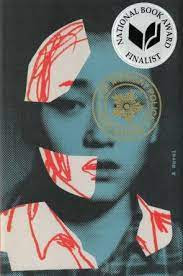
I read The Memory Police about a year ago and I thought it was so good that I should post something about it. I put the book down on the deep windowsill in my study which functions a bit like an in-tray. That's where I put things I'm working on, or things I need to attend to - work, parking fines, speeding tickets, tax notices and so on. For a while, each morning, I'd look at it and think about what I might write, but I couldn't come up with anything. Gradually things began to accumulate around it, and there were more pressing things to do, like my own writing for instance. Soon it was hidden underneath other stuff, well after the fines were paid and the tax notices filed away. But now there were papers to review, drafts to look over - maybe a new parking fine to pay or to appeal against, life goes on. It would be a fiction to I claim that I forgot about The Memory Police. It just got buried. It got buried because I couldn't work out what I wanted to say about it. Occasionally it would come to light again as I sorted through the mess of things on the windowsill. And if I tidied up, as I do occasionally, there it was - something I wanted to do, and I'd promise myself that I'd write something about it. But I didn't. After some time, maybe six months or so, I realised that I wasn't going to get round to it and that it would be better just to forget it altogether. It got shelved, somewhere or other. I gave up. The title stayed with me though, and from time to time I would mention the book to someone or just conjure up the strange atmosphere that it created for me. And then last week, when I found myself in a bookshop looking for something to read, I remembered it, but I couldn't think of the name of the Japanese author who wrote it. I felt a bit under pressure because I wasn't sure whether I'd parked my car illegally, but I googled the title anyway and there it was - The Memory Police by Yoko Ogawa. The bookshop had a couple of shelves that featured Japanese writers, and that's what had prompted my memory. I quickly turned up three titles by Ogawa and chose The Housekeeper and the Professor. I'm about half way through it at the moment and it confirms my view that Ogawa is a brilliant writer. It seems good to post about it now and I certainly don't want it to sit on the windowsill like The Memory Police did. It's written in the same spare prose style, conjuring up this rather strange world, not unlike our own but different, of course, unusual perhaps. 'Haunting', I think it says on the dust jacket. But what does that actually mean? I have no idea, nevertheless it is - haunting, unusual, atmospheric. The reader is drawn into this very particular sort of world, detailed but impressionistic - both at the same time. If I said it was a bit like ink wash, I hope it doesn't sound as if I'm looking at it through the eyes of a romantic orientalist. It's like ink wash because it's beautiful, delicate and at the same time slightly out of focus. Blurred. There's craft and precision; every word contributes to the whole. In this sense, I'm reminded of Small Things Like These, in fact everything by Claire Keegan, although the result couldn't be more different. And just like The Memory Police, The Housekeeper and the Professor is about remembering and forgetting although so far, at least, there isn't the same feeling of oppression, the same political undertow that haunts the pages of The Memory Police. Even though I haven't finished reading it yet, it's a real achievement, and it probably won't ever sit on the deep windowsill underneath the random stuff that accumulates there.
Sunday, November 20, 2022
Writing migration
Helping us to reflect on our particular position in the wider sweep of social and cultural life is something that literature does well. I don't mean that all literature does or indeed should do that, but it is often the case. It was a pre-occupation of nineteenth century novelists, who often constructed dynamic localised narratives against the backdrop of social and political change. The parochial or provincial drama played out on a larger canvas. Flaubert's Madame Bovary is subtitled 'provincial lives'; Eliot's Middlemarch 'a study of provincial life'. Nowadays it doesn't get spelt out in the same way. Go, Went, Gone could be about anything, from the title, but what you get it is a chilling blast of what it might be like to be an illegal migrant in modern day Europe. Jenny Erpenbeck's novel centres on a recently retired professor and his encounters with a group of African migrants in Berlin. Pause for thought. What is it with these recently retired professor types? Is there an offer on at the Writers'R'Us character warehouse? I'd only just recently retired the recently retired professor in Orkney for heaven's sake! They're full of ideas, and good intentions, not quite sure what to do with themselves, well-read and disturbingly adrift in their cardigans. Do they themselves represent something - tell us something about ourselves, our comfortable, rational, cloistered, male ineffectiveness, perhaps? In stark contrast the migrants in Erpenbeck have each in their own way become ambiguous, hurt or in some sense erased. They live in limbo. When Erpenbeck isn't being pedagogical - feeding us snippets about sub-Saharan politics, religion, culture and conflict, she's being rather clever. The retired professor is a character formed in pre-unification Germany and this adds depth. So here, identity, nationality, and the effects of political extremism create a shadowy backdrop to the story. What's clever, is that Erpenbeck doesn't have to tell us all this, she just gestures towards it. She doesn't need to tell us because we know it. We are her readers, after all, not the migrants that she writes about. And this is the problematic bit of Go, Went, Gone - even as she is helping us to empathise with the lives, the stories and the hardships of the migrants she is objectifying them, she is othering them, at just the point at which she's trying not to. I think this is partly a structural problem. She zooms in on the main characters one by one and gives each their individual story. It's almost as if she had found a similar group of migrants and interviewed them. You end up with something like a collection of pen portraits. But Erpenbeck is too sophisticated a writer to hang her story on this alone. Richard, that's the name of our retired professor - the same as the retired professor in Orkney, unfortunately - Richard has his own story, his own suffering, and this is partially resolved towards the end of the novel in a way that the plight of the migrants isn't - and thank goodness, because that's true to life. There's also a clever metaphor at work throughout the novel - something about surfaces, and what's beneath the surface. A quote at the beginning informs us that 'surfaces were invented by the devil'. The novel ends with Richard saying 'the things I can endure are only just the surface of what I can't possibly endure'. But what exactly is it about surfaces, when staying on the surface seems so vital in some of the dangerous journeys across the Mediterranean that Erpenbeck also writes about? Go, Went, Gone will stay with me because it's a story about nationality and migration in contemporary Europe, and it's a story that should be told more often.
Wednesday, March 17, 2021
A hall of mirrors
Narrative fiction has become an important site for exploring interiority and the complexities of self-reflection. The conscious separation of author from narrator always present in fiction opens possibilities that twentieth century writers have been keen to exploit. Think of the unbelievable narrator of 'The Good Soldier' or the pathological one that tells us all about 'Lolita'. Stefan Zweig is a master of this art of separation. In his short stories and novellas he taps into psychological revelations by creating a series of layers of narration. Sometimes in this hall of mirrors we wonder who is who. In 'Fantastic Night', for instance, the narrator opens a sealed packet that contains the story of a Baron who has just died. The Baron's tale is something of an epiphany, but the way in which it is told allows for a forensic exploration of the self. Initially, or so it seems, the Baron is as hesitant about his writing abilities as he is about himself - but, of course, this is all beautifully written by Zweig. Take this, for example, 'But once more I feel I must pause, for yet again, and with some alarm, I become aware of the double-edged ambiguity of a single word.' Who is it that is really experiencing this ambiguity we wonder? Is it our Narrator, the Baron, or the author himself? The reader is destabilised. And a couple of sentences later, this sense of separation is extended further 'I have just written "I" and said that I took a cab at noon on the 7th of June 1913. But the word itself is not really straightforward....'. Well, no, it certainly isn't - however you think about it! He goes on '...I am by no means still the "I" of that time, that 7th of June, although only four months have passed since that day, although I live in the apartment of that former "I" and write at his desk, with his pen, and with his own hand'. All this is elegantly crafted - but we can't help but think of Zweig himself, sitting at his desk in Vienna, or wherever he was in 1922, writing about pretending to be a man who has opened a package containing the story of someone who has experienced a dramatic shift in his sense of self. Our attention is drawn to what writing is and what writing can do, at that same time as asking us who we really are. In this sense I can see parallels with Foucault's extended commentary on Velazquez's 'Las Meninas'. Zweig's 'Fantastic Night' disrupts our certainties about the world as well as being an excellent storyteller.
Sunday, March 11, 2018
Synthetic reading
Sometime in the mid '60s my father discovered drip-dry shirts. They were one of the many products of the modern world; a world in which science and technology seemed to know no bounds. They released my mother, at least temporarily, from the chore of ironing, because that's how the domestic economy was for them back then. The shirts were hung, rather unceremoniously, over the bath to drip and dry, and that could take rather a long time in the days before central heating. But they were something different, and they were, my father explained, man-made (not that other shirts weren't), and they were artificial, they were synthetic. And therein lay their downfall. They were still a little creased after drying and what's more they didn't perform particularly well when it, or should I say he, heated up, which happened on regular occasions. Soon he'd had enough of what he called 'that synthetic rubbish', and as a result, synthetic, the very word, became associated in my impressionable mind with the artificial, or the inauthentic - something rather inferior that imitated the real thing but clearly wasn't. So now, when I see that word synthetic associated with reading teaching, I can't help but think that the obsession with phonics-above-all, and particularly phonics taught in a very specific way kind of way, is just that - an artificial product. To cling to that particular dogma, because I'm afraid that's what it is, seems rather like exhuming those shirts from the '60s, hanging them up to dry without central heating and somehow conning yourself into thinking that they perform better than any others. They don't.
Friday, February 09, 2018
Immersive reading
I think I may have coined the term 'immersive reading' in an attempt to draw parallels between the experience of dwelling in the imaginary world of gameplay and the more traditional experience of reading print fiction. It still works for me, and I imagine a continuum that runs from lightweight to immersive engagement. Not that immersive is in anyway better, it's just a different sort of experience, and one that may, on occasions, be appropriate. Having just spent 3 weeks in India, and a considerable amount of that time on very long train journeys, immersive reading was certainly appealing. I'd taken with me a substantial tome - what you might call a European classic - slow moving and highly descriptive. That turned out to be quite a challenge, partly because of frequent disruptions to my reading, but also because the narrative context (the collapse of the Austro-Hungarian Empire) seemed so far removed from the dust, heat and general mayhem of the sub-continent rolling past my open window. Somehow or other there was a dissonance between the jolting carriages, the clanking of couplings and the click-clacking of the train and the slow, dignified conduct of the story's characters. I had to work in order to conjure this faraway place, despite the fact that it was so meticulously described. I returned home with a few chapters to go, and this seems an altogether more fitting context for an immersive reading - at least of this particular book. I now feel I've missed out! Thinking about this, I was reminded of how I'd become completely hooked when I picked up a copy of Panjak Mishra's novel 'The Romantics' where I was staying in Kathmandu a few years ago. It just seemed to fit my mood. Context is a strange thing. Clearly there are no golden rules; if there were, stories would never travel, but nevertheless immersion appears to be a delicate experience and subject to all sorts of complex factors.
Subscribe to:
Posts (Atom)


