Thursday, October 15, 2015
New mobile literacies
I hope there will be a good audience for my talk on Sunday. It's called 'New Mobile Literacies' and here's a bit of a taster. ....Mobility is one of those signature themes of early 21st Century living. On a macro scale we are preoccupied with the movement of people, whether it takes the form of the ‘migrant crisis’ that has tested Europe’s ability to act with humanity, the contagion and spread of Ebola that has troubled the medical community, illegal border crossings and their generational legacy, or the carbon footprint left by mass tourism and big business. Within liberal democracies we agonise about social mobility, about the rising gap between rich and poor. At a local level about the ability of the transport infrastructure to get people from A to B, and with our growing sensitivity to disability, and ageing, how access and mobility can be enhanced. None of these are new to the 21st Century, but a concept of ‘mobilities’ sensitizes us to how we put ourselves about, how we get around, who moves where, and how. So how do any of these instances of mobility connect with our idea of literacies? Perhaps the answer lies in something that has always intrigued me, the other dictionary definition of communication. It’s the second in my Concise Oxford, in which communication is described as ‘a means of connecting different places, such as a door, passage, road or railway’. Then communication, by whichever definition, always implies a sort of movement, whether that is a movement of people, things or ideas. Yes, a mobility. And if this holds true we could argue that all literacies are in some way mobile. If that is the case, no need to go on, except of course, for the fact that we see rather a lot of people wandering about holding these things, these rectangular objects of different sizes – talking to them, tapping them, stroking them as if they were pets. Maybe you do the same, temporarily stashing a phone in your back pocket as you walk along or rummaging around in the dark recesses of a bag to locate the pulsing feel of an incoming call?
Saturday, October 10, 2015
Enchanted
In a current writing project we've been exploring Bennet's notion of enchantment - eloquently developed in her book The Enchantment of Modern Life (2001). Bennet has become a bit of an academic superstar, and most people seem to rave about Vibrant Matter which apart having a cover design to die for is, in my humble opinion, not nearly so good. Although the argument about a politic of enchantment is hard to sustain, it can work. In an educational context, I think we may have resolved it adequately if somewhat simply. Here I'll just put it in a sort of aphorism - better to be enchanted by the inventiveness of children than fall under the spell of a stultifying curriculum. It all stems from a simple question. How can we, as educators work with teachers who are labouring under the dead hand of a one-size-fits-all lockstep curriculum driven by a draconian regime of accountability? To me it seems that most teachers are attracted to the profession because they are interested and inspired by children, by watching them play and learn, and being with them and not by measuring their progress against arbitrary measures. If we can re-orientate towards some basic professional values, or become re-enchanted by the actions and activity of young children we unlock what Bennet would call 'virtual possibilities'.
Sunday, August 30, 2015
Children reading on tablets
Last week the Guardian newspaper carried a well-researched piece on the possible effects of tablets on children's reading. Stuart Dredge's piece rehearses the different points of view with some balance and it certainly would make a useful discussion prompt for students. For me three issues come to the fore: 1. How we think about reading 2. What we think about the relationship between print and narrative 3. How we think about screen time. So first, if we think that reading involves some sort of universal, unchanging set of skills and behaviours that somehow float free from the people that use them - in other words from culture and society, the changing technologies of reading are going to come as a bit of a shock. We won't be able to cope with new skills, new attitudes or new ways of knowing, and we'll bemoan the demise of the old ones. We'll worry that under some conditions we'll learn more from YouTube than from a cookery book, for example. We'll worry that our reading has become superficial. And we'll worry about the advance of abbreviated conversational writing in text messaging or short-form expression on Twitter. But if we see reading as an evolving meaning making system that changes with social conditions, with culture, with technology, with and through the people that use it, then we'll see the emergence of new practices, often overlying old practices, with curiosity and an open mind. Sure, we may still see the demise of valued practices, but that, as they say, is the way of the world. Which brings me to the second issue. If we remain strongly invested in the virtues of print fiction, we'll worry about the popularity of movies, the advance of video games, and some of the directions taken by the book trade. Delightful as print narrative can be, it has achieved an almost unassailable position with some of our cultural elite. Humans love narrative. And you find narrative whereever you find people - in their oral stories, anecdotes, and epic poems, as well as in their play, their theatre, their movies and their games. Narrative has a very special magic and print books can have us spellbound, but for me the importance of narrative over-rides the specifics of a particular medium, and screens carry great narratives (as well as average ones). But can we have too much screen time? This is the worry underlying the final issue. Well, I must say I'm concerned by the way this term 'screen time' has slowly crept up on us. What exactly does it mean? Does it include the time I spend getting cash out of ATMs, reading information at travel hubs, watching scoreboards or electronic hoardings? And what about those flickering screens I walk past in town, the TVs on in the background? If screens were harmful, then most academics would be dead by now, because their usage must be as high as anybody's! If there's any suggestion of harm from the glare of those flickering screens then those high tech companies better get on to it now - after all they wouldn't want anything to dint their sales.
Sunday, July 19, 2015
iPadology
Observational studies of children working on desktop computers sometimes drew our attention to how those particular material conditions established a new sort of physical discipline. In schools early digital literacy was predominantly a sedentary desk work with the textual display on the vertical axis. In contrast navigation, control and transcription was on the horizontal plane. As in traditional reading and writing students were seat bound but what had changed was the direction of the gaze as well as the work of the hands. So the move from page to screen involved, amongst many other things, new bodily engagements. The most challenging of these often turned out to be the keyboard and mouse operations. Young hands had to learn how to do new things - yet, perhaps unsurprising these new forms of dexterity were quickly mastered. The more recent adoption of tablet computers shifts this yet again. As always literacy practices have an embodied dimension, but now new literacies are more like the old ones in the sense that the text is portable. More or less the same weight as a print book, or notebook, the tablet has portability in its favour. And touchscreen control involves a close physical interweaving of production and consumption. In common with earlier practices this literacy involves the work of the hands, but those movements are new all over again. New for young hands, but quickly learnt. And as with other technological innovations the name of the inventor or the brand has become interchangeable with the thing itself. We tended to prefer to use the name of the Hungarian inventor 'Biro' to refer to the ballpoint pen, and like substituting the verb 'google' for looking something up, 'iPad' has come to stand for all things tablet - even though tablet computers preceded this particular product. It's as if literacies have become mobile all over again. This just could mean something new in learning situations. iPads are unlikely to blow away in a breeze, writing on them is free from blots, but you can still drop them, crack the screen or run out of power. Same same, different different!
Saturday, June 13, 2015
Professor Hashtag @GuyMerchant
If anyone was in any doubt that written language is changing, or that children are active members of writing communities they need look no further than this story on the use of hashtags in their work. Asked by the BBC to comment on this phenomenon I was unremittingly positive, although as you'll see I refused to be drawn on predicting the shelf life of the hashtag! The origins of the symbol itself are interesting, and you can trace its history as a way of denoting a number through to its adoption by early programmers. Bringing the hash symbol to the practice of tagging (from meta tags) has been an interesting user-driven innovation. Hashtags weren't written into Twitter, they have just become a useful convention. Of course it makes your tweet, or your post on Instagram, searchable and also helps to define the audience, topic or conversation you are addressing. There are many other uses, too and I'm sure linguists have coded the various functions that hashtags perform. For me it's their adoption into language that is intriguing, and like @GuyMerchant the hashtag is primarily a written form. But new writing features do seem to enter spoken language, too. It's not uncommon to hear people saying 'lol'. And 'confused.com' has become quite popular. I've also recently witnessed a four year old asking 'go to the park hashtag orange slide?'. We live in interesting times!
Thursday, May 21, 2015
Digital literacy in the classroom
In a current piece of writing we've been asking why an expansive view of new literacies is hard to realise in practice. We note that some innovative teachers are able to incorporate 21st Century literacies in their classroom practice whilst others find it hard. Part of that difficulty comes from competing curriculum priorities, the extensive blocking of websites, and conflicting messages about the role of technology in learning. For example, media discourses continue to polarise opinion, reporting here on the positive influence of banning mobiles in school, here on the negative effects of video gaming and here on girls' online reading. As always the studies are more nuanced than the headlines suggest, but the media reports still bolster dichotomous viewpoints. In the face of this it is timely to consider something a bit more sophisticated than the old 'is technology good or bad' question. We should be asking how particular digital literacy practices relate to activity, interaction and engagement, and then how they might benefit (or disadvantage) their users. New literacies won't go away - and anyway we're rather powerless to check their advance, but we can as educators help in promoting efficacious uses of hardware and software.
Saturday, May 09, 2015
Sacrifice and punish
In the wake of an unexpected election result, three of our political leaders have resigned, sacrificing themselves in order to shoulder what must be seen as collective failure. Resignation from public office has a respectable history as a ritual, and it is one in which the individual takes responsibility for collective failure. It could be read as an extension of the techno-politics of punishment, a condition in which an individual must ultimately and symbolically be held accountable. In this morning's newspaper the report sits cheek by jowl with the story of a public execution. The execution in Guild Wars 2 of the avatar of a player who had been guilty of cheating. DarkSide, the avatar in question, was executed in front of an audience of 325,000, symbolically punished by AreaNet to underline that cheats will not be tolerated (perhaps also to attract interest in Guild Wars 2). In a mediascape in which more alarming videos of real-world execution have been circulating the intermingling of real, virtual and symbolic acts of punishment and sacrifice is uncanny. Uncanny because of their multistability - the individual accepts, or is forced to accept responsibility, but the crime and the authority to punish is ambiguous. Throughout history the techno-politics of punishment are in part a spectator sport. We feel a certain sense of closure when an ineffectual leader falls on his sword, a sense of outrage when an innocent journalist is executed by militants, and maybe we are unsure what to feel about DarkSide.
Sunday, March 08, 2015
Discourse/methodology
Discourse and Digital Practices - the outcome of a lively symposium in Hong Kong, organised by Rodney Jones and his colleagues, is out now in the UK. In my chapter, I took some of the iPad data (also published here), and tried to relate my analytical methods to the more familiar practices of discourse analysis. Whether or not I succeed in doing this is, of course, for readers to decide, but to me it felt a little like retracing my own footsteps. I was trying to think through how discursive practices, media narratives, digital technologies, adult-child relationships, notions of literacies... and so on, all mesh together in the story-sharing episodes captured on video. In doing this, I probably focused too intently on the micro-analysis, applying a rather simplistic multi-modal framework to make sense of the interactions between adults, children and iPads. So although this generated interesting thoughts about pointing and touching, it bypassed embodiment and feeling altogether. But more importantly it excluded the intervention of researchers, ignored the representational nature of video and foregrounded human interaction. I was drawn into a comfortable world - one in which we can watch and describe 'fluctuating modal hierarchies' (Norris, 2004) from outside. But recently, and particularly in my collaborative work with Cathy, that idea that there are distinct actions, interactions and even episodes 'out there', waiting to be described, labelled, and interpreted becomes rather problematic. It's not that I've come to embrace a rather extreme form of social constructivism in which everything dissolves into being a sort of collective hallucination (although it must be said that the time spent looking at virtual worlds often made me question the distinction between the virtual and the actual, and sometimes to the extent that there seemed very little difference), but more that the work on multiplicities, socio-materialism and post-humanism that we've been reading prompts some rather challenging thoughts about what we do as literacy researchers - well, let's say social science researchers in general - with our dominant structuralist accounts of meaning-making and our almost doctrinal acceptance of social constructivism.
Sunday, February 08, 2015
Cutting
Scissors. A whole book could be written about them. And maybe it has - but what layers of interest! Perhaps a starting point could be the surge of enthusiasm for hand-finished scissors. Ever since videos about Sheffield putters went viral they've been unable to keep up with the orders. Demand is peaking. Putters, the 'putter-together-res' of scissors are makers. And yet by avoiding some of the craft romanticism that colours Ingold's account, they show the intimate and fluid gathering together of the human and the material. You see skilled hands at work, the small adjustments, the smoothing off of the fash, those rough extrusions around the join in the mould. And then, the more 'arty' video produced by Storying Sheffield eschews commentary and in so doing invites you to experience, even to feel in a very different way. To feel (of course, once removed) the texture. As Sedgwick suggests it is '...sedimented, extruded, laminated, granulated, polished, distressed, felted or fluffed up.....to perceive texture is to know or hypothesize whether a thing will be easy or hard, safe or dangerous to grasp, to stack, to fold, to shred, to climb on, to stretch, to slide, to soak' (Sedgwick, 2003:14) - or in the case of scissors, to cut, to snip. to trim. At the same time this is all woven in with a deep sense of the local, the tradition of that which is 'Made in Sheffield', and the ways in which that extends and has extended outwards, to the Bowie knives and bayonets of combat and the cutlery that famously travelled the world before trade slumped, workers were laid off and mass unemployment set in. But what an interesting turn of events, as our narrator explains; 'That's internet for you - i'n't it?' Obviously not a going back, a return, but nonetheless a new twist in an ongoing story. A different cut. Can we think about humans and technology again, please?
Thursday, January 15, 2015
Writing, thinking, knowing
It's good to see the Second Edition of this book in print. and I think it provides a very useful overview of contemporary work in literacies. The case study I wrote with @Kate Cosgrove looks good, and the carefully-crafted introduction references the great work done by the DeFT project. It's also nice to see some acknowledgement of the Points of View paper, too. Sometimes it all seems a bit like a production line - the next lot of proposals are in, there's something new to write, something to revise, something that needs proof-reading and usually no time for reading! So, as much as I dislike New Years resolutions, this is going to be mine: read more. That's it. I'm trying to get involved in some academic reading groups, and I'm particularly interested in one Chris Bailey's setting up, in which we'll be exploring the literature on children and video games. Having just finished a chapter that deals with the topic of virtual play, I think I've just about worked out what I don't know about the topic - which is quite a lot really! And I suppose, for me, that's the whole cycle that I'm referring to - from proposal to proofs it seems like a continuous process of finding out what I don't know, working out what other people know, trying to work out what I think and then realising that there are whole lot of other things I don't know. If experience counts for anything, it must be about being quietly confident that you don't know very much at all.
Thursday, January 08, 2015
New literacies around the globe
I don't usually gloat over reviews, but if we live in an age of self-promotion maybe we are compelled (?) to put things out there. So I'm quoting Sam Duncan's review of last year's edited book 'New Literacies around the Globe' (Burnett, Davies, Merchant and Rowsell, 2014) sent to us by or publisher, Routledge. I'm not sure where this review will appear but it picks up on some of the high points of that work. (Sam, by the way, is an expert on adult literacy. ) Here goes: 'Of all the literacy-related books I have managed to get my hands on this year, this is the one I am most pleased to own. By far. This is a wonderful book: stimulating, engaging, exciting, varied and just so useful. It is useful in providing new ideas for practice and it is useful in providing new perspectives on research. It begins with a foreword (by Peter Freebody) asking: “aren’t we all, perhaps, a bit tired of seeing words like ‘new’ and ‘global’”? And don’t we need to examine what exactly is ‘new’ about literacies and what is ‘global’ about literacies? Freebody’s explorations of these questions alone make this book worth reading; he examines how relationships between technical, economic and social factors produce new literacy demands, and encourages us to think about the ways in which these demands reconfigure how we may understand the local and the global, and what it means to be literate. He asks us to think about, as this entire volume asks us to think about, the relationship between ‘school’ literacies and the other, the wider, the more ‘multiple’ literacies of our lives, “because many of literacy’s riches haven’t been missed; they’ve been omitted” (p. xviii).Each chapter has something important to say about literacy development, each chapter provides valuable references and ways of expressing, imagining and reimaging puzzles of teaching and research. Like most books concerned with ‘literacy’, the focus is more on children than adults, but there are chapters with specific foci around teenagers and young adults (for example Davies on young women’s Facebook spaces or Williams on university students’ engagement with digital texts). Yet, every single chapter addresses issues of relevance- of importance- to adult literacy educators and researchers. For example, Beavis’ chapter on ‘Literature, Imagination and Computer Games’ forces us to examine what we mean by the subject of ‘English’- something of increasing importance as adult literacy provision is labelled, by some, as ‘adult English,’ and Merchant’s chapter on ‘Interactive Story-Apps’ reminds us to keep broadening our conceptualisations of reading (that reading is not one practice or process; it is multiple and ever-evolving). Reading this volume (and I did read every chapter; I would have been unable to resist it) also reminded me that though we want, as adult literacy specialists, to emphasise differences between ‘our patch’ and that of children’s literacy, we are still part of a larger literacy context- and thank goodness. As people concerned with literacy (or literacies), we are part of a huge and extraordinarily interesting group. We have so many colleagues from whom to learn. My favourite part of this volume is in the last few pages: ‘A Charter for Literacy Education.’ Burnett et al have created nine key points, all of which are of fundamental relevance to adult literacy scholarship and practice. I’ll end with three of these: 1. An empowering literacy education involves a recognition of the linguistic, social and cultural resources learners bring to the classroom whilst encouraging them to diversify the range of communicative practices in which they participate. 2. An empowering literacy education involves a range of activities that include improvisation and experimentation as well as the production of polished texts. 3. An empowering literacy education involves a recognition of the affective, embodied and material dimensions of meaning-making. And there are six more, each helping us to understand what it means to think about what is ‘new’ and what is ‘global’ about literacy.'....Thank you, Sam!
Thursday, January 01, 2015
Builders' stilts
I often think that discussions of new media place their emphasis on either representation or technology but rarely both. Thinking about the technological function of so-called everyday objects can therefore be an interesting point of departure. Colleagues whose work focuses on the digital tend to overlook the fact that technologies are implicated in such basic things as food preparation and consumption, domestic chores, and so on - indeed in the full range of daily activity. And as Latour's work implies, non-humans are therefore active in all aspects of our lives. These builders' stilts work well when plastering a ceiling and certainly reduce the labour of climbing ladders and trestles, saving on both time and effort. Whether or not they turn plasterers into cyborgs is debatable, but they do serve as an illustration of how our relationship with the world is constantly modified by the things we make and use. The plasterer isn't particularly concerned with meaning making - he's just getting the job done. Well, we might well ask whether a smartphone or laptop is any different, and why. After all, it's all stuff. In the closing minutes of the film 'Transcendence', when the internet goes down, there's a lovely image of someone using a keyboard as a doorstop. Is that act about giving new meaning to old stuff or just getting a job done? In an early paper, Latour refers to the way in which we delegate to non-humans. From this point of view, re-purposing a keyboard as a doorstop is perhaps just an act of delegation. One that uses the physical affordances of a piece of plastic with letters on it to keep a door open. On the other hand, I could thing of many other uses of builders' stilts - but keeping in touch with colleagues in Australia or Canada wouldn't be one of them!
Monday, December 22, 2014
Data driven?
At this year's LRA conference I found myself repeatedly asking whether presenters felt that their video data was producing them, rather than the other way around. It probably sounded like someone trying to make a clever point, so I thought it might be worth trying to unpick what I was driving at. The thought first occurred to me a while back when it seemed as if researchers had 'discovered' mobility, as if it was something akin to a previously overlooked landmass - already there, but as yet unchartered. At that point I wondered whether that new interest in movement was simply a by-product of moving image technology. Were we simply seeing what our technology enabled us to see? Looking back then, was that earlier fascination with spoken interaction, turn-taking, transcripts and all the paraphernalia of oracy simply the result of affordable recording devices and magnetic tape? Thinking in this way might just exemplify how data produces us - and also at the same time how technologies of data capture enact exclusions. In our rush to study mobility do we ignore turn-taking, or indeed anything that falls outside the frame? You could take the argument to another level, as Barad does in Meeting the Universe Halfway, when she argues that 'technoscientific practices play a role in producing the very phenomena they set out to describe.' (207:2007). Or on an everyday level you could see how the way the iPhone camera gets used creates a new way of seeing the world. That wide angle lens, the heightened colour values, and also the simple ubiquity of the phone itself melds with our experience in new ways, creating radical departures from photography as it was. Put that into a slideshow (as above) and the way we participate in the world is changed.
Sunday, October 26, 2014
Fictions
In writing about virtual worlds and video games recently, I found myself reaching deep into 'the canon' to illustrate the enduring appeal of imaginary worlds. Using the Tempest I rehearsed the idea that dramatic performance, and the imaginary world that is conjured up by it, is an 'insubstantial pageant', with a cast of characters involved in a sequence of events that we temporarily believe in. Following this I argued that a play could be seen as a prototypical virtual world - as an event-space that is real enough, and takes place in real time with all the material supports of a theatre or similar venue. Members of the audience are embodied and present, but yet the world they are transported into is constructed in their individual imaginations, and filtered through their own particular lived experiences. Of course video games are different in all sorts of ways- ways which I won't go into here, but my intention was to argue for the familiarity (and cultural history) of what you might call imagined worlds. Attending the launch of the Reading Digital Fiction exhibition on Thursday evening, I was struck by how a different discipline works its way into the same territory. In her succinct opening remarks Astrid Ensslin reminded us how digital fiction sits somewhere between literary fiction and video gaming, as well as how print fiction lives on whilst digitally-born narrative continues to evolve. The common thread of how new and old narratives work to engage our imaginations emerges again, along with the idea that digital technology often end up troubling existing categories such as the distinctions between games and stories, art and life, the real and the imagined. It was a successful thought-provoking event, and underscores the fact that digital fiction is now old enough to have a history.
Wednesday, October 08, 2014
Deep reading
I've not been posting for a while because I've been on a long break in Nepal and Tibet - but somehow or other a complete break isn't quite as complete as you might think. Noticing the impact of the digital on everyday life seems to have become a way of life, and I found myself observing and photographing the different ways in which devices and texts are woven into lives that on the surface at least seem rather different. This is a monk at Boudanath, Kathmandu reading a Tibetan scripture on an iPad as part of a devotional practice - one of many examples of how digital texts become absorbed into cultural practices. Reading Will Self about the impact of new technology on what he calls 'deep reading', I found myself recalling this image. Is this 'deep'...or did it suddenly become shallow because its read on an iPad? Clearly not. But of course, in an otherwise intelligent and nuanced piece, Self is actually equating the immersive experience of reading fiction with depth. Although he offers a balanced account, and is certainly not bemoaning the rise of digital text, there is a sadness in his tone. He thinks we have lost something. If he's right, though, its not depth we've lost, but a way of accessing imagined worlds.
Friday, August 01, 2014
Threads
Social networking sites and the ways in which they are folded into the socio-technical arrangements that frame the everyday lives of an ever-growing population are situated at the confluence of new forms of social organisation and a cultural imaginary that now extends beyond the limits of nation states and jurisdictions. Although to a large extent this is attributable to the adoption and reach of technologies it is also the product of a desire for new or enhanced practices of communication and connection, in its turn dependent upon the spread of a particular ideology of connectivity in the guise of an aspiration to be always present in the lives of others, and to be continually producing a sense of identity through a sort of restless activity of consumption and self-publication. It might almost seem that to be in the 21st century, is to perform a continually present and continuously updated social identity dependent upon making visible one's connections with others (boyd & Ellison, 2000). Take Instagram as a case in point. Here the image-trail that we leave is addressed to the other, is validated by family and friends, and is wittingly enacted on a canvas that is patently larger than the connections themselves, always cognisant of the wider network in which it is located. In this sense those who participate are repeatedly improvising and embellishing the @ reference point that they inhabit, that blue dot on the virtual map, always in relation to other @s and from time to time in relation to #things, #places, and #events. This may be the brave new world that we have created, but in itself it does not give us a full enough picture of contemporary social networks, because these are inherently promiscuous and perhaps best conceived as an assemblage of activity, a restless updating of lived experience, attitude and belief in textual threads that meander across multiple sites, and platforms both on- and off-line.
Wednesday, July 16, 2014
Death of the book
When asked recently about the impending death of the book it occurred to me that, just like the terms 'text' and 'literacy', new developments prompt us to rethink our definitions and terms of reference. If we think of the book as that familiar material object made up of printed paper bound together between hard or soft covers we are likely to think of the different platforms now available - platforms that turn the actual book into something like a virtual simulacrum of the 'original' object. Alternatively, if we think of the book as a particular form of writing - a reasonably lengthy piece defined by the generic conventions of literary fiction, reference and the like, we might think that the exponential growth in the number of titles available and the number of topics covered continues regardless of trends in format and distribution. In this sense, book sales remain high, and although e-book sales are rising rapidly there is no reason to believe that we are witnessing the death of the book. Take children's literature, fiction and non-fiction for young people as a case in point. These forms continue to attract some of the finest writers and illustrators, and although Children's Laureate Malorie Blackman is currently campaigning for more reading for pleasure, I don't believe that things are in terminal decline. Of course we want children to read, and to enjoy reading as a leisure activity, but we also need to recognise that new digital forms have an important a part to play in this. It's probably true to say that with the advent of widely available tools for digital communication, there is more reading and writing going on now than at any other point in our history. This means that there's more competition for our reading time, and of course narrative fiction has to compete with both film and videogaming for our attention. But, at the same time, print books continue to be popular and attractive (they gain media attention - witness the Harry Potter phenomenon) whilst on the other hand more authors and media producers are investigating what digital fiction might look like, and indeed how 'transmedia' narratives gain traction. In my own work I have shown how young children respond positively to interactive story apps on iPads and there are some great resources available - and huge potential for future development. However these developments don't sound the death knell for the book, they just provide more alternatives. Parents shouldn't be worried by the growing availability of resources like story apps - they should embrace them and allow them to take their place alongside familiar storybooks. Although school and public libraries are threatened by funding cuts, there are some compelling reports of libraries that have embraced digital media, giving them a proper place alongside more traditional forms. In short, books matter - we need to introduce children to them, celebrate them, own them, share them and lend them. But we also need to be aware of the alternatives and the exciting developments that are now possible.
Monday, June 30, 2014
Coming and going
Settling into a new location involves many small adaptions; adjustments that we make in order to stabilise the disturbance caused by the inconvenience of travel, the sudden breakdown of familiar routine, the disorientation that results from the disappearance of familiar landmarks, and all those major and minor details that when combined together have a tendency to make us recoil from the change we encounter. But with experience and perseverance I think we learn to cope. In fact we do surprisingly well. Our capacity for adaptation feels like a sort of survival instinct, and what's more, it seems to be written deep into the psyche. It appears, for instance, as if a territorial sensitivity has been awakened in us, as we attempt to read our surroundings in ways that will aid our navigation to avoid becoming lost. A keen attention to signs and landmarks springs up. Conscious noting of changes of direction are temporarily anchored to particular occurrences as we map our immediate location. In new urban contexts I invariably find myself walking in short bursts, building up an impression, staking out the territory, initially within something like a quarter of a mile radius of my temporary home, hotel or wherever I might be staying. Only when this is done, can I venture further afield daring, perhaps, to be temporarily lost until the familiar re-emerges once again in its reassuring way, like the shoreline out of a sea mist. Cussins (1992) calls this phenomenon perspective-dependence. He argues that we understand where we are, in other words the territory, by making 'cognitive trails'. This is our way of achieving stabilisation. And what's even more interesting is that this activity can work as a metaphor for learning in a more general sense. Although Engestrom (2009) applies this theory to mobile learning, surely it applies to all learning. We need to work out the territory, the key landmarks, the junctions and distinctive features. The quirky features, the dangerous areas, places that are under construction - they are all part of the jigsaw. Our cognitive trails are not like maps, although maps may be helpful, the key thing is inhabiting the space, albeit temporarily, but at least until navigating it becomes embodied. At that point, perhaps, it might be admitted that we have learnt something, even if our sense of territory is only modest, temporary or provisional. Then, of course, on our return, the familiar is re-awakened once more as we rapidly remember things that had been temporarily shelved away. The detail begins to fill in, just as it can 'rez' in a virtual world. And so it is that even though we can't go back in time, we can, as it were, go back in space; go back thanks to the cognitive trails we have blazed and the perspective-dependence we have achieved, the sum total of our prior learning. And that, it must be said, is very comforting indeed, and perhaps one reason amongst many, why we call it home, sweet home!
Monday, June 16, 2014
Embodied expertise
Over the last couple of weeks I've been involved in a lot of discussion about how teaching and learning get conceptualised in the on/offline blend. Sometimes that has involved avatar instructors organising a kind of cybergogy, at other times the idea of heutagogy and on a more fundamental level the differences between VC delivery and face-to-face teaching. What becomes clear is that there are all sorts of different blends and possibilities for creative learning designs, and although institutional systems tend to be a bit primitive (with the exception of thin VLEs) there's plenty of ways to enrich the student experience. But in a discussion with Masters students, what impressed me most was the value they placed on the 'tutor in the room'. Here you got the sense that what I called embodied expertise has a significant, affective impact. Watching the expert, who is perceived as being at the cutting edge, thinking on her feet, responding to questions, outlining the dilemmas live and unplugged as it were, was still one of the most valued experiences. So, in situations in which this is still possible the real challenge is how to make other modes work effectively and creatively to free-up live performance. And of course, the related to challenge is to find the kinds of online experiences that could be the next best thing to witnessing embodied expertise.
Tuesday, May 27, 2014
Commodification
Last week at the University of Greenwich I talked about new technology and the commodification of literacy. I used digital apps and playthings - aimed at very young children and their parents - as a way of exploring the tension between the opportunities and attractions of the digital, and the corporate interests that package and sell them. Erica Hateley in Children's Literacy, Learning and Culture expresses something similar when she writes that: 'As children are inducted younger and younger
into particular modes of literacy, and particular dispositions as
'consuming citizens', researchers committed to learning from and
contributing to young people's agency and social opportunities need to
pay attention to what is happening culturally when reading and playing
and literacy and learning means tapping, touching, swiping, and scrolling
and combining online and offline activities.' (2013:39). I also pointed out how some of what is available carries an implicit message for parents - these are the sort of literacy routine that are important. This has been called the discourse of the 'good parent'. But this tension runs through everyday and institutionalised uses of technology at all levels - its potential both to free us and to enslave us.
Wednesday, May 14, 2014
New book!
The increasing popularity of digitally-mediated communication is prompting us to radically rethink literacy and its role in education. In our new edited collection Cathy Burnett, Julia Davies, Jennifer Rowsell and I draw on cutting edge research from the USA, Canada, UK, Australia and South Africa to launch international debate around these changing literacies, how they might shape
policy and practice, and how they articulate across national
boundaries. Currently many national policies promulgate a view of literacy focused on the skills and classroom routines associated with print, and these are bolstered by regimes of accountability and assessment. As a result, teachers are caught between two competing discourses: one upholding a traditional conception of literacy and the other encouraging a more radical take on 21st century literacies driven by leading edge thinkers and researchers. The book explores studies of literacy practices in varied contexts through a refreshingly dialogic style, interspersed with commentaries which address the significance of the work described for education. The book concludes on the ‘conversation’ that develops to identify key recommendations for policy-makers through a Charter for Literacy Education. The book is due to be published by Routledge in July. Advance orders, library recommendations and more information can be found here.
Sunday, May 11, 2014
Boxes of poison
Stacks of cardboard boxes are scattered around Barnsborough. Children's avatars might just discover them, and if they do, by hovering over them they will read a label that says 'boxes of poison'. Such a chance discovery might or might not map on to their interest, and to the play of narratives that emerges in this virtual world and the classroom in which it is accessed. And what is more this will only happen through extended, exploratory and open-ended action and interaction. Story building of this sort, whether it involves drama, videogaming, movie-making, virtual world play or immersive engagement with written text, takes time and has multiple and complex learning outcomes that are not quantifiable or easy to measure. Although understanding narrative and the opportunities for problem-solving and generating hypotheses that are embedded within are generally understood to involve important habits of mind and learning dispositions, they have come under threat from a curriculum that is driven by simple, measurable outcomes, over-specified learning objectives and so-called evidence-based practice. Reclaiming this territory is fraught with difficulty, particularly when dominant discourses are pervasive, and present a regime of truth which evokes sentiments like investing in our children's future, securing high standards and developing a world-leading education system - who could criticise those virtuous ambitions? In a forthcoming piece provisionally titled 'Boxes of Poison' that's exactly what we'll attempt to do!
Wednesday, April 16, 2014
Baroque Philadelphia
When Cathy and I worked on the data that later became Points of View, we experimented with deconstructing the notion of 'the event', partly because we found it hard to define any clear boundaries between different instances of meaning-making in the material we were dealing with, and our multiple readings of the data, the stacking stories we developed, highlighted increasing levels of complexity, rather than coalescing around a single version of what was happening in classroom virtual world play. We struggled to find a word for what we were observing - maybe occurrences or action sequences might work - otherwise just call it the project! Part of the problem with the idea of 'events', which we haven't so far articulated, is the way in which they tend to associate too easily with 'activities' or 'routines' in the world of literacy education. And one thing that is clear about the virtual worlds work is the way in which it challenges just those sorts of boundaries, planned learning sequences, activities, objectives and all the rest. In our AERA presentation, we deepened our baroque reading of the data, using this to critique simple, reductive models of literacy in classrooms. Cathy introduced the notion of a baroque pedagogy, an exuberant expression of free roaming gameplay, one that is hard to describe, hard to understand, but thoroughly absorbing for participants. But we also used baroque techniques to illuminate the heterogeneity of meaning-making in classrooms, and that, I think, will be at the heart of the next paper that we're working on.
Sunday, April 13, 2014
Modal aggregates
Norris's work on modal aggregates is a powerful way of conceptualising the iPad data that I've recently been writing about. Although her argument that multimodal perspectives destabilise the primacy of language in social interaction is not exactly new, the focus on action, as a unit of analysis, helps to highlight the shifting dominance of modes - how, in her words, modal hierarchies fluctuate. In the sorts of multiparty interactions that occur between children, adults and iPads, we can see how deictic gestures, at times dominant, give way to spoken language, onscreen visual movements, object-handling and so on. Accepting that overall meanings are always greater than the sum of these modal parts, this perspective helps to incorporate materiality and embodiment into the analysis in useful ways. There are some limitations, though. The analytical work that Norris (2012) engages in places humans as social actors at the centre of the interaction, thus following in the footsteps of earlier sociolinguistic approaches, but in doing this objects are cast as rather mute associates. For example, in Norris's data, a painting is moved (object-handling mode), pointed at (deictic gestural mode), and then talked about. But when scripted material objects - like iPads - are so deeply woven into activity, I think we need a broader perspective, one which shows how things (such as technologies) can generate, initiate, or participate in action. Perhaps it would help to focus on developing accounts of action sequences with different trajectories - the vibrating alert from a mobile phone that heralds an incoming text message, prompting some email checking, a phone call and so on, for example. Thinking about fluctuating hierarchies in modal aggregates might well be a useful way of approaching and understanding the emerging patterns of communication associated with new technologies. This could then lead to a more sophisticated account of how objects participate in social interaction, bringing what we read in Latour to bear upon our discussions of multimodality and discourse analysis.
Monday, March 31, 2014
School collaboration
The idea of connecting schools and school children has been around for some time. Serving worthwhile goals of promoting cross-cultural understanding, developing language awareness and language skills and even contributing to wider notions of citizenship, school collaboration often ticks all the right boxes. Anastasia Gouseti's new book, Digital Technologies for School Collaboration, explores some of these themes and recognizes that although programmes that provide opportunities for transnational collaboration between schools have a respectable history, the potential expansion of these opportunities through new technology has yet to be evaluated in a principled way. Gouseti's book does just that. Based on a case studies of teachers' and students' experiences of the European eTwinning programme she provides a detailed analysis of the promises and pitfalls of web-based school collaboration. But the book is much more than that, providing an excellent overview and critique of the rhetoric associated with web 2.0 and 'participatory culture.' This is a book that is well-informed, well-argued and scholarly throughout, offering practical guidance on how to develop school collaboration through new media.
Wednesday, March 05, 2014
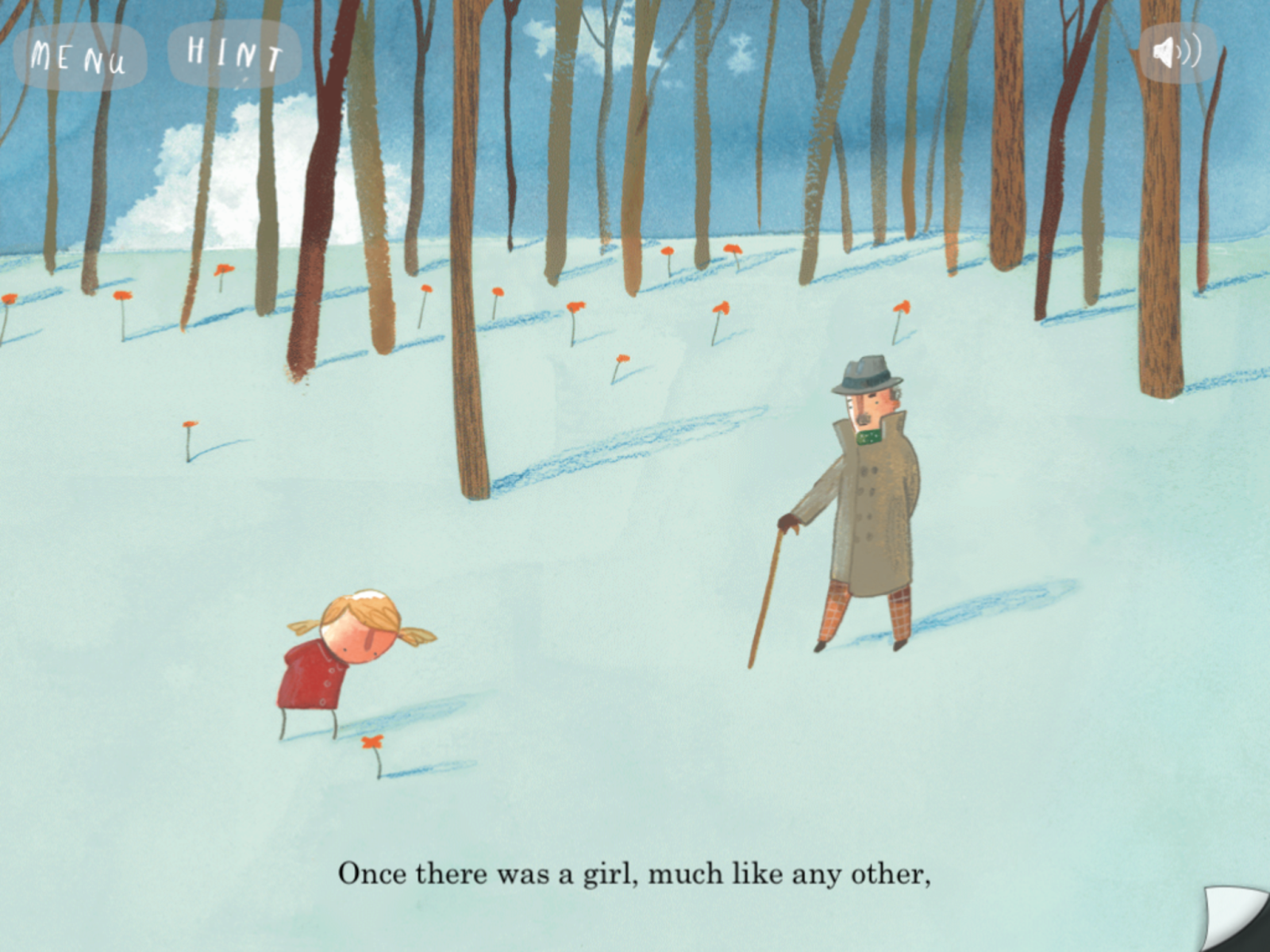
Is it a book or is it an app?
Sunday, February 09, 2014
Digital futures for teachers
The need for teachers to engage with digital literacies at all stages of education has been articulated in numerous policy documents and directives in many parts of the world. Often the economic desirability of 21st century skills is seen as the central rationale for this, but commentaries also make reference to the increasing importance of digital literacy in citizenship and participatory culture. In education theory and research, the importance of acknowledging and using children and young people’s knowledge of popular culture has become a key theme, with a growing number of studies addressing the rise of digital culture. In the face of this, educators now realize that levels of participation in popular digital culture vary considerably between populations and social groups (Warschauer and Matuchniak, 2010). To add further complication, the understandings and experiences that learners and their teachers have, and need, are rapidly changing as technology itself changes (Davies and Merchant, 2009). Preparing teachers to operate effectively in this volatile environment presents a number of challenges. In our chapter in this book we look at some of the driving and constraining forces, concentrating particularly on the ways in which open educational resources (OERs) may have the potential to support teachers and trainee teachers in developing their capacity to address the ‘digital challenge’ (Abrams and Merchant, 2012). All this receives a detailed treatment in the chapter that Julia and I have written for this collection (now available). The chapter draws on the work of the DefT project.
Sunday, January 26, 2014
In-story purchases
Last week I bought a goat, a spider and a stork. They cost 99p for the job lot. I know that because of the helpful receipt I got from iTunes. Now I've done some strange things in the name of virtuality, and this wasn't really one of them, but it is what they call a telling case. You see, as it turns out, I bought the goat, spider and stork as a way of upgrading my grandson's favourite story-app: the story that he calls 'Night Fours', which is his rendering of the opening line 'Night falls'. It's an app I recommend (it's real title is 'Nighty Night'). It's his favourite because it's an engaging app, and just right for 2-3 year olds. In the story, it's night time and most of the village is in darkness - apart, that is, from the farmhouse, which is still blazing with light. The reader is invited to 'go' to each light in the farmhouse, say goodnight to the animals found there and turn off the light. Once the light is turned off, there's no going back. Sure, you can return to the barn, the dog's kennel and so on, but they've gone to sleep and there's nothing at all you can do about it. It's a simple scenario, that helps with prediction, naming animals, and the simple and repetitive night time rituals of saying goodnight and turning off the light. So in this way it does what good picture books tend to do, in supporting language, helping children to make predictions and making connections to firsthand experience. What might the app add then? Well first off, even though, it's made for sharing, the child can look at it independently and still hear the story being told - a small gain admittedly, but nonetheless a difference from a print book. Then there is the important fact that it is user-driven. This happens in two ways: firstly, the animals and insects won't go to sleep unless you switch off (tap) the light and secondly, the order in which this is done is entirely up to the reader - so it's not unilinear, the child dictates the reading path. Because this is an app for young children, these features are simple and easy to see, but imagine if they were scaled-up and you begin to glimpse the future of digital fiction. Rather like a videogame, you are in 'Nighty Night' because you change the story environment as you go along. And then, of course, there's the upgrade I started with. I really enjoyed the surprise Dylan felt when he suddenly discovered that, overnight, more animals had moved into the farmhouse! The potential for a story that has add-ons is quite something. Of course, the same business model as in-game purchases is lurking behind the scenes - but I want to keep that in proportion. The app plus add-ons, is cheaper than most good quality picture books for this age-group.
Sunday, January 19, 2014
Make up money
I'm posting a picture of make-up. In fact I'm posting two pictures of make-up - and that might just be a first for this blog. It's a photograph of what my mother would call a powder compact, or perhaps more simply a compact. I asked my daughter what she called it. Make-up, she said. It's a pleasingly shaped hinged box in black plastic, which snaps closed with a satisfying 'pock', and as you can see there's a delicate flower-like design in gold on the front. By contrast my mother's were weighty metallic things with an enamal finish. Enough to lend some substance to your handbag, I should imagine. But this is make-up with a difference. It's money. Or to be a bit more accurate it's got purchasing power......just a prototype, I know, but it works. And it may well be the shape of things to come. Probably the next big thing, if indeed something so small can be called big. And here's where the second picture comes in. You see you flip it over, and there's the evidence, in the Mastercard contactless chip which is embedded in the plastic case. Neat. And that allows you to buy things with make-up, and it's what I call new. It made me think of the slow demise of currency. Remember, I'm old enough to
remember decimalisation. When all of a sudden there were 100 shiny new pennies to a pound compared to twelve shillings, or whatever awkward amount we had before. And now it's all turning into plastic. Spending is gradually becoming more abstract, several steps away from the real thing. No wonder so many people get into debt! Of course that idea of coins as the 'real thing' is actually a strange convergence of the material and the abstract. Maybe currency only has any real meaning at the point of transaction. And financial transaction itself is built on a sort of tacit social contract. Now I'm sure economists have better ways of talking about this, but the one thing I'm sure of is that the money business is looking very different as mobile digital technology takes hold. Take the fascinating emergence of mobile exchanges in Kenya. Read about it here, if you haven't caught the story - and this isn't about smartphones, we're talking basic models, here. What a wonderful illustration of the ways in which social groups take up the affordances of mobile technology and make it work for them to fulfil their needs. In fact, I can see myself doing the Kenya thing rather than carrying around make-up (or cufflinks, apparently).
Sunday, January 12, 2014
Translocal assemblages
In the current book project New Literacies around the Globe, we've had to confront some of the myths surrounding the idea of 'the global' as unbounded free space. In its place we use the term 'global assemblages' (from McFarlane, 2009) to capture how complex and multiple forces coalesce as place-based events. We suggest that these events are constituted by the exchange of ‘ideas, knowledge, practices, materials and resources across sites’(McFarlane, 2009:561) as language and power intersect with socioeconomic status. Although the word 'global' is so much easier, it often erases all this. Increases in the extent of broadband connectivity, and growing access to resources (particularly powerful handheld devices) is accelerating the sorts of exchanges that constitute translocal assemblages. But this isn't a universally even process. In the studies featured in the book, we see how practices are patterned by local forces as cultural resources are accessed (or not), appropriated and recontextualised within specific social networks. To be specific: things like PlayStations, jacuzzis,and mobile phones take on different meanings in different settings and practices like texting, chatting and flirting are given local nuances. More often than not, in translocal assemblages we see that sociotechnical practices are absorbed into existing ideologies, sustaining and sometimes amplifying them. In other words, technologies and the global flows that are associated with them rarely flatten out inequalities, but they certainly can draw our attention to them.
Sunday, December 29, 2013
The discourse of online reviews
Reputation and ranking through comment and consumer review are a ubiquitous feature of new media. Reviewing involves online performances of identity and taste that are highly influential in the consumer-led participatory culture of late modernity. Based on an analysis of a corpus of 1000 such texts, Camilla Vasquez's book 'The Discourse of Online Consumer Reviews', due to be published by Bloomsbury later this year, explores the linguistic features of this new online genre. Using an eclectic range of approaches, the discourse of these (often humorous) reviews is given a detailed treatment. In a compelling exploration of stance-taking Vasquez shows how the quest for the perfect product inflects the comments of these self-appointed reviewers. As she observes in the conclusion to the second chapter 'on our quest to have a "mind-blowing" dining experience, or with our hopes of finding the "perfect" diaper bag - we will continue to consume.' We see how reviewers work hard to position themselves on the expertise continuum, often evoking professional knowledge or the views of others to bolster their credentials - and, of course, all this is indexed in their written comments. Advice, warning and product endorsement all feature here as review-writers gain reader involvement and encourage interaction. Vasquez majors on reviews of specific items such as multi speed blenders, diaper bags and yoga mats, throwing in more general ones such as hotel reviews from TripAdvisor, movie reviews from NetFlix, and recipes from Epicurious for good measure. A highlight, for me, was the mushroom tortellini debate on the recipe site - witty, yet spirited - and this is lovingly analysed for the play of voices in the extended online interaction! Through their evaluations and short narratives these reviewers create a shifting online community of consumer advice, and Vasquez shows how they deploy discursive resources to achieve this. All this makes goes to make this book an essential for anyone who is interested in online discourse.
Wednesday, December 18, 2013
(Con)text
Political speeches, presentations, ritual invocations, announcements, radio broadcast and so on are closed one-to-many forms of communication in which interaction is constrained through the ways in which the speaker occupies a position of power in relation to the audience. Often enough, although not exclusively, their textual power is achieved through appropriation of the linguistic structures of writing and in fact part of the process of their production may involve the use of scripts, notes, prompts, the inclusion of quotation from written sources, or the memorisation of sacred texts. Casual conversation,with its diversions, its vagueness, hesitation and the prevailing condition of incompleteness is tinctured by provisionality and is in contrast more open, more democratic and more context-dependent. These contrasts, however, are extremes on a continuum and perhaps, because of this, the in-between ground is as interesting as the extremes. We often use the context dependent/independent continuum as a way of differentiating between texts, but really we have to accept that text must always have a context. Perhaps it's more a case of foreground and background. In much of the casual traffic of texts it almost seems as if the text (by which I mean, in this case, the linguistic element) is an elaborating detail that surrounds the action. When we're fixing something perhaps, we are involved in action and that's foregrounded. The linguistic detail attaches to that. In other instances - reading a novel or writing a paper, it seems that we work the other way round. The linguistic content is central and reference moves both within the text as well as to the world, real or imagined, that is outside it. It can be no different with digital text, except that it may be the case that there is more possibility for extra-linguistic material to become part of the situation. Perhaps, by moving away from a text-centric way of looking at things we are simply becoming more interested in action, activity and relationship, and maybe they are the underplayed dimensions of communication.
Saturday, December 07, 2013
The text vanishes
I found this year's LRA conference provided a rich fare. Some familiar things were being re-stated, some key work felt yet further developed and some radically new ideas seemed to be emerging. Cathy commented that the text itself received relatively little attention, and it does seem that with a growing interest in mobilties, and embodiment and affect, new constellations of sociotechnical and sociomaterial engagements are coming to the fore. Any signs of the text have now become ghostlike. Especially since now they have become open, provisional and often multi-authored, and in some senses ephemeral. Karen Wohlwend said something like 'I don't really like to talk about texts anymore, it seems that the kids are producing contexts.' I liked this, and although you could see in her work, and in that of many others, things that looked like texts - texts that formed and reformed - they were marginal things, like pencil shavings to the real sharpening of meaning that was occurring. The frozen fixed texts we used to pour over, the multimodal designs we read into them now seem to move backstage, as we watch gesture, movement and the claiming or enacting of meaning making spaces through mobility and countermobility. But what if the researcher's gaze is actually produced as much by data capture tools as it is by new representational practices and related theoretical advances? Does the availability of head-cams, spy-pens and flip cameras simply frame the segments of reality that we study in a different way? Perhaps though, we are learning more about the contexts that we always knew were there. Perhaps we have started to neglect text, or maybe it is slowly erasing itself as a fixed thing, a thing of privileged interest. When early emergent writing was a hot topic, we ran those paper-based artefacts under the photocopier and poured over the products while they were still warm. The contexts we tended to capture back then, if we had the time, the resource, and the inclination were more about talk, the stretches of verbal interaction that we caught on dictaphone tapes and then lovingly transcribed. As different then as new literacies might be, so are the possibilities for data collection. If we remain true to our reflexive project we are duty bound to think about what is newly acknowledged as well as what is omitted, erased or remains hidden, and how this influences the construction of knowledge. Did the play of power and the enactment of inequality, for example, just slip from our gaze or, if we are attentive, are those same forces simply seen in new ways and understood afresh?
Wednesday, December 04, 2013
Tenth anniversary
The act of writing has held my interest for a long time. It's partly because of its openness: the fact that possibility exists. There may be an idea that you hadn't quite thought through yet, but somehow it can come out in the process of writing. Writing, it seems, is a tool for thinking. Perhaps that's simply because writing is an imagined conversation with another and the presence of that imagined reader confers upon it a dialogic character. That conversation, it seems, is very attractive - almost to the point of addiction. Despite that, I completely forgot the tenth anniversary of this blog (here's my first post), but what surprises me when I look back is that even then I was preoccupied with trying to make sense of writing. A lot has happened in the intervening time, but that fascination certainly hasn't dimmed. Blogging for me now is about condensing my reflections into something that's about the size of an average paragraph and then finding a still or moving image that can sit alongside it. The post may be more or less complete in its own right, or it may simply be work in progress. But always it's what Rosenblatt describes as a transactional process: '....always an event in time, occurring at a particular moment in the writer's biography, in particular circumstances, and under particular external and internal pressures. In short, the writer is always transacting with a personal, social and cultural environment.' (1989:163). And in posting on the blog, at times it forms the basis of something I'll write more about, extend in some way, but more often than not it's just a sketch, complete in itself. The piece of writing that I started the first blog with actually turned into a book chapter entitled 'Barbie meets Bob the Builder at the Workstation', but many subsequent posts have been of the moment, a passing observation or a whimsical thought. Nevertheless they all form an important expression of writing as exploration, as a transactional process.
Monday, December 02, 2013
The grassy knoll
Visiting Dallas 50 years after the Kennedy assassination could be a significant experience. After all, the shooting was a defining moment in contemporary life, wasn't it? But today looking down on that rather familiar-looking stretch of road, standing on the grassy knoll, gazing up at the box-like structure of the book depository, up to the sixth floor, it all seems rather flat and clean. Sterile, you might say. The memorial fountains are bathed in full sunshine. The sky is a deep blue. It's so neat and clean it's hyper-real. Museum staff are on the streets selling facsimiles of the Dallas newspaper of 22/11/63, but those events have already been swallowed up by history, they are long gone. So, how is it that we can best relate to recent historical events? The most familiar way, I suppose, is to think about what we were doing on that particular day. That helps to pinpoint it, to remember, to tie it to our experience in order to make it more real. In this case I can remember it well. We had been walking in Bradgate Park. It was a cold day, and my father had the gas fire on full when he tuned in the radio for the six o'clock news. That was how he kept up, it was like a religious ritual - listening to the BBC on the wireless (and that's what he called it, the wireless). He was shocked by the headlines, nodding his head saying 'Crikey',or something like that. But my mother's reaction made a much stronger impact on me, because when she came in the room, the rest of the news was playing. Aldous Huxley had died, and that upset her more, and I think she made the mistake of saying so. My father ridiculed her, as he often did. But Huxley was one of her literary heroes, and there was no denying that. Huxley was a towering figure, in more ways than one, and his death was inevitably rather overshadowed by Kennedy's, which is a shame. But they weren't the only newsworthy deaths that day. C.S. Lewis, the author of the Narnia books, which I had read, and loved, also died that day. And in my still impressionable young mind, I understood my mother's viewpoint completely. Narnia was brilliant; Kennedy was just someone on the news. I'd never been to Dallas, but I had been to Narnia. That was a strange day then: Huxley first, then about 10 minutes later Lewis, followed an hour later by Kennedy. Each died in a very different way, each left a distinctive legacy. I'd very much like to return to Narnia in the same way that I first did, slipping between the fur coats into that snowy landscape, but the warm Texas sunshine seems to place it far out of reach. In some ways it's all in the past.
Place hacking
Like many cities that prospered in late Victorian times, the centre of Nottingham still has those imposing multi-storey buildings or chambers that served as the office blocks of that era. In my youth, these were the premises of solicitors, surveyors, small businesses and suppliers, and they were often half hidden behind anonymous-looking doors set in between the shops, banks and department stores of the city centre, accessed through a labyrinth of winding corridors and dim stairwells. They were, in some way at least, the private areas of that urban environment. And in my teen years, when the city seemed like a playground, my friend and I filled many an exciting afternoon exploring these spaces. Sneaking down passageways, tip-toeing up linoleum-covered stairs, opening creaking unlabelled doors, the unexpected and unannounced thrilled us in the very moment, at every turn. We would never wittingly take the same route twice. Our exploits were halfway between playful investigation and trespass. One moment blundering into a typing pool, a reception desk, the back room of a shop, an office workers' tea station, a stationery cupboard; another stumbling into a jumble of brooms, mops, cans of cleaning fluid and tin buckets.These spaces weren't exactly private, but neither were they public. What's more we had no good reason for being there in the first place. Part of the fun lay in that. We might get caught, or challenged (and sometimes we were - and that, of course, was half the fun), but at the same time we would be rewarded by a different view of the city, some novel connection, some unexpected learning, spilling out onto a different street. But after all where were we in this city in our youth? Too young for pubs, sometimes too noisy, too raucous for the cafés and tea shops, and still unqualified and woefully ill-equipped for the world of work. Nothing bad came of it. And it gave us the taste of freedom, as we worked our way between and outside the lines of what was expected; it filled time that was otherwise unaccounted for, school having become too tedious, too regimented, altogether too much. That youthful diversion now has a name: it's called urban exploration. In fact, it was reading about urban exploration (or place hacking), in Bradley Garrett's excellent ethnography 'Explore Everything', that brought all this back to me. In a strange sort of way it offered me an intelligent rationale for something that had seemed like a half-forgotten, and somewhat quirky adolescent pursuit. At that time, I am sure that we didn't know quite what we were doing or why we were doing it, we certainly didn't discuss it, we just did it. It was fun. Yet we were 'reclaiming the city', blissfully unaware of Debord, or the situationists, or any guiding theory or politic, for that matter. If it was covered in the underground press of the time, I certainly missed it and so did my friend. And so all this makes me think how we may often do quite reasonable, intelligent things without exactly knowing why - at least at the time. Either that or we have an astonishing capacity to make sense out of the most random of things, thereby dignifying our seemingly unending acts of human foolishness. But once something like this is given a name, explored in a thoughtful way, it seems to articulate the motive - or at least part of the motive that propelled it in the first place. That journey of reading and recalling urban exploring reminded me of how my longstanding interest in visiting and sometimes photographing ignored, dilapidated and abandoned buildings took on new meaning when I read about the ideas of 'ruin porn' and bunkerology, how my regular and random zigzag walks around Sheffield looked and felt different when they were rethought as psychogeography. Now, or so it seems, I know why it interested me in the first place. Did a name, a theory, bestow new meaning upon it? Or was the meaning there, already awaiting its later discovery - in some way immanent? Did the incoherent blind interest simply gain respectability through a post-hoc rationalisation? Or more likely, or at least more attractively to me as an academic, did the act of reflection, in a dialogic relationship with others who have done and thought about similar things, help in bringing into being new experiences, and new perspectives on old experiences? A new way of looking. And does all this - this process of re-thinking, help us in imagining possible future actions, experiences, diversions or misdemeanours? I don't know, but either way one thing is certain, I will continue to explore, in my own way, buoyed up by what I have read, what I have talked about and what I have thought. Perhaps, just perhaps, that constitutes an invitation, too. After all, those old Victorian buildings are still there somewhere, as are both our current and our remembered experiences and actions!
Subscribe to:
Posts (Atom)


