Sunday, February 26, 2017
Mapping as data
A map can be very useful when you're lost - if you've got the right one, and if you can make sense of it. And pouring over maps can be quite compelling, too - imagining what it might be like to visit a place, or even to see the ways in which familiar places connect - connections that you had never before considered. But making maps is something entirely different - an artform in its own right, and its something I'm experimenting with at the moment. Trying to figure out different ways of presenting empirical materials has recently led me to think about writing otherwise, and in a number of recent publications Cathy and I have explored how storying our data, using different points of view may gesture towards multiplicity. We call this approach 'stacking stories', although admittedly we haven't yet managed to publish a full account of it. However, the shortcoming is that the story, whilst certainly capable of opening up other ways of looking, remains a predominantly linguistic medium. Cartography, on the other hand, presents different challenges, and although what to write is one of them, it only plays a small part. There has been some fascinating work on mapping as a way of tracing movement, and Abigail Hackett's focus on young children's movement around museum spaces is a great example. But after a recent research visit, I was tempted to try to map the remembered experience of the event. Not being particularly adept at mapping using paper and pencil, I looked for an online solution. It wasn't immediately apparent what would suit my needs, and there were a number of false starts. Eventually I settled on Inkarnate which is free, easy to use and has a pallette of Lord of the Rings-type icons. My original intention was to map felt experience, key moments and so on - the topography of the event, but the mapness of maps took over, and I ended up simply recasting where I'd been, as if the journeying was more significant than what happened (although, I note my stories often have a similar quality). But it's a beginning. Part of the problem is getting familiar with what this simple mapping tool can do; the bigger problem is what you might call translation. How can the territory of an event be mapped? At the moment I haven't got a clue, and maybe the map (or maps) might just end up being a supplement to the storying, but there's certainly potential here, and if not there's an engaging little hobby.
Friday, February 03, 2017
Forests and fictions
Now there are no forests to speak of there is nowhere to be completely lost. All we have are our own places of abandonment and enchantment - the ones that are human constructions. Once the maze of library shelves, now surfing online. Movies, stories, poetry, Zombie Apocalypse, Call of Duty, war, crime, horror...and romance. Imaginary monsters. Could it be that these other spaces, these fictional spaces began to open up just as we were embarking upon the wholesale destruction of the living world? In Europe, forests that we first stripped away along the major trade routes were tamed by a latticework of trails by the twelfth century, paving the way for the printing presses - those machines of movable type, overlords of the tyranny of words, eating away at any new growth. Where could we now lose our bearings, become enchanted, or find ourselves by finally confronting the ways in which we neither know where or who we are? For in the depths of the forest all we had was intuition and imagination, a sense of scale and of being in something much larger than we knew - seemingly boundless, full of mystery. Now we hunt and are hunted by our own fictions. Those imaginary worlds colonise and repopulate our consciousness. They pour out of our screens and leap up from the page. The forests may be reduced to words and images, but they still create places of possibility. Places to roam, to connect, to lose ourselves and through losing ourselves maybe to understand ourselves and what we have done in a deeper way. In this dense thicket of fictional imaginings we may glimpse or grasp at ideas that aren't yet fully formed, as if blindly tracing the outline of a shape or squinting to make sense of an indistinct form, something half-hidden in the surrounding darkness. And in this way we can come to understand something that we didn't quite know we knew and bring to life something that speaks to us from the depths.
Thursday, December 29, 2016
What technology?
Tsering Dolma is not at home. Although the house and outbuildings are abandoned, provisions are stored away for the coming winter. So although the place has a Marie-Celeste atmosphere, there is perhaps no mystery - just a temporary absence. Water comes from a six inch pipe running all the way up to a cistern fed by a mountain stream below Shade. But the pipe has long since fractured. There is no water. Tsering Dolma's possessions remain, despite the locked doors. At first they're hard to make out amongst the dirt and mud bricks, but slowly they reveal themselves. This building is well stocked. In fact it is bristling with technology - farming implements fashioned from wands of willow - a rake, a hoe, a basket weave cradle for flattening the earth after ploughing, all carefully stowed in the roof space, or jutting out from holes in the brick work. This is the technology of subsistence farming, of a low impact bonding with the land. the only absence is Tsering Dolma herself, but you can see that she is held in a network of relationships - with locals, the monks from Phuktar, her yak, the sheep her companion species, these tools and the land she scrapes her living from. What we call technology, our phones, our cameras, and our tablets would be of little use to her. They would play no part. And besides there is no electricity, no signal, no internet. And if you imagined what might improve her quality of life it would be none of this. It would be more likely to be a pair of thick woollen socks for the winter. That and someone to fix several miles of six inch pipe. But with no utilities, public or private, that would require an attentive and caring regional authority. Or very generous neighbours with nothing else to attend to. So perhaps now that we have more or less abandoned that Victorian notion of human progress, of cultural development, of economic growth and the relentless march forwards, our place in the world in all its diversity needs to be re-thought. You see Tsering Dolma has a different relationship with the world. Better? Worse? These evaluations hardly seem appropriate. Zanskar is a very different world and one that is separated from ours by a wide margin, and this gap throws ideas of wealth, of relationship and of technology into confusion. Care has been taken in amassing a good collection of juniper that is piled on a makeshift table in a small room near Tsering Dolma's house. A celebratory light breaks through the simple window. Does anyone have what they need?
Friday, November 11, 2016
Making Literacy, Media, Technology
The idea of celebrating the materialisation of a book in print form might at first glance appear to be rather anachronistic. After all, in this era of online publishing, most of our words are 'out there' before any publishers' ink hits the page. But somehow or other receiving one's advance copy is still a rich experience. Not only does it represent completion, that it is, at least in some sense of the word, finished, that the labour is over - perhaps even, in retrospect, that it was worth it after all, no matter what one felt at the time, or at various stages on the way, but also and perhaps more importantly that it has become a thing, something more tangible, something with a particular heft, a particular look and so on. I feel the same about journal articles, and even though I have my name on a number that I've never seen as published, in amongst other contributions, or in the particular issues in which they 'appeared', I usually have a print-off, because that's the next best thing. Julia Gillen has teased me about this in private, but I suspect that she might agree that somehow online first is a bit of a shadow - more correctly a foreshadow, of the real thing. Or perhaps real is the wrong word altogether, it's maybe just that we live in a world of different kinds of objects, and that print forms have their own place in this order of things. This is a key point in the book Literacy, Media, Technology that I'm referring to. The book is an edited collection, and the subtitle: Past, Present and Future presented an opportunity for Becky Parry, Cathy Burnett and myself to interrogate that linearity, the slow and inexorable passage of time or the mad dash into the future - or whatever version of the progressive modernist narrative that you might subscribe to. Things can only get better? Maybe. But actually things co-exist, they resonate back and forth in interesting ways. And so, we take a stand against that popular phrase 'the future has arrived', opting instead for a view that it just hasn't happened yet. In a way we're more interested in the present and the way it is infused by the way things were and our ideas of what they might become. But apart from all of this, the excellent chapters, written by some of the finest academics in the field, are in conversation with one another, and in the final stages of the editing process it seemed as if they had something new to say about the inter-relationships between literacy, media and technology, at least to gesture towards a new conceptualisation of their interconnectedness, an interconnectedness that was always there but had to be found, and had never been fully articulated before. It feels good to hold on to that, and at least as good as holding the book itself, as a thing.
Monday, April 04, 2016
25 years of oppressive education policy
Sunday, March 20, 2016
Outrageous education policies
As we wait to see the real effects of the latest swathe of educational reforms, reforms that appear to completely remove all local influence and parental involvement in the running of our schools, it may be time to rethink how we respond to unwarranted political interference in public education. The problem recurs at a number of levels as well as in many different spheres of civic life. Take the health service, beleaguered and battered by government reform - actions which often provoke anger, despair or cynicism. In this case, old school activists may petition or demonstrate whilst others, imagining this is probably futile, simply wring their hands and think of early retirement. At times it may seem that these reforms, or attacks, on our once great public institutions are ridiculous, or absurd, at others that they are simply intolerable. It's often the small incursions that are the telling ones, and these, the small movements of power without a conscience, prompt me to ask whether they are, in fact, absurd or intolerable? A story that may well get buried by the sheer scale of the next wave of education reforms concerns the sad case of the exclamation mark - yes, that humble little point, capped with its light-hearted vertical dash. In a spasm of powerful bureaucratic interference, the Department for Education attempted to legislate on its use in schools. The move provoked some derisory responses as well as some more measured explorations in the press. The guidance actually says: 'A sentence that ends in an exclamation mark, but which does not have one of the grammatical patterns shown above, is not considered to be creditworthy as an exclamation.' For the purpose of the test: 'an exclamation is required to start with What or How.' Much debate could, and probably will be had about the status of this as guidance to make an assessment workable or as an attempt to police the English language. It may be that such as small point is not worth getting excited about. It could be laughed off as simply absurd. But actually it's intolerable to think that intelligent and creative teachers will have to reign in the usually enthusiastic outpourings of young writers to teach them yet another rule which isn't really a rule, and because...? It is, to my mind, important to consider how this small intervention may ripple through classrooms and how we might read its significance in relation to large systemic change which is, perhaps, easier to see as intolerable rather than just absurd.
Wednesday, March 16, 2016
Social networking book
I was pleased to be asked to contribute to Kurylo and Dumova's volume Social Networking: Redefining communication in the digital age and flattered to be in as Chapter 1, apparently acting as a 'launching pad' for the rest of the book. In my chapter Together and Apart: social and technical works, I attempt to locate social networking in the much larger network of material, discursive and semiotic practices in a way that some have suggested is more like actor network theory. In fact I draw on Latour's work to make some points about the wider ordering of things in which social networks, and particularly online social networks, sit. But I'd shy away from calling that an ANT approach, but let's not get into that here! Anyway there's some great chapters in the book that explore a range of contemporary social networking issues including self-disclosure, social movements and networked activism. This makes this whole topic area very live and very relevant, and as far as I'm concerned - the more scholarship on this, the better. Buy the book!
Sunday, February 21, 2016
Straight carrots
A while back there was a spontaneous outcry about what was happening to our vegetables. Through some sort of consciousness-raising process, people had noticed that all the carrots in the supermarket were getting to be more or less the same length, the same colour, clean from soil and so on. What had happened to the earth, to the dirt that usually clings to them? And more importantly where were the misshapen ones? Well they just didn't fit, did they? Given a choice of vegetables Deleuze and Guattari would have favoured the mushroom because of its rhizomic character, but the fate of the misshapen carrot would I'm sure have worried them too. In fact it is carefully described in AntiOedipus. The misshapen carrot is in fact 'trapped within the residual or artificial territorialities of our society' (p. 37), referred for therapy or simply consigned to the mixed vegetable soup factory. It is surplus. Let's face it, supermarkets are homogenising the food shopping thing. Tesco is anywhere; just like Whole Foods Market and all the rest. Everything looks the same. A carrot is a carrot wherever you are. And is it such a leap to think about how this sort of conformity, this market standardisation or whatever applies to us, too? Does the architecture of social media force us all to be certain kinds of carrots on display - and if not carrots, shiny aubergines, or even 'exotic fruit' of a certain size and shape (and country of origin). It doesn't stop at social media, though. Time and again we are required to perform certain kinds of identities and not others. And certainly not troublesome ones. Heaven forbid! But slowly though, we reach our use-by date. We become reduced. That is if we have not already been removed!
Saturday, February 20, 2016
Slippery subjects
It must be symptomatic of something that the most searching questions that one can ask can often be met with a dismissive cynicism if not outright derision. Dan Fox, in a new book, nails this as the prevailing climate of anti-intellectualism or dumbing down (see here for a review), and he could well be right. So that makes me all the more determined. Determined to return to the identity topic, and turn to the picture next to this and ask 'is this me'? Not, I hope, to provoke the reaction that by opening the topic I'm engaged in some sort of pretentious navel-gazing - although perhaps that wouldn't be such a bad thing after all? But to interrogate what all this activity of capturing images, taking selfies and textualizing these online is all about. Really. This is not me. It's as if layers of difference have been tightly pressed together, fusing them in a process you could call lamination. Whilst there is resemblance or representation, there are also bits, bytes, and pixels. There is framing not to mention posing, cropping, colour enhancement and so on. The result may be an image of me, but that's all. Here, it's recontextualized. It enters another space, another time, juxtaposed with writing, squeezed into a template, worked into a particular form and recruited in a particular way for a particular purpose. Showing the image here becomes part of a performance, a performance that may be read off by an audience. But this me business is slippery. The image holds all sorts of other resonances, an affective dimension, a motley collection of shifting memories, the sharpness of the air, the Himalayan rock beneath my boots, the paucity of oxygen and so on - all of which may or may not be me. In current social theory this could all be seen as an emerging entanglement of affective, socio-material and discursive practices - a mouthful I know, but a sort of flowing together of bodies, things and ideas. A state of affairs in which constructions of me-ness are always contingent. If we live in times of space-time compression, of context collapse or whatever, it seems to me that we have also become slippery subjects. But perhaps I should just speak for myself, because that's what it looks like from here. I'm also aware of power geometries at work, creating conditions that allow for or provoke this slipperiness (a certain age, class, gender configuration for example). And that leads me to wonder whether some subjects are more slippery than others?
Saturday, February 06, 2016
Personal, colonial
I'm back! Back from what friends fondly refer to as my gallivanting, which roughly translated means making the most of my time to explore new places, or places that interest me - alternatively rendered as going to warm and exotic locations just because I can. This time Sri Lanka. And from my humble iPhone snaps this Hillman was the best, parked up on a sidestreet it strongly resonated with my 1950s boyhood whilst also being totemic of the whole colonial legacy. Corny as hell, I know, but cars seemed so important to me back then. That beige two-tone was the colour of my childhood and the taste of milky tea all wrapped up in one. Sri Lanka, or Ceylon as we then called it, was something we did in geography as a prelude to getting on with life. So much for innocence. In Sri Lanka the communication system, both road and rail, put in place by the British, constituted an elaborate net to capture the country, to suppress resistance and to strip the hillsides first for coffee and later, when that failed, for tea. The road system is still there, you can see some well-preserved classic cars and tea is still big business. But amongst all that are centuries of culture, a whole history of art and architecture as well as an exquisite and diverse natural habitat. Returning to work might seem dull in comparison if it weren't for the enthusiasm of colleagues, the promise of new projects and the slow closing stages of previous work, all of which may well get reported on here in due course. As a corrective, before I stop for a cup of tea, I do want to make it clear though that I am not remotely interested in classic cars but it's just that I learnt at quite an early age that my father earnestly believed that owning a Hillman would make him happy, that it would be a step up in the world. That was abandoned when he splashed out on an MG in cream and British racing green...and just as I know Sri Lanka as Ceylon, these sorts of things remain with you.
Friday, November 20, 2015
New work in new literacies
I was flattered to be asked to present for the Global Conversations in Literacy series. The video is a screen capture of the talk, probably a reduction of the live experience, but useful to share anyway. What Peggy Albers and her colleagues are doing here is important, and although I'm familiar with all the affordances of elluminate and other similar video conferencing/virtual classroom environments the idea of doing what is in essence a large scale public lecture online is significant in bringing ideas and scholarship to a wider audience. I definitely recommend this to students, researchers and fellow scholars. In playing with the idea of mobile literacies in that talk I was acutely aware of what exactly becomes mobile and what doesn't with the advance of new technoliteracies, and this will be a theme I'll be pursuing soon. In the mean time, it's good to see the Handbook of Research on the Societal Impact of Digital Media published. I have an overview chapter on virtual worlds in there. There's also a new paper co-authored with a former doctoral student of mine (Ruth Barley) in Childhood based on her fascinating ethnography of young children in a cultural diverse classroom setting. A fuller account of her work is available in the book Identity and Social Interaction in a Multi-ethnic Classroom. And finally, you can read about The Challenge of 21st Century Literacies in the current edition of the Journal of Adolescent and Adult Literacy.
Thursday, October 15, 2015
New mobile literacies
I hope there will be a good audience for my talk on Sunday. It's called 'New Mobile Literacies' and here's a bit of a taster. ....Mobility is one of those signature themes of early 21st Century living. On a macro scale we are preoccupied with the movement of people, whether it takes the form of the ‘migrant crisis’ that has tested Europe’s ability to act with humanity, the contagion and spread of Ebola that has troubled the medical community, illegal border crossings and their generational legacy, or the carbon footprint left by mass tourism and big business. Within liberal democracies we agonise about social mobility, about the rising gap between rich and poor. At a local level about the ability of the transport infrastructure to get people from A to B, and with our growing sensitivity to disability, and ageing, how access and mobility can be enhanced. None of these are new to the 21st Century, but a concept of ‘mobilities’ sensitizes us to how we put ourselves about, how we get around, who moves where, and how. So how do any of these instances of mobility connect with our idea of literacies? Perhaps the answer lies in something that has always intrigued me, the other dictionary definition of communication. It’s the second in my Concise Oxford, in which communication is described as ‘a means of connecting different places, such as a door, passage, road or railway’. Then communication, by whichever definition, always implies a sort of movement, whether that is a movement of people, things or ideas. Yes, a mobility. And if this holds true we could argue that all literacies are in some way mobile. If that is the case, no need to go on, except of course, for the fact that we see rather a lot of people wandering about holding these things, these rectangular objects of different sizes – talking to them, tapping them, stroking them as if they were pets. Maybe you do the same, temporarily stashing a phone in your back pocket as you walk along or rummaging around in the dark recesses of a bag to locate the pulsing feel of an incoming call?
Saturday, October 10, 2015
Enchanted
In a current writing project we've been exploring Bennet's notion of enchantment - eloquently developed in her book The Enchantment of Modern Life (2001). Bennet has become a bit of an academic superstar, and most people seem to rave about Vibrant Matter which apart having a cover design to die for is, in my humble opinion, not nearly so good. Although the argument about a politic of enchantment is hard to sustain, it can work. In an educational context, I think we may have resolved it adequately if somewhat simply. Here I'll just put it in a sort of aphorism - better to be enchanted by the inventiveness of children than fall under the spell of a stultifying curriculum. It all stems from a simple question. How can we, as educators work with teachers who are labouring under the dead hand of a one-size-fits-all lockstep curriculum driven by a draconian regime of accountability? To me it seems that most teachers are attracted to the profession because they are interested and inspired by children, by watching them play and learn, and being with them and not by measuring their progress against arbitrary measures. If we can re-orientate towards some basic professional values, or become re-enchanted by the actions and activity of young children we unlock what Bennet would call 'virtual possibilities'.
Sunday, August 30, 2015
Children reading on tablets
Last week the Guardian newspaper carried a well-researched piece on the possible effects of tablets on children's reading. Stuart Dredge's piece rehearses the different points of view with some balance and it certainly would make a useful discussion prompt for students. For me three issues come to the fore: 1. How we think about reading 2. What we think about the relationship between print and narrative 3. How we think about screen time. So first, if we think that reading involves some sort of universal, unchanging set of skills and behaviours that somehow float free from the people that use them - in other words from culture and society, the changing technologies of reading are going to come as a bit of a shock. We won't be able to cope with new skills, new attitudes or new ways of knowing, and we'll bemoan the demise of the old ones. We'll worry that under some conditions we'll learn more from YouTube than from a cookery book, for example. We'll worry that our reading has become superficial. And we'll worry about the advance of abbreviated conversational writing in text messaging or short-form expression on Twitter. But if we see reading as an evolving meaning making system that changes with social conditions, with culture, with technology, with and through the people that use it, then we'll see the emergence of new practices, often overlying old practices, with curiosity and an open mind. Sure, we may still see the demise of valued practices, but that, as they say, is the way of the world. Which brings me to the second issue. If we remain strongly invested in the virtues of print fiction, we'll worry about the popularity of movies, the advance of video games, and some of the directions taken by the book trade. Delightful as print narrative can be, it has achieved an almost unassailable position with some of our cultural elite. Humans love narrative. And you find narrative whereever you find people - in their oral stories, anecdotes, and epic poems, as well as in their play, their theatre, their movies and their games. Narrative has a very special magic and print books can have us spellbound, but for me the importance of narrative over-rides the specifics of a particular medium, and screens carry great narratives (as well as average ones). But can we have too much screen time? This is the worry underlying the final issue. Well, I must say I'm concerned by the way this term 'screen time' has slowly crept up on us. What exactly does it mean? Does it include the time I spend getting cash out of ATMs, reading information at travel hubs, watching scoreboards or electronic hoardings? And what about those flickering screens I walk past in town, the TVs on in the background? If screens were harmful, then most academics would be dead by now, because their usage must be as high as anybody's! If there's any suggestion of harm from the glare of those flickering screens then those high tech companies better get on to it now - after all they wouldn't want anything to dint their sales.
Sunday, July 19, 2015
iPadology
Observational studies of children working on desktop computers sometimes drew our attention to how those particular material conditions established a new sort of physical discipline. In schools early digital literacy was predominantly a sedentary desk work with the textual display on the vertical axis. In contrast navigation, control and transcription was on the horizontal plane. As in traditional reading and writing students were seat bound but what had changed was the direction of the gaze as well as the work of the hands. So the move from page to screen involved, amongst many other things, new bodily engagements. The most challenging of these often turned out to be the keyboard and mouse operations. Young hands had to learn how to do new things - yet, perhaps unsurprising these new forms of dexterity were quickly mastered. The more recent adoption of tablet computers shifts this yet again. As always literacy practices have an embodied dimension, but now new literacies are more like the old ones in the sense that the text is portable. More or less the same weight as a print book, or notebook, the tablet has portability in its favour. And touchscreen control involves a close physical interweaving of production and consumption. In common with earlier practices this literacy involves the work of the hands, but those movements are new all over again. New for young hands, but quickly learnt. And as with other technological innovations the name of the inventor or the brand has become interchangeable with the thing itself. We tended to prefer to use the name of the Hungarian inventor 'Biro' to refer to the ballpoint pen, and like substituting the verb 'google' for looking something up, 'iPad' has come to stand for all things tablet - even though tablet computers preceded this particular product. It's as if literacies have become mobile all over again. This just could mean something new in learning situations. iPads are unlikely to blow away in a breeze, writing on them is free from blots, but you can still drop them, crack the screen or run out of power. Same same, different different!
Saturday, June 13, 2015
Professor Hashtag @GuyMerchant
If anyone was in any doubt that written language is changing, or that children are active members of writing communities they need look no further than this story on the use of hashtags in their work. Asked by the BBC to comment on this phenomenon I was unremittingly positive, although as you'll see I refused to be drawn on predicting the shelf life of the hashtag! The origins of the symbol itself are interesting, and you can trace its history as a way of denoting a number through to its adoption by early programmers. Bringing the hash symbol to the practice of tagging (from meta tags) has been an interesting user-driven innovation. Hashtags weren't written into Twitter, they have just become a useful convention. Of course it makes your tweet, or your post on Instagram, searchable and also helps to define the audience, topic or conversation you are addressing. There are many other uses, too and I'm sure linguists have coded the various functions that hashtags perform. For me it's their adoption into language that is intriguing, and like @GuyMerchant the hashtag is primarily a written form. But new writing features do seem to enter spoken language, too. It's not uncommon to hear people saying 'lol'. And 'confused.com' has become quite popular. I've also recently witnessed a four year old asking 'go to the park hashtag orange slide?'. We live in interesting times!
Thursday, May 21, 2015
Digital literacy in the classroom
In a current piece of writing we've been asking why an expansive view of new literacies is hard to realise in practice. We note that some innovative teachers are able to incorporate 21st Century literacies in their classroom practice whilst others find it hard. Part of that difficulty comes from competing curriculum priorities, the extensive blocking of websites, and conflicting messages about the role of technology in learning. For example, media discourses continue to polarise opinion, reporting here on the positive influence of banning mobiles in school, here on the negative effects of video gaming and here on girls' online reading. As always the studies are more nuanced than the headlines suggest, but the media reports still bolster dichotomous viewpoints. In the face of this it is timely to consider something a bit more sophisticated than the old 'is technology good or bad' question. We should be asking how particular digital literacy practices relate to activity, interaction and engagement, and then how they might benefit (or disadvantage) their users. New literacies won't go away - and anyway we're rather powerless to check their advance, but we can as educators help in promoting efficacious uses of hardware and software.
Saturday, May 09, 2015
Sacrifice and punish
In the wake of an unexpected election result, three of our political leaders have resigned, sacrificing themselves in order to shoulder what must be seen as collective failure. Resignation from public office has a respectable history as a ritual, and it is one in which the individual takes responsibility for collective failure. It could be read as an extension of the techno-politics of punishment, a condition in which an individual must ultimately and symbolically be held accountable. In this morning's newspaper the report sits cheek by jowl with the story of a public execution. The execution in Guild Wars 2 of the avatar of a player who had been guilty of cheating. DarkSide, the avatar in question, was executed in front of an audience of 325,000, symbolically punished by AreaNet to underline that cheats will not be tolerated (perhaps also to attract interest in Guild Wars 2). In a mediascape in which more alarming videos of real-world execution have been circulating the intermingling of real, virtual and symbolic acts of punishment and sacrifice is uncanny. Uncanny because of their multistability - the individual accepts, or is forced to accept responsibility, but the crime and the authority to punish is ambiguous. Throughout history the techno-politics of punishment are in part a spectator sport. We feel a certain sense of closure when an ineffectual leader falls on his sword, a sense of outrage when an innocent journalist is executed by militants, and maybe we are unsure what to feel about DarkSide.
Sunday, March 08, 2015
Discourse/methodology
Discourse and Digital Practices - the outcome of a lively symposium in Hong Kong, organised by Rodney Jones and his colleagues, is out now in the UK. In my chapter, I took some of the iPad data (also published here), and tried to relate my analytical methods to the more familiar practices of discourse analysis. Whether or not I succeed in doing this is, of course, for readers to decide, but to me it felt a little like retracing my own footsteps. I was trying to think through how discursive practices, media narratives, digital technologies, adult-child relationships, notions of literacies... and so on, all mesh together in the story-sharing episodes captured on video. In doing this, I probably focused too intently on the micro-analysis, applying a rather simplistic multi-modal framework to make sense of the interactions between adults, children and iPads. So although this generated interesting thoughts about pointing and touching, it bypassed embodiment and feeling altogether. But more importantly it excluded the intervention of researchers, ignored the representational nature of video and foregrounded human interaction. I was drawn into a comfortable world - one in which we can watch and describe 'fluctuating modal hierarchies' (Norris, 2004) from outside. But recently, and particularly in my collaborative work with Cathy, that idea that there are distinct actions, interactions and even episodes 'out there', waiting to be described, labelled, and interpreted becomes rather problematic. It's not that I've come to embrace a rather extreme form of social constructivism in which everything dissolves into being a sort of collective hallucination (although it must be said that the time spent looking at virtual worlds often made me question the distinction between the virtual and the actual, and sometimes to the extent that there seemed very little difference), but more that the work on multiplicities, socio-materialism and post-humanism that we've been reading prompts some rather challenging thoughts about what we do as literacy researchers - well, let's say social science researchers in general - with our dominant structuralist accounts of meaning-making and our almost doctrinal acceptance of social constructivism.
Sunday, February 08, 2015
Cutting
Scissors. A whole book could be written about them. And maybe it has - but what layers of interest! Perhaps a starting point could be the surge of enthusiasm for hand-finished scissors. Ever since videos about Sheffield putters went viral they've been unable to keep up with the orders. Demand is peaking. Putters, the 'putter-together-res' of scissors are makers. And yet by avoiding some of the craft romanticism that colours Ingold's account, they show the intimate and fluid gathering together of the human and the material. You see skilled hands at work, the small adjustments, the smoothing off of the fash, those rough extrusions around the join in the mould. And then, the more 'arty' video produced by Storying Sheffield eschews commentary and in so doing invites you to experience, even to feel in a very different way. To feel (of course, once removed) the texture. As Sedgwick suggests it is '...sedimented, extruded, laminated, granulated, polished, distressed, felted or fluffed up.....to perceive texture is to know or hypothesize whether a thing will be easy or hard, safe or dangerous to grasp, to stack, to fold, to shred, to climb on, to stretch, to slide, to soak' (Sedgwick, 2003:14) - or in the case of scissors, to cut, to snip. to trim. At the same time this is all woven in with a deep sense of the local, the tradition of that which is 'Made in Sheffield', and the ways in which that extends and has extended outwards, to the Bowie knives and bayonets of combat and the cutlery that famously travelled the world before trade slumped, workers were laid off and mass unemployment set in. But what an interesting turn of events, as our narrator explains; 'That's internet for you - i'n't it?' Obviously not a going back, a return, but nonetheless a new twist in an ongoing story. A different cut. Can we think about humans and technology again, please?
Thursday, January 15, 2015
Writing, thinking, knowing
It's good to see the Second Edition of this book in print. and I think it provides a very useful overview of contemporary work in literacies. The case study I wrote with @Kate Cosgrove looks good, and the carefully-crafted introduction references the great work done by the DeFT project. It's also nice to see some acknowledgement of the Points of View paper, too. Sometimes it all seems a bit like a production line - the next lot of proposals are in, there's something new to write, something to revise, something that needs proof-reading and usually no time for reading! So, as much as I dislike New Years resolutions, this is going to be mine: read more. That's it. I'm trying to get involved in some academic reading groups, and I'm particularly interested in one Chris Bailey's setting up, in which we'll be exploring the literature on children and video games. Having just finished a chapter that deals with the topic of virtual play, I think I've just about worked out what I don't know about the topic - which is quite a lot really! And I suppose, for me, that's the whole cycle that I'm referring to - from proposal to proofs it seems like a continuous process of finding out what I don't know, working out what other people know, trying to work out what I think and then realising that there are whole lot of other things I don't know. If experience counts for anything, it must be about being quietly confident that you don't know very much at all.
Thursday, January 08, 2015
New literacies around the globe
I don't usually gloat over reviews, but if we live in an age of self-promotion maybe we are compelled (?) to put things out there. So I'm quoting Sam Duncan's review of last year's edited book 'New Literacies around the Globe' (Burnett, Davies, Merchant and Rowsell, 2014) sent to us by or publisher, Routledge. I'm not sure where this review will appear but it picks up on some of the high points of that work. (Sam, by the way, is an expert on adult literacy. ) Here goes: 'Of all the literacy-related books I have managed to get my hands on this year, this is the one I am most pleased to own. By far. This is a wonderful book: stimulating, engaging, exciting, varied and just so useful. It is useful in providing new ideas for practice and it is useful in providing new perspectives on research. It begins with a foreword (by Peter Freebody) asking: “aren’t we all, perhaps, a bit tired of seeing words like ‘new’ and ‘global’”? And don’t we need to examine what exactly is ‘new’ about literacies and what is ‘global’ about literacies? Freebody’s explorations of these questions alone make this book worth reading; he examines how relationships between technical, economic and social factors produce new literacy demands, and encourages us to think about the ways in which these demands reconfigure how we may understand the local and the global, and what it means to be literate. He asks us to think about, as this entire volume asks us to think about, the relationship between ‘school’ literacies and the other, the wider, the more ‘multiple’ literacies of our lives, “because many of literacy’s riches haven’t been missed; they’ve been omitted” (p. xviii).Each chapter has something important to say about literacy development, each chapter provides valuable references and ways of expressing, imagining and reimaging puzzles of teaching and research. Like most books concerned with ‘literacy’, the focus is more on children than adults, but there are chapters with specific foci around teenagers and young adults (for example Davies on young women’s Facebook spaces or Williams on university students’ engagement with digital texts). Yet, every single chapter addresses issues of relevance- of importance- to adult literacy educators and researchers. For example, Beavis’ chapter on ‘Literature, Imagination and Computer Games’ forces us to examine what we mean by the subject of ‘English’- something of increasing importance as adult literacy provision is labelled, by some, as ‘adult English,’ and Merchant’s chapter on ‘Interactive Story-Apps’ reminds us to keep broadening our conceptualisations of reading (that reading is not one practice or process; it is multiple and ever-evolving). Reading this volume (and I did read every chapter; I would have been unable to resist it) also reminded me that though we want, as adult literacy specialists, to emphasise differences between ‘our patch’ and that of children’s literacy, we are still part of a larger literacy context- and thank goodness. As people concerned with literacy (or literacies), we are part of a huge and extraordinarily interesting group. We have so many colleagues from whom to learn. My favourite part of this volume is in the last few pages: ‘A Charter for Literacy Education.’ Burnett et al have created nine key points, all of which are of fundamental relevance to adult literacy scholarship and practice. I’ll end with three of these: 1. An empowering literacy education involves a recognition of the linguistic, social and cultural resources learners bring to the classroom whilst encouraging them to diversify the range of communicative practices in which they participate. 2. An empowering literacy education involves a range of activities that include improvisation and experimentation as well as the production of polished texts. 3. An empowering literacy education involves a recognition of the affective, embodied and material dimensions of meaning-making. And there are six more, each helping us to understand what it means to think about what is ‘new’ and what is ‘global’ about literacy.'....Thank you, Sam!
Thursday, January 01, 2015
Builders' stilts
I often think that discussions of new media place their emphasis on either representation or technology but rarely both. Thinking about the technological function of so-called everyday objects can therefore be an interesting point of departure. Colleagues whose work focuses on the digital tend to overlook the fact that technologies are implicated in such basic things as food preparation and consumption, domestic chores, and so on - indeed in the full range of daily activity. And as Latour's work implies, non-humans are therefore active in all aspects of our lives. These builders' stilts work well when plastering a ceiling and certainly reduce the labour of climbing ladders and trestles, saving on both time and effort. Whether or not they turn plasterers into cyborgs is debatable, but they do serve as an illustration of how our relationship with the world is constantly modified by the things we make and use. The plasterer isn't particularly concerned with meaning making - he's just getting the job done. Well, we might well ask whether a smartphone or laptop is any different, and why. After all, it's all stuff. In the closing minutes of the film 'Transcendence', when the internet goes down, there's a lovely image of someone using a keyboard as a doorstop. Is that act about giving new meaning to old stuff or just getting a job done? In an early paper, Latour refers to the way in which we delegate to non-humans. From this point of view, re-purposing a keyboard as a doorstop is perhaps just an act of delegation. One that uses the physical affordances of a piece of plastic with letters on it to keep a door open. On the other hand, I could thing of many other uses of builders' stilts - but keeping in touch with colleagues in Australia or Canada wouldn't be one of them!
Monday, December 22, 2014
Data driven?
At this year's LRA conference I found myself repeatedly asking whether presenters felt that their video data was producing them, rather than the other way around. It probably sounded like someone trying to make a clever point, so I thought it might be worth trying to unpick what I was driving at. The thought first occurred to me a while back when it seemed as if researchers had 'discovered' mobility, as if it was something akin to a previously overlooked landmass - already there, but as yet unchartered. At that point I wondered whether that new interest in movement was simply a by-product of moving image technology. Were we simply seeing what our technology enabled us to see? Looking back then, was that earlier fascination with spoken interaction, turn-taking, transcripts and all the paraphernalia of oracy simply the result of affordable recording devices and magnetic tape? Thinking in this way might just exemplify how data produces us - and also at the same time how technologies of data capture enact exclusions. In our rush to study mobility do we ignore turn-taking, or indeed anything that falls outside the frame? You could take the argument to another level, as Barad does in Meeting the Universe Halfway, when she argues that 'technoscientific practices play a role in producing the very phenomena they set out to describe.' (207:2007). Or on an everyday level you could see how the way the iPhone camera gets used creates a new way of seeing the world. That wide angle lens, the heightened colour values, and also the simple ubiquity of the phone itself melds with our experience in new ways, creating radical departures from photography as it was. Put that into a slideshow (as above) and the way we participate in the world is changed.
Sunday, October 26, 2014
Fictions
In writing about virtual worlds and video games recently, I found myself reaching deep into 'the canon' to illustrate the enduring appeal of imaginary worlds. Using the Tempest I rehearsed the idea that dramatic performance, and the imaginary world that is conjured up by it, is an 'insubstantial pageant', with a cast of characters involved in a sequence of events that we temporarily believe in. Following this I argued that a play could be seen as a prototypical virtual world - as an event-space that is real enough, and takes place in real time with all the material supports of a theatre or similar venue. Members of the audience are embodied and present, but yet the world they are transported into is constructed in their individual imaginations, and filtered through their own particular lived experiences. Of course video games are different in all sorts of ways- ways which I won't go into here, but my intention was to argue for the familiarity (and cultural history) of what you might call imagined worlds. Attending the launch of the Reading Digital Fiction exhibition on Thursday evening, I was struck by how a different discipline works its way into the same territory. In her succinct opening remarks Astrid Ensslin reminded us how digital fiction sits somewhere between literary fiction and video gaming, as well as how print fiction lives on whilst digitally-born narrative continues to evolve. The common thread of how new and old narratives work to engage our imaginations emerges again, along with the idea that digital technology often end up troubling existing categories such as the distinctions between games and stories, art and life, the real and the imagined. It was a successful thought-provoking event, and underscores the fact that digital fiction is now old enough to have a history.
Wednesday, October 08, 2014
Deep reading
I've not been posting for a while because I've been on a long break in Nepal and Tibet - but somehow or other a complete break isn't quite as complete as you might think. Noticing the impact of the digital on everyday life seems to have become a way of life, and I found myself observing and photographing the different ways in which devices and texts are woven into lives that on the surface at least seem rather different. This is a monk at Boudanath, Kathmandu reading a Tibetan scripture on an iPad as part of a devotional practice - one of many examples of how digital texts become absorbed into cultural practices. Reading Will Self about the impact of new technology on what he calls 'deep reading', I found myself recalling this image. Is this 'deep'...or did it suddenly become shallow because its read on an iPad? Clearly not. But of course, in an otherwise intelligent and nuanced piece, Self is actually equating the immersive experience of reading fiction with depth. Although he offers a balanced account, and is certainly not bemoaning the rise of digital text, there is a sadness in his tone. He thinks we have lost something. If he's right, though, its not depth we've lost, but a way of accessing imagined worlds.
Friday, August 01, 2014
Threads
Social networking sites and the ways in which they are folded into the socio-technical arrangements that frame the everyday lives of an ever-growing population are situated at the confluence of new forms of social organisation and a cultural imaginary that now extends beyond the limits of nation states and jurisdictions. Although to a large extent this is attributable to the adoption and reach of technologies it is also the product of a desire for new or enhanced practices of communication and connection, in its turn dependent upon the spread of a particular ideology of connectivity in the guise of an aspiration to be always present in the lives of others, and to be continually producing a sense of identity through a sort of restless activity of consumption and self-publication. It might almost seem that to be in the 21st century, is to perform a continually present and continuously updated social identity dependent upon making visible one's connections with others (boyd & Ellison, 2000). Take Instagram as a case in point. Here the image-trail that we leave is addressed to the other, is validated by family and friends, and is wittingly enacted on a canvas that is patently larger than the connections themselves, always cognisant of the wider network in which it is located. In this sense those who participate are repeatedly improvising and embellishing the @ reference point that they inhabit, that blue dot on the virtual map, always in relation to other @s and from time to time in relation to #things, #places, and #events. This may be the brave new world that we have created, but in itself it does not give us a full enough picture of contemporary social networks, because these are inherently promiscuous and perhaps best conceived as an assemblage of activity, a restless updating of lived experience, attitude and belief in textual threads that meander across multiple sites, and platforms both on- and off-line.
Wednesday, July 16, 2014
Death of the book
When asked recently about the impending death of the book it occurred to me that, just like the terms 'text' and 'literacy', new developments prompt us to rethink our definitions and terms of reference. If we think of the book as that familiar material object made up of printed paper bound together between hard or soft covers we are likely to think of the different platforms now available - platforms that turn the actual book into something like a virtual simulacrum of the 'original' object. Alternatively, if we think of the book as a particular form of writing - a reasonably lengthy piece defined by the generic conventions of literary fiction, reference and the like, we might think that the exponential growth in the number of titles available and the number of topics covered continues regardless of trends in format and distribution. In this sense, book sales remain high, and although e-book sales are rising rapidly there is no reason to believe that we are witnessing the death of the book. Take children's literature, fiction and non-fiction for young people as a case in point. These forms continue to attract some of the finest writers and illustrators, and although Children's Laureate Malorie Blackman is currently campaigning for more reading for pleasure, I don't believe that things are in terminal decline. Of course we want children to read, and to enjoy reading as a leisure activity, but we also need to recognise that new digital forms have an important a part to play in this. It's probably true to say that with the advent of widely available tools for digital communication, there is more reading and writing going on now than at any other point in our history. This means that there's more competition for our reading time, and of course narrative fiction has to compete with both film and videogaming for our attention. But, at the same time, print books continue to be popular and attractive (they gain media attention - witness the Harry Potter phenomenon) whilst on the other hand more authors and media producers are investigating what digital fiction might look like, and indeed how 'transmedia' narratives gain traction. In my own work I have shown how young children respond positively to interactive story apps on iPads and there are some great resources available - and huge potential for future development. However these developments don't sound the death knell for the book, they just provide more alternatives. Parents shouldn't be worried by the growing availability of resources like story apps - they should embrace them and allow them to take their place alongside familiar storybooks. Although school and public libraries are threatened by funding cuts, there are some compelling reports of libraries that have embraced digital media, giving them a proper place alongside more traditional forms. In short, books matter - we need to introduce children to them, celebrate them, own them, share them and lend them. But we also need to be aware of the alternatives and the exciting developments that are now possible.
Monday, June 30, 2014
Coming and going
Settling into a new location involves many small adaptions; adjustments that we make in order to stabilise the disturbance caused by the inconvenience of travel, the sudden breakdown of familiar routine, the disorientation that results from the disappearance of familiar landmarks, and all those major and minor details that when combined together have a tendency to make us recoil from the change we encounter. But with experience and perseverance I think we learn to cope. In fact we do surprisingly well. Our capacity for adaptation feels like a sort of survival instinct, and what's more, it seems to be written deep into the psyche. It appears, for instance, as if a territorial sensitivity has been awakened in us, as we attempt to read our surroundings in ways that will aid our navigation to avoid becoming lost. A keen attention to signs and landmarks springs up. Conscious noting of changes of direction are temporarily anchored to particular occurrences as we map our immediate location. In new urban contexts I invariably find myself walking in short bursts, building up an impression, staking out the territory, initially within something like a quarter of a mile radius of my temporary home, hotel or wherever I might be staying. Only when this is done, can I venture further afield daring, perhaps, to be temporarily lost until the familiar re-emerges once again in its reassuring way, like the shoreline out of a sea mist. Cussins (1992) calls this phenomenon perspective-dependence. He argues that we understand where we are, in other words the territory, by making 'cognitive trails'. This is our way of achieving stabilisation. And what's even more interesting is that this activity can work as a metaphor for learning in a more general sense. Although Engestrom (2009) applies this theory to mobile learning, surely it applies to all learning. We need to work out the territory, the key landmarks, the junctions and distinctive features. The quirky features, the dangerous areas, places that are under construction - they are all part of the jigsaw. Our cognitive trails are not like maps, although maps may be helpful, the key thing is inhabiting the space, albeit temporarily, but at least until navigating it becomes embodied. At that point, perhaps, it might be admitted that we have learnt something, even if our sense of territory is only modest, temporary or provisional. Then, of course, on our return, the familiar is re-awakened once more as we rapidly remember things that had been temporarily shelved away. The detail begins to fill in, just as it can 'rez' in a virtual world. And so it is that even though we can't go back in time, we can, as it were, go back in space; go back thanks to the cognitive trails we have blazed and the perspective-dependence we have achieved, the sum total of our prior learning. And that, it must be said, is very comforting indeed, and perhaps one reason amongst many, why we call it home, sweet home!
Monday, June 16, 2014
Embodied expertise
Over the last couple of weeks I've been involved in a lot of discussion about how teaching and learning get conceptualised in the on/offline blend. Sometimes that has involved avatar instructors organising a kind of cybergogy, at other times the idea of heutagogy and on a more fundamental level the differences between VC delivery and face-to-face teaching. What becomes clear is that there are all sorts of different blends and possibilities for creative learning designs, and although institutional systems tend to be a bit primitive (with the exception of thin VLEs) there's plenty of ways to enrich the student experience. But in a discussion with Masters students, what impressed me most was the value they placed on the 'tutor in the room'. Here you got the sense that what I called embodied expertise has a significant, affective impact. Watching the expert, who is perceived as being at the cutting edge, thinking on her feet, responding to questions, outlining the dilemmas live and unplugged as it were, was still one of the most valued experiences. So, in situations in which this is still possible the real challenge is how to make other modes work effectively and creatively to free-up live performance. And of course, the related to challenge is to find the kinds of online experiences that could be the next best thing to witnessing embodied expertise.
Tuesday, May 27, 2014
Commodification
Last week at the University of Greenwich I talked about new technology and the commodification of literacy. I used digital apps and playthings - aimed at very young children and their parents - as a way of exploring the tension between the opportunities and attractions of the digital, and the corporate interests that package and sell them. Erica Hateley in Children's Literacy, Learning and Culture expresses something similar when she writes that: 'As children are inducted younger and younger
into particular modes of literacy, and particular dispositions as
'consuming citizens', researchers committed to learning from and
contributing to young people's agency and social opportunities need to
pay attention to what is happening culturally when reading and playing
and literacy and learning means tapping, touching, swiping, and scrolling
and combining online and offline activities.' (2013:39). I also pointed out how some of what is available carries an implicit message for parents - these are the sort of literacy routine that are important. This has been called the discourse of the 'good parent'. But this tension runs through everyday and institutionalised uses of technology at all levels - its potential both to free us and to enslave us.
Wednesday, May 14, 2014
New book!
The increasing popularity of digitally-mediated communication is prompting us to radically rethink literacy and its role in education. In our new edited collection Cathy Burnett, Julia Davies, Jennifer Rowsell and I draw on cutting edge research from the USA, Canada, UK, Australia and South Africa to launch international debate around these changing literacies, how they might shape
policy and practice, and how they articulate across national
boundaries. Currently many national policies promulgate a view of literacy focused on the skills and classroom routines associated with print, and these are bolstered by regimes of accountability and assessment. As a result, teachers are caught between two competing discourses: one upholding a traditional conception of literacy and the other encouraging a more radical take on 21st century literacies driven by leading edge thinkers and researchers. The book explores studies of literacy practices in varied contexts through a refreshingly dialogic style, interspersed with commentaries which address the significance of the work described for education. The book concludes on the ‘conversation’ that develops to identify key recommendations for policy-makers through a Charter for Literacy Education. The book is due to be published by Routledge in July. Advance orders, library recommendations and more information can be found here.
Sunday, May 11, 2014
Boxes of poison
Stacks of cardboard boxes are scattered around Barnsborough. Children's avatars might just discover them, and if they do, by hovering over them they will read a label that says 'boxes of poison'. Such a chance discovery might or might not map on to their interest, and to the play of narratives that emerges in this virtual world and the classroom in which it is accessed. And what is more this will only happen through extended, exploratory and open-ended action and interaction. Story building of this sort, whether it involves drama, videogaming, movie-making, virtual world play or immersive engagement with written text, takes time and has multiple and complex learning outcomes that are not quantifiable or easy to measure. Although understanding narrative and the opportunities for problem-solving and generating hypotheses that are embedded within are generally understood to involve important habits of mind and learning dispositions, they have come under threat from a curriculum that is driven by simple, measurable outcomes, over-specified learning objectives and so-called evidence-based practice. Reclaiming this territory is fraught with difficulty, particularly when dominant discourses are pervasive, and present a regime of truth which evokes sentiments like investing in our children's future, securing high standards and developing a world-leading education system - who could criticise those virtuous ambitions? In a forthcoming piece provisionally titled 'Boxes of Poison' that's exactly what we'll attempt to do!
Wednesday, April 16, 2014
Baroque Philadelphia
When Cathy and I worked on the data that later became Points of View, we experimented with deconstructing the notion of 'the event', partly because we found it hard to define any clear boundaries between different instances of meaning-making in the material we were dealing with, and our multiple readings of the data, the stacking stories we developed, highlighted increasing levels of complexity, rather than coalescing around a single version of what was happening in classroom virtual world play. We struggled to find a word for what we were observing - maybe occurrences or action sequences might work - otherwise just call it the project! Part of the problem with the idea of 'events', which we haven't so far articulated, is the way in which they tend to associate too easily with 'activities' or 'routines' in the world of literacy education. And one thing that is clear about the virtual worlds work is the way in which it challenges just those sorts of boundaries, planned learning sequences, activities, objectives and all the rest. In our AERA presentation, we deepened our baroque reading of the data, using this to critique simple, reductive models of literacy in classrooms. Cathy introduced the notion of a baroque pedagogy, an exuberant expression of free roaming gameplay, one that is hard to describe, hard to understand, but thoroughly absorbing for participants. But we also used baroque techniques to illuminate the heterogeneity of meaning-making in classrooms, and that, I think, will be at the heart of the next paper that we're working on.
Sunday, April 13, 2014
Modal aggregates
Norris's work on modal aggregates is a powerful way of conceptualising the iPad data that I've recently been writing about. Although her argument that multimodal perspectives destabilise the primacy of language in social interaction is not exactly new, the focus on action, as a unit of analysis, helps to highlight the shifting dominance of modes - how, in her words, modal hierarchies fluctuate. In the sorts of multiparty interactions that occur between children, adults and iPads, we can see how deictic gestures, at times dominant, give way to spoken language, onscreen visual movements, object-handling and so on. Accepting that overall meanings are always greater than the sum of these modal parts, this perspective helps to incorporate materiality and embodiment into the analysis in useful ways. There are some limitations, though. The analytical work that Norris (2012) engages in places humans as social actors at the centre of the interaction, thus following in the footsteps of earlier sociolinguistic approaches, but in doing this objects are cast as rather mute associates. For example, in Norris's data, a painting is moved (object-handling mode), pointed at (deictic gestural mode), and then talked about. But when scripted material objects - like iPads - are so deeply woven into activity, I think we need a broader perspective, one which shows how things (such as technologies) can generate, initiate, or participate in action. Perhaps it would help to focus on developing accounts of action sequences with different trajectories - the vibrating alert from a mobile phone that heralds an incoming text message, prompting some email checking, a phone call and so on, for example. Thinking about fluctuating hierarchies in modal aggregates might well be a useful way of approaching and understanding the emerging patterns of communication associated with new technologies. This could then lead to a more sophisticated account of how objects participate in social interaction, bringing what we read in Latour to bear upon our discussions of multimodality and discourse analysis.
Monday, March 31, 2014
School collaboration
The idea of connecting schools and school children has been around for some time. Serving worthwhile goals of promoting cross-cultural understanding, developing language awareness and language skills and even contributing to wider notions of citizenship, school collaboration often ticks all the right boxes. Anastasia Gouseti's new book, Digital Technologies for School Collaboration, explores some of these themes and recognizes that although programmes that provide opportunities for transnational collaboration between schools have a respectable history, the potential expansion of these opportunities through new technology has yet to be evaluated in a principled way. Gouseti's book does just that. Based on a case studies of teachers' and students' experiences of the European eTwinning programme she provides a detailed analysis of the promises and pitfalls of web-based school collaboration. But the book is much more than that, providing an excellent overview and critique of the rhetoric associated with web 2.0 and 'participatory culture.' This is a book that is well-informed, well-argued and scholarly throughout, offering practical guidance on how to develop school collaboration through new media.
Wednesday, March 05, 2014
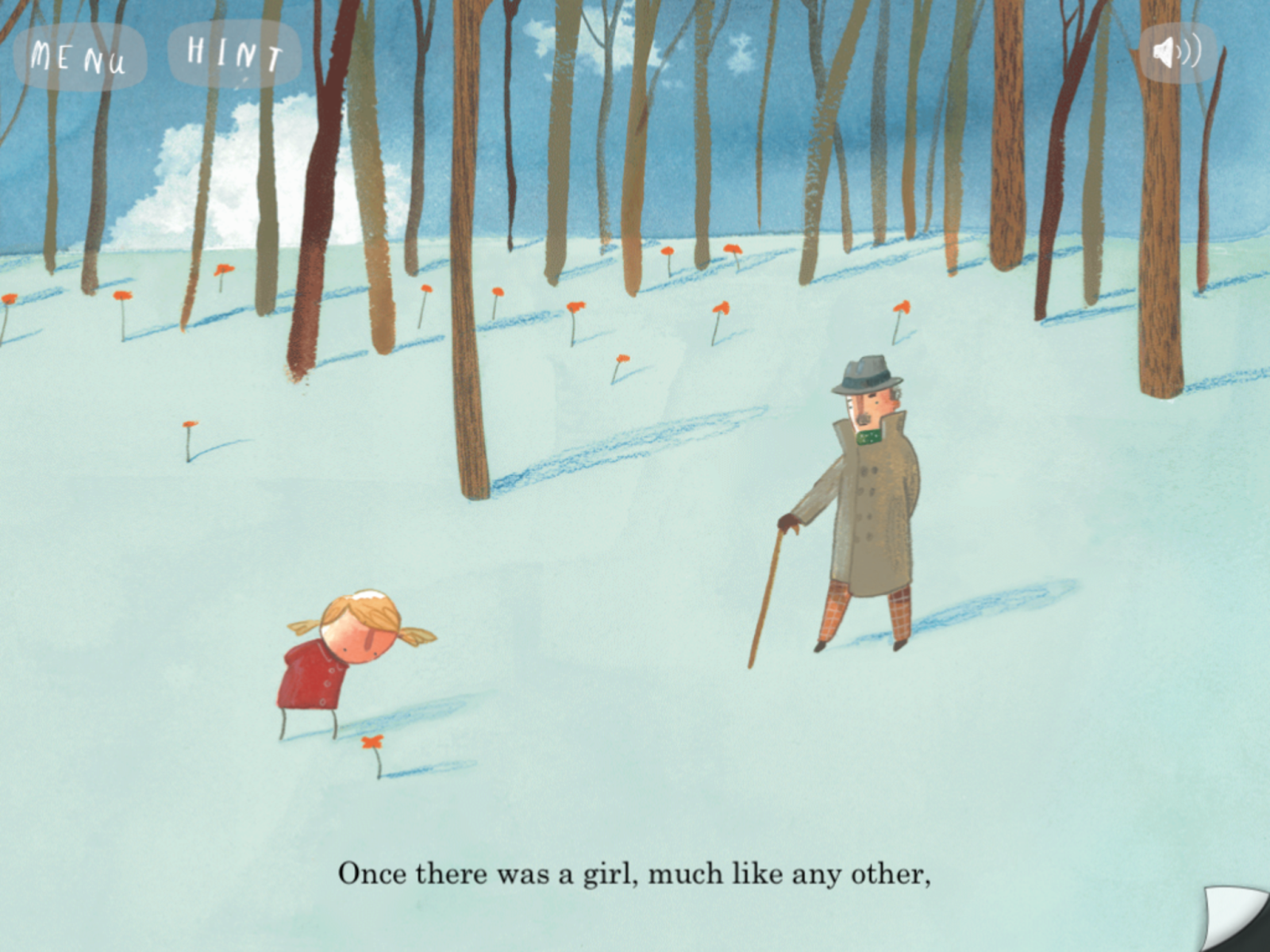
Is it a book or is it an app?
Subscribe to:
Posts (Atom)


