Wednesday, September 03, 2008

Joggled voussoirs


Light

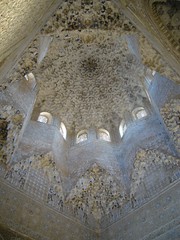
What? Yes, joggled voussoirs! Those interlocking marble blocks (in two contrasting colours) that recur time after time in Islamic architecture are joggled voussoirs. Barabara Drieskens' fascinating urban anthropolgy "Living with Djins" uses joggled voussoirs as a metaphor for the interdependence of storyteller and audience, and story and event. What fascinates me about her book is the way she just stays faithful to the stories themselves. Whilst she looks at their significance, particularly to the urban poor of Cairo, she does not get distracted by looking at their relationship to "real events", but simply treats them as truths in themselves.

Tuesday, September 02, 2008

Did I say that?


Extract


I did a phone interview with a TES journalist about social networking in education. Apparently, in commenting on the english space and LinkedIn I said " I see the use of these sites to further careers as being the next stage of development : it's quite exciting." Well there's nothing like a bit of enthusiasm, don't you think? Anyway, you can read the whole thing, here.

Monday, September 01, 2008

I am dance


Crop dance

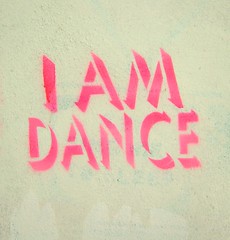
I am dance for two good reasons. The first is that the book Web 2.0 Learning and Social Particpation is finished (Dr Joolz has a few final tweaks). And second, and not completely unrelated, I have the music. Writing on Web 2.0 and music took me to Last.fm., and I love it. I have the music to dance, and what's more you can see it as I play it by scrolling down the page and looking on right sidebar! Sam kindly gave me an fm transmitter, so I can hook that into the USB port and play my Last.fm station through my tuner. How cool is that? As I say, I am dance.

Thursday, August 28, 2008

I cried


Winner
It's won a string of awards already and Somers Town is a great film. Shane Meadows always seems to come up with a new take on masculinities. Anyway there's a bit where the Polish boy gets drunk and a bit carried away and ends up trashing the flat. The next morning his father makes him a coffee, gently wakes him and apologises! Tears were running down my cheek at this point. It's so sensitively done. Whether it triggers the whole father-son thing or whether it's a broader theme about parents getting it wrong is unclear to me...but it's still powerful. And here's a YouTube teaser for Shane's next venture. I'm from Nottingham, too. Cool!

Wednesday, August 27, 2008

Ambigramming


Clear
Originally uploaded by De Seven Free.

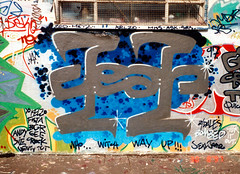
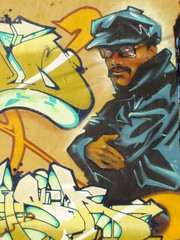
There’s a whole lot of work to do on creating a taxonomy of graffiti tags. Recently I’ve been tuning into the diversity of all the calligraphic styles. It’s interesting that they can’t all be read by the tagging community, but there’s clearly an awareness of styles. So De Seven Free's picture Clear introduces ambigramming, a reference that had me racing to the dictionary and then here, where you get Hofstadter's definition: a calligraphic design that manages to squeeze two different readings into the selfsame set of curves. Many thanks to DSF, keep on ambigramming, its remixing the script!

Tuesday, August 26, 2008

Post industrial post


I went to pay my last respects to Tinsley Towers last week and somehow managed to leave my camera at home! But not to worry, there are some excellent views of the demolition on YouTube and on Flickr, too. The two towers were right beside the M1, the major north-south arterial which was constructed when I was young. They were a sort of gateway to the North, or of course a return home; depending on your point of view. Anyway, I’ve been thinking quite a bit lately about growing up in the twilight of the industrial age. As a child I remember factory sirens, factory shut downs and crowds of workers leaving Raleigh Cycles, Players Cigarettes, and Erikson’s. Now only Erikson’s remains as we inhabit a post-industrial landscape where the sites and markings decay into history or are completely erased like the Towers. Erased except from memory and archive material on YouTube and Flickr.

Saturday, August 23, 2008

Les fleurs du mal


they knock yer back
I've just been writing about music-sharing for the Web 2.0 book. I wrote this. 'Legal file-sharing can be used in the study of music, but also educators have a responsibility to alert students to the potential risks involved in using and downloading from sharing sites.' I referenced Becta on the risks, one of which is exposure to viruses and hacking.....A few minutes later I was on to downloading beats from DJ spaces and that's when I got the malware. Antivirus 2009 looks just like a Windows security message. I clicked and downloaded a whole bucket load of trouble! The laptop froze, error messages were popping up like crazy and all operations ground to a halt. I looked on my other computer and read the boards and it seemed like SpyDoctor was the answer, downloaded that, copied it, loaded it - but reader beware, its just as much trouble! Eventually I managed to rescue the book document (and keep all this secret from Dr Joolz). It then came down to a deep clean. This involved running F-secure in safe mode...and that's not easy. That, quickly followed by Spybot from my pen drive. Now I'm clean. Ironic, or what?
Thursday, August 21, 2008

Born to be random


Born to be wild
One of the attractions of music file-sharing is that the user can select the specific track wanted, rather than the whole bundle and go on to produce a personalised compilation of his or her own favourites. This practice of creating your own mix, which first emerged with the availability of cheap recordable audio tape is now reproduced online. Muxtape is a Web 2:0 music sharing site that encourages its members to exchange compilation collections. But alternative patterns of consumption are emerging all the time. The CD multiplayer brought in the idea of randomly shuffling through a bank of CDs, but as Naomi Alderman observes, the iTunes shuffle function takes randomness to a new level, as listeners are able to draw on their entire music library. But Alderman goes one step further in suggesting that 'we’re welcoming more randomness in our lives'. She gives a number of examples including the Flickr concept of interestingness. Now that’s interesting, or is it random? And how random is random, anyway? Shall I tag this Web 2.0 or random?

Tuesday, August 19, 2008

No SATs


Twenty two and three six four days
We’ve had a bumper crop of good SATs stories this year, starting off with this one about a student picking up marks for using swear words (appropriately) in a paper. Then that was followed by ETS Europe’s failure to do the marking on time. But of course it wasn’t the government’s fault, they just responded by cancelling the £156 million contract or at least asking for some of the money back. Surely the larger question is how the profession and the British public allow the government to get away with it. £156 million on marking something we never wanted, and most kids find mind-bogglingly boring.

Friday, August 15, 2008

Out of it on new literacies


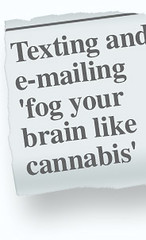
Fog your brain
Thank goodness it's just texting and emailing....blogs are perfectly OK! Phew. Here's the wonderful Becky Bowley (remember the dissolving knitting?). Her recent performance piece Transmerge was based on her train journey from Sheffield to Manchester. In Sheffield she dug a hole: then she took the earth to the next stop, Dore, where she then dug another hole and filled that hole with the earth from Sheffield. The process was repeated right along the Transpennine train route to Manchester. The Manchester earth was then taken back to fill the original hole in Sheffield. The full story's on the blog, complete with photographs of the costume and props. How cool is that?

Thursday, August 14, 2008

Frolleagues


r
I just love all those portmanteau words! In Canada I discovered the wonderful idea of a snack called a naanwich, a real linguistic mash-up! I also recently listened to a programme on infomercials. Infomercial is a term used to describe those endlessly boring programmes that try to convince you that you need some weird gadget - or on the lighter side, those TV shopping channels (which, of course I never watch). So when I saw the feed on this piece on frolleagues I just had to read it. Interestingly, I’ve just had an invite to LinkedIn so it was useful to read. Amusing that LinkedIn recommends that users keep a separate account for socialising so that business contacts don't mix with friends! Their spokeswoman warns us that it's becoming increasingly important that we keep our professional and social lives separate and manage our online reputation as effectively as possible. Well I suppose we all do a bit of impression management, but I always felt one of the strengths of online spaces is the opportunity they present to blur some of those boundaries. Oh and by the way, it seems that a frolleague is a colleague who sends a friendship request. So let’s put a stop to all that nonsense, first name terms and the like. It’s all on a professional footing now. If I met you through work and I see you on the street I’m going to blank you (or maybe not).

Wednesday, August 13, 2008

Blog on blogs


Sarah and Danah
Wow! This was NRC - nearly 3 years ago. I realised I haven't been visiting some blogs very much lately. So I've done some catching up. Sarah has a great post on blogging (from April!). As she says: We're lucky if our posts get one comment, and even luckier if they spark a discussion!! But still we keep on blogging because we know they're not discussion boards. So maybe this comment on Web 2.0 - that they are based on the value gained from actions of users is a bit off-beam. Wouldn't that make a discussion board a bit more Web 2.0 than a blog, which it clearly isn't. Apart from spending my time writing about Web 2.0 I'm also trying to keep up to date with new stuff. There are a couple of list sites, here and here.

Thursday, August 07, 2008

New technologies in childhood


I'm one of the founders of the Journal of Early Childhood Literacy - and it's a fine journal. It's a great pleasure to work with such creative people in the literacy field! On the horizon we have a Special Issue on New Technologies in Childhood and I'm co-editing this with guest editors Victoria Carrington and Vivian Vasquez. The call for papers (which will appear in the next issue) reads something like this... New technologies are changing communicative practices on a global scale. Many children are apprenticed to these practices from an early age, in their homes and communities as well as through their early schooling. Nevertheless, the role that new technologies plays in early childhood literacy is under-researched. This Special Issue aims to stimulate academic interest in this area by focusing on young children’s experience of the literacies embedded in new technologies. Cross-disciplinary and international in scope, we seek to feature papers from researchers whose work addresses these new literacy practices and the complexities of learning through and learning about new technologies. Papers may be theoretical or report on empirical work within any research paradigm. The emergence of new technologies and new forms of digital text provide a changing set of resources for meaning-making, presenting young children with new semiotic tools and communicative possibilities. Key features of the communicative practices associated with digital text challenge traditional views and definitions of literacy and literacy development. This Special Issue will provide a forum for exploring these ideas and for setting the agenda for future research in this area. Submissions for the special issue of the Journal of Early Childhood Literacy are invited on any aspect of the topic of literacy and new technologies....it's going to be a good one!

Tuesday, August 05, 2008

Skin literacies


tattoo book

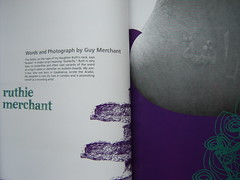
I've finally got my copy of Arabic Tattoos (see sidebar for details). It's got my photograph of Ruth's white farasha tattoo (here) in it. There's also a really interesting piece by Jon Udelson on the appropriation of different languages and scripts in skin art. The tattooers' and tattooees' comments are also worth noting. They show the tattooers' concern to get it right, as well as the way the writing is significant to the tattooees. Jon asks the question: to whom does a language belong, but avoids a direct answer. In most cases it seems that the meaning is richer for the bearer of the tattoo (the text?) than for the reader or the writer.

Saturday, August 02, 2008

Desktop spaces


open your mind

We already have a language for the topgraphy of online space that is expressed in th way we refer to the flow of information which we either up- or down-load. Similarly, in describing our connection, like turmimg on water or electricity, we are either on or off. Yet the popular description of going online does seem to suggest that logging on is a point of departure and the question "are you online?" compares well with location-based questions like "are you in the garden?". In screen navigation we borrow the language of print to describe directionality, with up and down, and forwards and backwards. In contrast we open up programmes or new windows and go into or click through screens as if we are actually going somewhere. Somewhere we can walk through or have a look around. But also we personalise our space, we decorate it or protect it with passwords. These spaces become the more intimate places of online worlds. Perhaps we should also consider the folders on our desktop as private space. Are they like the wardrobes and desk-drawers that Bachelard writes about: "...hybrid objects, subject objects. Like us, through us and for us, they have a quality of intimacy."? (1994:77)

Thursday, July 31, 2008

Consuming nature


bear watching

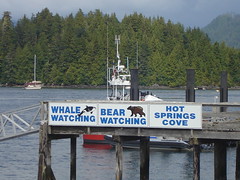
Reading this sign in Tofino, I was struck by how we now simply watch what we once hunted. I think it was John Berger who once suggested that the transition from gun to camera could be seen as just a different way of shooting wildlife. His argument that the impact is similar must be an over-statement, but it does draw attention to our changing ways of consuming nature. Anyway, when we did see a bear by the roadside we realised we'd left the camera in the boot of the car, so maybe that was a good thing!

Tuesday, July 29, 2008

Locks


padlock on green

I'm reading Bachelard's Poetics of Space at the moment. It's a fascinating work that looks at intimate spaces like nests, shells, corners and so on. He explores both the physicality and the experiential quality of these spaces in great detail. Here he talks about the lock: "It is not merely a matter of keeping a possession well guarded. The lock doesn't exist that could not resist absolute violence, and all locks are an invitation to thieves. A lock is a psychological threshold." Bachelard also has some memorable lines on home-spaces: "...our house is our corner of the world" and "...all really inhabited space bears the essence of the nature of home." I suppose I'm wondering how these illuminating perspectives tie in with our experience of virtual spaces - how when I go to those familiar online spaces from this unfamilar place (Campbell River, Vancouver Island) I am, in a sense, at home.

Thursday, July 24, 2008

No graffiti


no graffiti

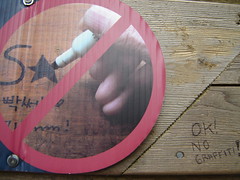
Views from the Capilano Suspension Bridge are truly amazing, and the experience of walking across reminds you of the fairground cakewalk. The cliff-top walkway gives equally good views of the gorge, but I must confess that I was completely distracted by the handrail! This is a foot wide smooth surface of wood that runs at chest height around the perimeter of the walkway. It is absolutely covered with writing in English, Vietnamese, Spanish, Hindi and so on. Visitors have left their mark on the handrail, using the materials at hand. Gouging out their names, writing them in biro, in marker pen, telling other visitors who they are, where they are from, and when they were there. It is the most basic form of mark making and identity performance. I was fascinated not only by the sheer diversity of visitors but the varied forms their messages took. Some were mourning missing relatives, others were statements of love or religious sentiment; others were more light-hearted (Bob smokes too much ganja) but none were obscene or malicious. Occasionally there was the polite notice from the owners, the no-graffiti sticker shown in the picture. But somehow this just became more graffiti. It is accompanied by a polite message reading "We don't come to your house and scribble on your walls, so please don't scribble on ours." Nonsensical really, because Capilano is not a house and a handrail is not a wall.

Wednesday, July 23, 2008

Niagara Falls reaction


Niagara Falls reaction

This is me visiting Niagra Falls, the other day. It’s a reaction shot in response to Ivor Tossell of the Globe and Mail, who thinks he’s caught the birth of a new meme. He traces the meme back to a young woman who filmed herself crying as she watched the trailer for Wall E. Here’s a variation of that meme. The reaction video is essentially a reworking of that dramatic effect in which we experience vicarious emotions. What’s interesting, and dare I say it postmodern, about this, is the way in which the stimulus for the reaction is erased. All we get is the reaction. Could you make a movie out of it? Well I guess not, but this meme is just made for the bite sized format of videosharing.

Saturday, July 19, 2008

Ways of being


on the wall

I've been thinking a lot this week about ways of being in online and offline spaces. Annette Markham's idea of internet-as-way-of-being has always really attracted me, but as I begin to think about the interpenetration of online/offline spaces, it's not a big enough concept. In fact, my awareness has been turning on the limitations of online worlds and how subject positions can be highly controlled whether that is by page profiles, avatar designs, layouts or file sizes. I was particularly struck by how so many of the virtual worlds for children, and particularly those that are in actual fact just animated doll-dressing games constitute a very particular heteronormative gender position. As the distinction between online and offline begins to dissolve, how will new citizens come to understand how these subject positions are made and re-made?

Thursday, July 17, 2008

And more again


Amy amd Hannah

I wanted to develop the participatory learning theme a little more from what Michele talked about and also with reference to Julia’s keynote. In their work both explore the blurring of boundaries between consumer and producer, actually the distinction gets so meaningless that participation seems a far better description. There’s also some really interesting identity work going on. First it is about getting noticed and this is achieved by inviting comments, making alliances and forging networks. The participatory identity involves what I call recruiting work (that’s what Facebook gets you to do so well). Then this is harvested by getting ratings, hits, comments and massaging your online ranking and reputation. But next, what happens seems really interesting. The group seems to generate its own discourse and measures of appreciation. I know the phrase is loaded, but the success criteria get hammered out and expertise gets defined. Particularly in Flick, but also in AMV there are some pretty complex relationships between online space and physical space, and between participants’ identities in both realms. That recursive interplay creates a chain of recontextualised meanings. The place in the photograph is seen differently in RL and then played back into the Flickr world and so on. If you want to place these ramblings in context, there’s running notes in the everydayliteracies blog!

Wednesday, July 16, 2008

Both


Digital moment

And of course, both of them were fabulous! Listening to Michele helped me to refine my thoughts. I've realised that what I’ve started calling participatory learning, or learning through participation, is actually rather different from collaborative learning, although it shares some of the same features. Participatory learning involves some sort of distributed activity and the technologies that are necessary to facilitate it. AMV works as a great example of this. Most descriptions of collaboration foreground face-to-face communication and co-presence; learning through participation is less bounded and allows for incremental knowledge building across time and space. The collective resources that build up over time in online spaces such as AMV communities, wikis or photosharing sites like Flickr are indicative of participatory learning. The individual contributes, but determines the extent and conditions of his or her own participation. In this way the degree of individual learning is personalised, whilst group knowledge aggregates. I’m thinking about a learning conversation, or an expert apprenticeship that you can archive, exit and re-engage with, on your own terms, but also one that you can re-wind or re-mix at will. Michele's AMV analysis seems to indicate what some of the key elements of participatory learning might me. More on this to follow, no doubt!

Tuesday, July 15, 2008

Toronto style


I gave my keynote today, and it seemed to go down OK. It’s great that Vivian Vasquez is here (this is her podcast stuff). I also learnt about this social networking site for kids in hospital called Upopolis and saw a convincing demo of Jing, which is really slick. I'll definitely be using this at work. This link backtracks to the Salman Rushdie quote on identity, which I think works really well alongside Seneca’s 'It’s a major achievement to act as one person'. Tonight we’ll be going downtown to meet with the lovely Naomi, Richard and Maxine.

Sunday, July 13, 2008

Worlds apart


Houses

I’m in Toronto now, just adjusting to a new time zone and putting the finishing touches to my keynote and workshop on virtual worlds. For the workshop I hope to do some exploration and evaluation of the metaverse. I’ve been working on a list of live and beta worlds, but need more time to work up something more useful. This is Izzy’s list for tweens and twids, from Jackie (who’s currently in Australia).

Friday, July 11, 2008

The same tune?


thinking

I am in Liverpool now at the UKLA international conference which has its characteristic conviviality and rich exchange of ideas. The highlight so far has been Kathy Hall's opening keynote. I found myself in harmony with nearly all her ideas about culture and identity and the role of literacy in making and re-making cultural meanings. It was important to restate the sociocultural turn in literacy research, to define culture as dynamic, complex and not necessarily benign. The emphasis on learning through participation flagged up some key themes which we followed up later. Issues around identity were a little more contentious. I'm not so sure about the agency implied in opting for identities or positions and even less sure about the idea of fashioning a coherent identity. The Seneca quote is focal here: it is a major achievement to act as one person. ...I'm coming to believe that this notion of self-narrative, and the idea of a coherent identity is in itself a cultural construction which may get in the way of a deeper analysis of mind, culture, and learning. But that's just me giving a counterpoint to Kathy's ideas and working through some half-formed ideas partly influenced by my recent re-reading of Judith Butler.

Tuesday, July 08, 2008

Time to post


Coach stop

I’ve been too busy to post for a few days, so this one’s a bit of a random collection of things I’ve noticed. Jackie has a good update on virtual world for children, keeping the discussion going (well done Jackie). Meanwhile here’s a rather strange thing: submit your neurosis to this site! And then there’s the filter, funded by Peter Gabriel. You see it all on laminate flooring (strange) and it does a sort of taste-matching thing with music, movies and web videos. It looks a bit like a sexed-up All Consuming to me.

Friday, July 04, 2008

Flickr and voyeurism


Roses

Yesterday I wrote that photosharing sites like Flickr have contributed to new ways of looking at the role of the visual image in our lives. It is as if our albums of photographs can now be released from the shelves and cupboards of our domestic life and thrown open for public viewing. But as a friend pointed out, this means that complete strangers can be leafing through shots of our family, our children and so on. Can this be an unsettling experience - peering like a voyeur into the lives of others...exposing one's own life to public scrutiny? I suppose it's all part of the blurring of private and public. But we'd be wrong to say that it is risk-free. We take intelligent decisions to remain safe and, I suppose, that is part of a Web 2.0 education, to ensure that our students make informed decisions about what is placed in public spaces, too.

Thursday, July 03, 2008

Evaluating Web 2.0


at SP

Finishing off my writing about Flickr has made me think of how you might evaluate a Web 2.0 app from a user perpective. So I've come up with this list and realted questions. They draw on, adapt and extend Lisa Harper's work, which you can see here.
• attractiveness: what attracts users to this site? Once it has been ‘found’, how does it encourage you to become more engaged?
• use value: how clear are the benefits of this site? Can you see how it could be used for enjoyment, learning, or in conjunction with other on-line or off-line activity?
• signing up: how easy is the sign-up process? Are there any hidden catches? Does it feel safe?
• clarity: is the on-screen design helpful. Are the navigation tools intuitive? How is exploration facilitated?
• trust: how can you gauge the trustworthiness of the provider and the community? How are you and your material protected? How easy is it avoid or block inappropriate material or behaviour? Does it seem fairly easy to leave the community?
• invitation and participation: does the site encourage participation and uploading of your own material? Is this relatively easy to do?
• interactivity: how is interaction and communication encouraged and controlled?
• customisation: does the site allow you to personalise your own page? Is this easy to do? How can you manage and update your own profile?
• updating: what sorts of updates are provided and to what extent do users have control over updates?
• user feedback: what are the different kinds of user feedback? What sorts of feedback from other users or the site operators can be expected?
• interoperability: how might the site, your profile identity, or material from the site be incorporated into other online spaces?

Tuesday, July 01, 2008

Social networking?


relaxing soldiers

I’ve always thought of Childnet as a rather conservative organisation, and one that is pre-occupied with internet safety, but as this article shows its latest report argues that the popularity of social networking websites should be exploited by teachers to develop children's ability to communicate and improve their technological skills. That’s an encouraging message (see the full report here). Ofcom, the UK’s independent regulator for the communications industry, also has an interesting report out on social networking, but this is more of an attempt to chart current patterns of use, but following their line on media literacy we would predict that they might encourage an approach that helps learners to access, understand and create in these environments.

Friday, June 27, 2008

Writing/not writing


Black

PewInternet have made a headline out of an observation that I've been making on and off for the last seven years: Teens write a lot, but they do not think of their emails, instant and text messages as writing. The comment is drawn from work with 8 focus groups in 4 US cities and a telephone survey of 700 parent/child pairs. You can download the whole report here or look at the IRA blog headlines here. The bottom line is that teenagers' lives are text-rich, but because their writing is embedded in their social interactions, and because the technology is therefore rendered invisible, they don't think they're writing - just communicating. The survey headlines show that 85% of the 12-17 year olds were using e-communication, but that 60% of them didn't consider it to be writing. There's an obvious gap, then, between literacy in their everyday lives and schooled literacy, and the survey does suggest that: educational institutions know they must review what constitutes effective institutional practice (2008:3) in writing. But do they? I would argue that the dominant view, at least in the UK, is that e-communication is undermining or even contaminating standards of academic writing. Could it be, though, that social uses of e-communication are simply more compelling than school literacy practices? In the light of this, I was interested to learn what the teenagers in the survey said would improve their writing. Over three quarters felt that if schools used more computer-based writing tools, their work would improve. That's not surprising, but still good to hear. Similarly, in overviewing everday writing in out-of-school contexts, there's nothing new: Effective communication, self-expression and self-presentation, and social connection are among the prime motivations behind the writing teens do in blogs, social network posts, emails and instant and text messages (2008:62).

Thursday, June 26, 2008

Bringing back Bakhtin


I’ve been going on about the power of dialogic reflection for some time now, without really thinking it through properly. In my university teaching I’ve been trying to develop learning spaces that promote reflection. There’s this work on connected learning spaces that attempts to make sense of how dialogue in virtual spaces can help (I like the idea of learning ecosystems), and this article is quite helpful in this respect. But Rupert Wegerif’s piece in the current edition of BERJ is very helpful, both in reminding me of what has influenced my own thinking, and also in doing a really good job of separating out the ideas of Vygotsky from those of Bakhtin.... and in so doing bringing back Bakhtin.

Tuesday, June 24, 2008

Virtually the same question


With the virtual world phenomenon I keep on coming back to the same question: how does online avatar-based interaction change our sense of who we are and how we relate to others? And that’s essentially a question about identity. The more I think about this, the less comfortable I feel with both the Giddens idea of the ongoing narrative of the self and the Goffman thing about identity performance. Both imply an essential self and neither really account for how identity is differently structured and formed (re-formed) in contextualised interactions. In this passage, from Issue 100 of Granta, Salman Rushdie seems to capture how identity as a discursive practice is subject to social and historical forces: As Popeye the Sailor Man so succinctly put it, I yam what I yam and that’s all I yam. These days, however, we have a slipperier, more fragmented sense of what character actually is. We argue a good deal about how much of our behaviour is externally determined and how much comes from within. We are by no means certain of the existence of a soul, and we know that we are very different people in different circumstances: we are one way with our families and another way in the workplace. We are more fluid and metamorphic than our forefathers believed they were; we know that within the ‘I’ there is a bustling crowd of different ‘I’s jostling for space, coming to the fore, being pushed back again, growing, shrinking, even disappearing entirely, while new ‘I’s grow. We can change, in the course of a life, so profoundly that we no longer recognise our younger selves [...]the nature of the self and the extent to which it determines our actions are more problematic subjects than they used to be. (Heraclitus - Rushdie in: Granta Winter 2007)

Thursday, June 19, 2008

Cue music


Brown Eyes 1
Technology has a key role to play in the history of music performance, recording and distribution. Within our own lifetime we have seen a massive expansion of radio-based music broadcasting (including the rather troubled emergence of the DAB format), rapid changes in music storage (from vinyl and reel-to-reel tape and on to eight-track, audio cassettes, mini disks, CDs and MP3 files) and changes in how live music is produced. All these changes have contributed to new ways of hearing music, and have transformed the role that music plays in our lives. Listening to our favourite tunes on an MP3 player or mobile phone allows us to take our music with us and this compares rather unfavourably to the idea of lugging a carrier-bag full of vinyl LPs around with us to share with our friends! It's an aspect of networked individualism - our music is delivered to us regardless of place, it has become highly portable. And so I think the way we use music in our everyday lives has had a sort of backwash effect on how we view live performance.

Tuesday, June 17, 2008

Worlds apart


at SP 4
I’ve been trying to compile a useful list of virtual worlds for children. I hear a total of 150 mentioned, but I’ve found it tricky to get past 10. This blog gives a listing(for youth, boomers, retired and beyond (that’s probably the dwellers in the great virtual world in the sky!). So in no particular order here is stardoll, and then moshimonsters, and then goaudition, and then nicktropolis, and clubpenguin (of course!). Then there’s buildabear, and mytinyplanet (ah!), not to mention chamberofchat, and whyville. Of course we won’t forget webkinz or weeworld or the rather different gaiaonline. And if you’re thinking that I’ve just done this to make up for not linking in my last two posts, you’re wrong. I guess the really useful thing would be to include a commentary on each virtual world. Well, I hope to do that later, with a little help from my friends!

Monday, June 16, 2008

Refreshing


refreshments
It was great to get some fan mail from Islamabad, today! But more seriously it illustrates the power and potential of blogging. I quote, i have had great fun reading your vedana site on a weekly basis - as not much educational talk happens in staffrooms! and being overseas we dont have as much exposure to courses and training, so people plod on doing their own work and not discussing or scrutinising the education they provide....and so on. Thank you!

Sunday, June 15, 2008

Flickr writing


Roses
In writing about Flickr, I have become more aware of its sophisticated design. Decisions about levels of participation are placed firmly in the hands of the user. At the most basic entry level, you can simply use Flickr as a private online archive of photographs. There is no pressure or obligation to do any more than this. However, images that are public on a photostream soon begin to attract some interest, particularly if they are seen as interesting by others and even more so if they are carefully titled and tagged. Others in the Flickr community may leave a comment or invite you to be a contact. But again you are free to accept or decline as you build up your list of contacts. There is no pushing or poking. You are in control of your level of particpation from the very onset. That's what distinguishes Flickr as a quality social networking site.

Thursday, June 12, 2008

YouTomb


Yes it is (I think)
Copyright laws are supposed to protect property and income. But with the increasing number of ways that you can copy and disseminate material in new media they’re becoming harder and harder to enforce. Is the media future unregulated, or should it be regulated by users rather than owners? Project YouTomb monitors alleged copyright infringement on YouTube by looking at the videos that get taken down. I think it's interesting that YouTube owners are not as concerned about appropriacy and ethics as they are about getting sued (see this post). Not surprising, really. If you want to read more about YouTomb read the Henry Jenkins commentary.

Tuesday, June 10, 2008

Timely?


five and twenty two
I was pleased to see that all the presentations from the Children in Virtual Worlds conference at the University of Westminster are now up – that’s a useful resource that I'll be referring to I'm sure. I’ve also been looking for a good virtual world review site, but since the demise of this one , not updated since 2006, there’s nothing. However, I did come across this site that provides a useful overview of references to virtual worlds in the Byron Report. And, of course, as one does I also found a report that I missed this from last August’s Guardian!

Monday, June 09, 2008

Research Day


clematis again
At the faculty research day we did an interdisciplinary symposium on 'Identity and personal development: the place of electronically-mediated relationships in academic and social life' . Four key themes came out of our various studies of SNS and professional dialogue. They were the salience of identity - particularly the idea of performativity and the person in dialogue; the interweaving of different kinds of online and online space; issues of trust and emotional closeness in the development of social networks; and the different kinds of learning (learning about oneself, each other, about stuff and about academic/ professional knowledge) that can take place.

Thursday, June 05, 2008

Flickr reflections


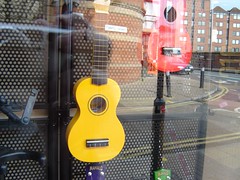
ukulele renaissance
Writing about photosharing is helping me to think more clearly about the Flickr experience. One thing that I realise is that I've built up a lot of knowledge about how Flickr works over a period of time. It has been an incremental approach in which I've learnt just what I need to know when I need to know it. Another thing I've realised is that the intelligent way in which it is structured leaves you in control of your own level of use. It's a very different experience to entering the somewhat anarchic world of YouTube. And finally, when you compare Flickr photosharing with blogging, you realise the difference in social interaction. Flickr allows for comments, notes, tagging and mail - so there are multiple options. By way of contrast, blogs will only display comments (and these are often hidden away). In Flickr they're right up there next to your picture. Blogging is much more about having your place on the net, personalising your page and performing your identity. Although you have your own portal in Flickr it looks more or less the same as someone else's. That seems to create the feel of a more continuous shared space.

Wednesday, June 04, 2008

Image as social object


more rain
I'm currently writing about Flickr, and just wanted an excuse to rehearse Engestrom's idea about social objects. In the case of Flickr, the social object is the digital photograph; for Amazon it is the book, and for YouTube, the video. The social object is the focus of user generated content and the resultant interaction that takes place. As objects become of particular interest to individuals, then a social network can develop around them. This is not particularly different to the formation of traditional interest groups - apart from in two aspects. Firstly, because the interaction is online, social networks are often dispersed (time and location are no obstacles to communication), and secondly, because social networking sites allow for varying degrees of engagement, they lend themselves to lightweight engagement and multiple group membership. The idea of the social object not only allows us to predict the likely success of a Web 2.0 app, but also helps us to provide an account for how networking gets organised. Interestingly, though, when pre-existing networks exist, such as friends and family on Flickr, the social tie is primary and the social object secondary.

Saturday, May 31, 2008

Interval


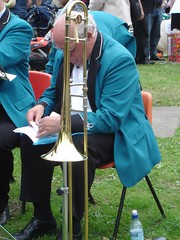
I’ve now discovered that Voicethread takes text well, allowing voice comments (that’s a very useful feature). It also does a reasonable job with video, too and similarly you can comment by voice or in writing. This looks like quite an idyllic scene, but actually it’s just off the main road. The brass band is a legacy of the Victorian industrial era – seen as a wholesome pursuit for the working classes of pit, mill and factory workers. Here, the Holymoorside Brass Band plays in front of the Revolution House (built sometime in the 1600s). So we have all sorts of layers of meaning in a single event.

Thursday, May 29, 2008

Interest


I was quite impressed by the sort of techniques that David Gauntlet’s been using to model identity. He sounds a bit like the Jools Holland of academia - but the video does more than simply advertise his book Creative Explorations. He shows some examples of his work and talks about its possible applications. I guess I’m linking this up with the sort of reflections I’ve been writing about with respect to the Pandorama and Theatro del Oprimido.

Sunday, May 25, 2008

Interpellation


badge
There is something a little too simplistic about Goffman’s dramaturgical account of identity (in The Presentation of Self in Everyday Life). Although I like the notion of performance, the influence of the other is somewhat problematic. “…when the individual presents himself before others, his performance will tend to incorporate and exemplify the officially accredited values of society.” (1969:45); but also in here there is the notion of an essential self that does the performance, and this is unconvincing. Better is Butler’s notion of interpellation in which others call us into being. Moreover Butler does not suggest that we perform a script or enact a discursive practice, but rather that the individual, or the self, is a result of discursive practices. There is no prior entity. Herein lies the distinction between performativity and performance. What we refer to as our identity, then, is the story supplied by the manipulation and re-combination of available resources, mediated through text, called into being through our interaction with others.

Saturday, May 24, 2008

Interactivity


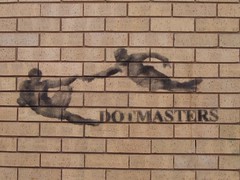
Dotmasters
I was at the Children in Virtual Worlds conference on Thursday (here). It was a bit of a mixed bag. Each time a really interesting topic came up, it tended to get left unexplored. A constant theme was the issue of interactivity and the regulation and surveillance of interaction. I realized, not for the first time, that the concept of interaction has quite range of interpretations. You could perhaps identify five possibilities. 1.o nline content encourages you to make a reponse (you think, learn, go and get something, phone in); 2. you perform an action and it is logged (you vote; rate or rank); 3. you communicate verbally or otherwise with others (comment; chat; tag etc.); 4. your actions change the screen environment (you post or personalize your page or portal, or adapt your pov); 5. Your collaborative endeavours result in a transformation of the environment you’re in (you co-construct). From this you arrive at some nuances of interactivity. They are: not all interactivity directly involves other human subjects; not all interactivity promotes social interaction; not all interactivity involves collaboration. Web 2.0 apps and SNS allow for different kinds of interactivity.

Tuesday, May 20, 2008

Classroom 2.0


With only one slide and 156 comments this voicethread illustrates the wisdom of crowds effect of Web 2.0. I suppose we need to ask about the benefits here, and whether or not this fulfills a useful purpose. It's great to have all those voices, but frankly I got bored. Maybe it would be different if I'd initiated it, because there's something much more attractive about the comments I get as opposed to the comments others get! When I'm reading blogs, I usually tend to skip the comments unless, of course, I've left a comment and go to check to see if there's a reply. There's a sort of self-presentation thing going on here. I wonder if that's why learning blogs tend to work better than bulletin boards, the sense of ownership, of it being my space in which I perform my identity, and then later, check to see how it went down?

Monday, May 19, 2008

Image and voicethreads


It feels a bit like arriving late at the party, but I’m just looking at the learning potential of voicethreads. This is because I'm getting interested in how visual images can help us to reflect, help us to see things differently, to make the familiar strange and to capture or frame our experience in new ways. On Saturday we had a ball, taking still images and recording and writing comments. I got the sense that you begin to move beyond your own particular idea by building on the perspectives of others. OK, I suppose we were just messing about with the affordances of the technology, but there’s more here than meets the eye!

Thursday, May 15, 2008

Electronic blurrings


blurrings
In a tantalizingly brief post, Torill Mortensen comments that in the late modern world, time and space are the only real values. I wished there had been more. I was reminded of Meyrowitz’s No Sense of Place (1985) in which he argues that with new media: what is happening almost anywhere can be happening wherever we are (p.125). Recently Meyrowitz has turned his attention to the blurrings of time and space that come with mobile technologies. In this essay (pdf) he describes how: electronic information seeps through walls and leaps across vast distances. While we still often think of electronic media as simply connecting one place to another more quickly, our forms of communication have been subtly but significantly altering the environments we live in, transforming them into social places in which we are becoming new people. (p.97) This comes from the essay Global Nomads in this book. This reminds us of Ito and Okabe’s technosocial spaces. But Meyrowitz makes some other useful observations, too. For instance literacy he suggests: encourages the splintering of identities based on levels of reading ability and sets and subsets of literatures (p.93). And later he approaches that idea of linear development from a different perspective: the old, year-by-year, staggered access to information, where children of each age and reading level were exposed to entirely different sets of information, is largely bypassed (p.95). What a massive challenge for models of education!

Monday, May 12, 2008

It is time


It is time
Is there such a term as hypermodification? If not then linguists should coin it, because I reckon I've noted a trend in the use of additional modifying prefixes. I first spotted it on a news bulletin in which one politician was accusing another of over-hyping a new initiative. Now I thought hyping already suggested a sort of inflation of claims, an exageration, so where does that leave hyping? As a normal state? Anyway here I found that it is defined as: To promote or publicize to excess. So the second example is from Hannah who pre-warned me about the heat in London. I loved this idea of being pre-warned, implying, as it does, that you've been given notice that you will be warned. However, on checking, this has more of a provenance - to warn beforehand faetures in Webster's 1913 dictionary. You could say that pre-warn is alternative to forewarn. Pre-warn reminded me of pre-hear which is becoming quite popular too. Logic is always a difficult thing to apply to language, but my initial thought was that pre-hear made no sense at all - you either heard something or you didn't. You couldn't hear it before you've heard it. But then I've recently seen it compared to previewing, in other words it's about listening to a something (eg music) before it's actually released. That makes sense. OK, well if there are other examples of hypermodification, let's hear them.

Sunday, May 11, 2008

GTA4 v 1688


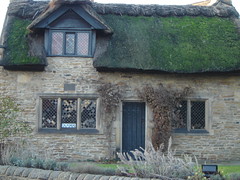
Revolution House
The urban environment has been saturated by images from Grand Theft Auto 4, to coincide with jubilant reports about the games media conquest and record-breaking sales. Video-gaming challenges Hollywood, or so the stories go. It’s interesting to think how non-gamers could hardly fail to notice the invasion of GTA 4. So where does 1688 come in? Well I just wanted to point out some similarities against the more obvious differences. In 1688, in the lead up to the Glorious Revolution, William of Orange exploited the potential of what was then the new media, by having thousands of copies of his pamphlets stashed away in secret locations, embargoed until the precise time of the invasion. Here’s the link. First the technology of mass production for creating billboard posters, handbills and so on. Second the strategic release and distribution to key sites and third, appealing and available content. They work together. So that’s the recipe for a fairly painless invasion. Now do you want to play the game?

Friday, May 09, 2008

Business


near you
Carphone’s Andrew Harrison has pledged to transform the UK broadband market, just as he did with mobile phones. His move to give a laptop free (to keep - as the ad says) with every broadband connection could well have a significant impact on home wireless connectivity in this country. The promotion has already started on TV (perhaps it’s too early to see the take-up) but we've heard no comment about the laptops themselves, but one presumes they’re at least good enough, or else Carphone will end up with egg on their corporate faces.

Thursday, May 08, 2008

The information


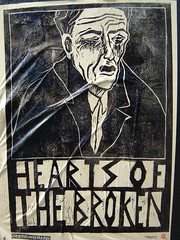
Hearts of the broken
Good YouTube stats are hard to come by, so I’ve been talking to those I meet. It strikes me that there are far more consumers than producers, and most people don’t even bother to comment. Looking for humour, parody and music seem pretty high on the casual vistors list. The users I talk to often refer to word-of-mouth recommendation. There’s some garden path surfing through related videos but not a lot. Here’s some (old) information on patterns of use and here’s the buzz on site meter type stats on your own uploads, that's just been made available.

Wednesday, May 07, 2008

YouTube (again)


Anarchy in the UK
The ephemeral texts produced in that nexus of popular culture, new technology and literacy are of enduring interest. Web 2.0 voices tend to be un-edited and un-censored, and as a result the texts that are produced are often, in one way or another, contentious. Looking at a YouTube video that has attracted a massive number of views, and an impressive list of comments, I was struck by the passions ignited by a low-grade mash-up of a football pitch incident. The un-regulated stream of comment was perhaps predictable. A public display of taunting, trading insults, and of taking sides - and much of the writing peppered with expletives and derogatory references . Much of it is in the demotic of grafitti - not the chic high-end street art stuff - I mean the raw edged stuff, crude and rude as it is, the material we choose not to photograph and put up on Flickr. I must say I don't find it offensive, but I was troubled, but perhaps not surprised, by the shades of racism and sexism that run through the banter. That made me wonder how we stand as educators in relation to this. I realised that I couldn't subscribe to a total Web 2.0 is wonderful view any more than I could to a ban this rubbish stance. I'm convinced that we need to engage with it, we can't turn our backs on it, pretending it isn't there, or naively accept that everything in the world of popular technoculture has a rosey glow. It's just as it is - a galaxy of practices - but we need to find ways of engaging with it, critiquing it, and harnessing the tools. It's out there, laid bare!